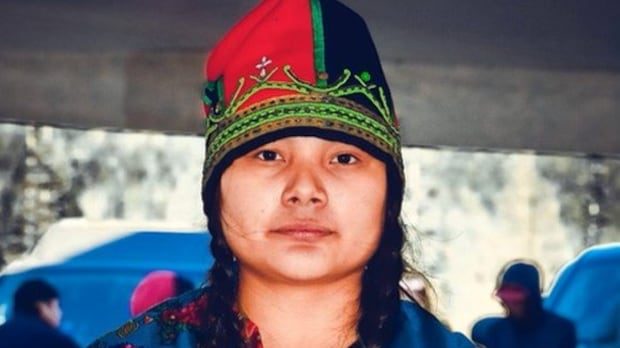
Faith Rich saw two sides of the child protection system. She died at 22
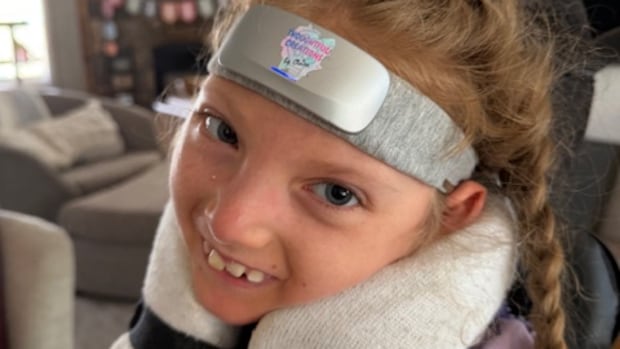
Faith Rich's first interaction with the child protection system came three weeks after her birth, when social workers removed her from her mother's care and placed her with extended family.Her last interaction with the system happened 22 years later, as a struggling mother of two on the verge of her untimely death.Now, a lawyer for her family says everything in between points to a child protection system that stripped her of authority and autonomy, and caused irreparable harm in life and death.“This is about systemic disempowerment and the predictable harm that follows disempowerment," lawyer Robby Ash told a public inquiry tasked with examining Rich's death. “The pattern began in infancy, 20 days after she was born, and it remained unchanged right into adulthood, right up to the time of her death.” Rich's death was one of six examined during the public inquiry into the treatment, experiences and outcomes of Innu in the child protection system. All six youths were from the Innu community of Natuashish.The inquiry produced reports into each of the deaths, which are private documents. The closing submissions by family lawyers, however, are public — giving a glimpse inside the investigations into their experiences with the child protection system.Six Innu youths died by suicide or hypothermia between 2015 and 2020. All six had been in the care of the child protection system at various points in their lives. They are Thunderheart Tshakapesh (top left), Jacob Collins, James Poker, Wally Rich, Faith Rich and Kirby Mistenapeo. (Submitted)Ash said Rich's early life was a series of "rapid, informal placements." Rather than support those who were caring for her, Ash said social workers would just move Rich to another home and hope for a better outcome.“Many of these placements were unvetted by the child protection system, and many of them were unsupported by the child protection system," Ash said. “The pattern begins here, that there was responsibility placed on the family without the power or the information to carry out that responsibility.”Early in Rich's childhood, instability had become the norm.“She herself, it’s documented, expressed a desire to leave certain placements, yet there was no evidence that her voice altered the course of any decisions that were made in a meaningful way," Ash said.By pre-adolescence, Ash said her behaviour had become more risky. There were reports of gas sniffing, a lack of supervision and times where her whereabouts were unknown. And yet, Ash said, the records show the system pulled away when she needed help most.“At this stage of her life is when her file was closed and certain reports were not investigated. This was a critical moment of disempowerment.” The child protection system intervened again in 2011, moving Rich outside the province to Broken Arrow, a care facility in northern Ontario. While there were noted issues with access to language and culture at Broken Arrow, Ash said Rich seemed to stabilize in a more structured environment. This showed she had the potential to succeed with the right supports, Ash said. But it didn't last.Rich was discharged from the facility in July of 2012 and sent home with no transition plan. “Responsibility was effectively handed back to the family, but it was handed back without any tools," Ash said. “What followed was sadly predictable.”Within weeks, there were new reports of gas sniffing, a lack of supervision and the same risky behaviours that arose earlier in her life. “It doesn’t appear they were investigated," Ash said of the reports. "The system was aware, but the system didn’t respond. For the family, this represents profound disempowerment. They could raise concerns, but they couldn’t generate action.” In 2013, she was again sent outside the province, this time to a youth treatment centre in Saskatchewan called Ranch Ehrlo. She showed progress again, Ash said, but was again discharged without a clear plan for when she got back to Natuashish.At 18, Rich became a mother for the first time. The Department of Children, Seniors and Social Development (CSSD) intervened and placed the child with Rich's grandmother. When her second child was born soon after, Ash said she was placed in care outside the community rather than going with extended family.In the final stages of her life, Ash said Rich was "experiencing acute vulnerability."She travelled to Happy Valley-Goose Bay in 2021 for a visit with her child, which fell apart for reasons unknown. “This became a critical moment for her. This is a point where communication and co-ordination for Faith as a young parent in the system was needed the most," Ash said. "She was clearly suffering from some mental health issues and clearly suffering post-partum issues.”Faith Rich was last seen on June 15, 2021. She was found dead more than a month later in the woods on the edge of Happy Valley-Goose Bay. It's believed she died by suicide.The inquiry is headed by commissioners James Igloliorte, Anastasia Qupee and Mike Devine. (Heidi Atter/CBC)Ash concluded his statements by making a pitch to the inquiry commissioners.He said the system could use an Innu parent advocate — a position empowered by its own legislation, someone who speaks the language and could be involved as a go-between for Innu parents and social workers.“They would act effectively as a buffer between two parts of the system that are in conflict," Ash said. "It solves a number of problems. It solves the communication breakdown issues. Especially if given the legislative authority, it solves the power imbalance. It solves the issues of having a cultural disconnect between the families and the system, and it de-escalates conflict.”Commissioner Mike Devine said the idea fits with conversations they've had around new positions that could lead to improvements to the child protection system.Commissioner James Igloliorte said those ideas will be put to Innu leadership before they become concrete suggestions."A recommendation like this, a very specific one, really has to be endorsed by the Innu," said Igloliorte. "We'll pass them on and say, 'Will this work?'"If you or someone you know is struggling, here’s where to look for help:Download our free CBC News app to sign up for push alerts for CBC Newfoundland and Labrador. Sign up for our daily headlines newsletter here. Click here to visit our landing page.