Birding around the world: western Brazil
Brazil is an incredibly bird-rich country that supports a huge number of species. The west shares most of the same birds as the east but has only half as many endemics. Indeed, only about 30 are found nowhere else. There are three states that attract the most birders – Amazonas, Pará and Mato Grosso. Tours are available to all of these from a variety of bird-tour companies, and for other states such as Rondônia, Acre and Roraima you can find local guides who can put together a plan for you.
Amazonas is huge, being six times the size of the UK. It has the largest bird list for any Brazilian state and it is home to 25 of those western endemics. Only seven of these are solely restricted to Amazonas and one of them, White-tailed Tityra, was famously photographed for the first time in 2022, having been discovered in 1829 and only seen once since! Other species restricted to Amazonas are Grey Wren, Chico's Tyrannulet, Chestnut-headed Nunlet, Varzea Piculet, Predicted Antwren and Diademed Amazon (treated by some as a subspecies of Red-lored Amazon). Tours in Amazonas are usually centred around Manaus, where South America's two largest rivers, the Rio Negro and the Amazon, meet. The rivers create a barrier that smaller birds do not cross, and so sister species are frequently found on opposite banks. Here there is lush humid lowland rainforest, river islands and seasonally flooded forests where the waters can rise and fall 15 m or more each year. The other main area to explore is São Gabriel da Cachoeira on the upper Rio Negro.
Cristalino Lodge boasts two towers from which birders can scan the treetops for canopy species (Keith Betton).
Pará supports 19 of the western endemics and has four species that are found nowhere else: Chestnut-headed Chachalaca, Golden-crowned Manakin, Xingu Scythebill and Opal-crowned Manakin. As with Amazonas, it offers a huge range of species and to see these it is best to ensure your trip includes Tapajós National Park and Carajás National Forest. One of the best birding lodges is Rio Azul Jungle Lodge.
Less well known is Rondônia, which borders Bolivia. It is a much smaller state, and although it shares several restricted-range species with Amazonas it has no specific endemics of its own, despite Rondônia Bushbird carrying its name. Relatively few birders visit this area; the same is true for Acre to the west and Roraima on the Venezuelan border. Indeed, some bordering countries may offer better opportunities to see birds that they share with Brazil.
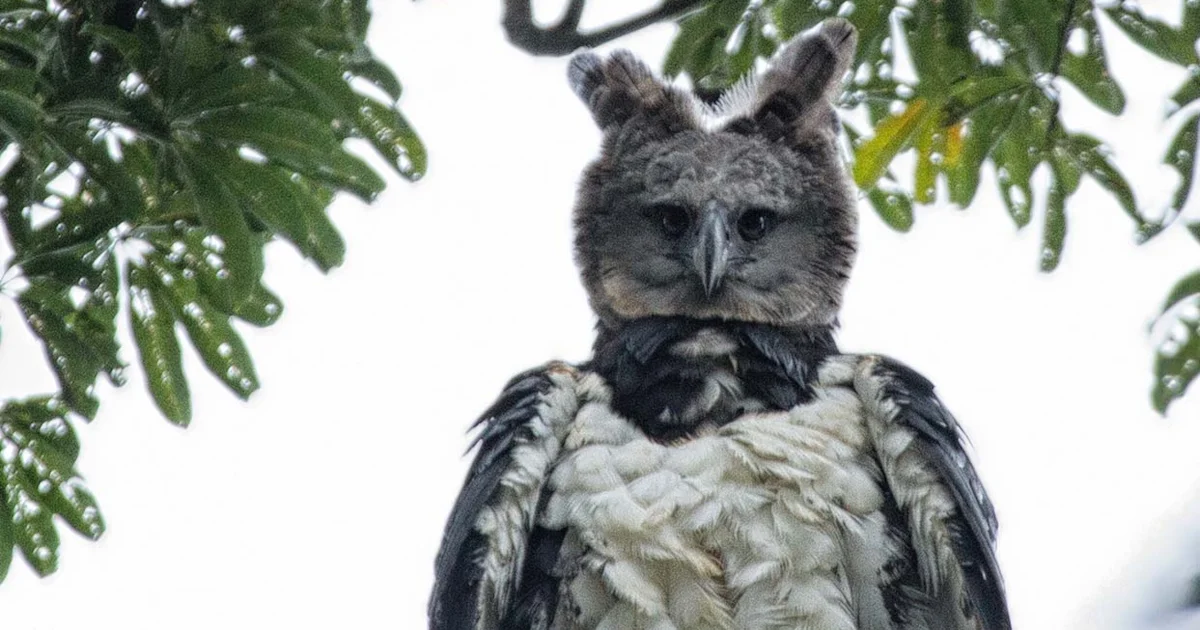
Finally, there is Mato Grosso, which includes the Pantanal. Here you have a great selection of birds in a wide-open mix of grassland and wetland habitats. It is also a terrific place to see mammals such as Jaguar and Giant Otter. In the north, close to the border with Pará, there is the famous Rio Cristalino area, and the famous Cristalino Lodge. This area supports a huge variety of birds and remains one of the best places to connect with Harpy Eagle – one of the world's most sought-after raptors. There is a chance to see an eagle from one of the lodge's canopy towers, but better still, hope to get lucky and observe a nest.
Jaguar is a major prize in the Pantanal (Wikimedia).
Getting there
There are direct flights with British Airways and Virgin Atlantic to Rio de Janeiro or São Paulo from £800, with onward connections. Leave plenty of time for connecting! Another option is to fly with TAP via Lisbon and direct into 12 airports across Brazil.
Key species
Harpy Eagle. 87-107 cm. Near Threatened. Although this enigmatic species can be found across many countries in Central and South America, Brazil remains one of the more reliable places to see it – particularly when a pair nests in an accessible location. In fact, it can live close to human habitation so long as there is good forest nearby. Sadly, old prejudices live on and some farmers perceive the birds to be a threat to livestock. It is a truly massive raptor but hunts for medium-sized mammals such as sloths and monkeys. It is tragic that 40% of the records collated during a recent survey of the species' status were of birds that had been shot. Each pair can only breed every two or three years because of the slow development of the single chick, which reaches maturity after five years.
Brazil is still one of the most reliable countries in which to see the magnificent Harpy Eagle (Leon Moore).
Discover BirdGuides Travel
BirdGuides Travel offers unforgettable wildlife experiences led by expert guides. Guests enjoy safe, comfortable accommodation and the chance to meet like-minded travellers with a shared interest in nature. See all BirdGuides tours, including Brazil: remote Amazon by river boat and Brazil: Pantanal, Chapada dos Guimarães and Atlantic Forest.
Recommended books
A Field Guide to the Birds of Brazil by Ber van Perlo, Oxford University Press, 2009, softback, £36.
Birds of Brazil: The Pantanal and Cerrado of Central Brazil by Robert Ridgely, 2010, Cornell University Press, softback [out of print].