Elon Musk Says Sam Altman Tricked Him Into Funding OpenAI
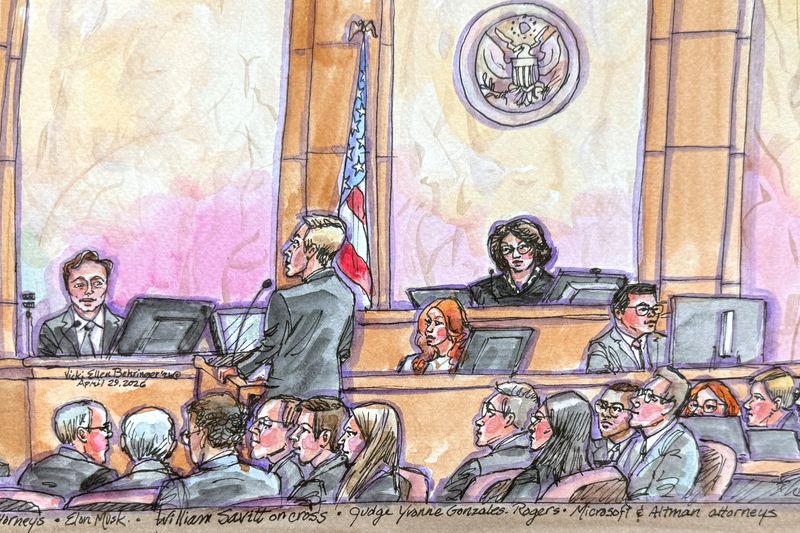
Savitt said Tuesday that in 2017, OpenAI executives, including Musk, were in the midst of conversations about whether and how to transition the company to a for-profit structure.
According to OpenAI’s court filings, as early as summer 2017, Musk had insisted on holding a majority equity stake in any for-profit entity, serving as CEO and controlling its board of directors.
Pressed by Savitt about what Musk meant by “expressing what you said about control,” the Tesla founder and billionaire said: “I try to be as literal as possible.”
In the fall of 2017, Brockman and Ilya Sutskever, another top OpenAI executive, emailed Musk with concerns about the for-profit structure he proposed. Shortly thereafter, discussions over the structure collapsed, and Musk stopped making significant quarterly funding contributions, OpenAI alleges.
He left the company less than six months later.
Savitt framed the breakdown and Musk’s exit as a result of his not getting control of the for-profit, and the other executives’ focus on maintaining its philanthropic mission. He suggested that Musk tried to pressure them to accept his terms by pausing the majority of his financial backing.
“You knew that would create financial pressure for the organization,” Savitt said.
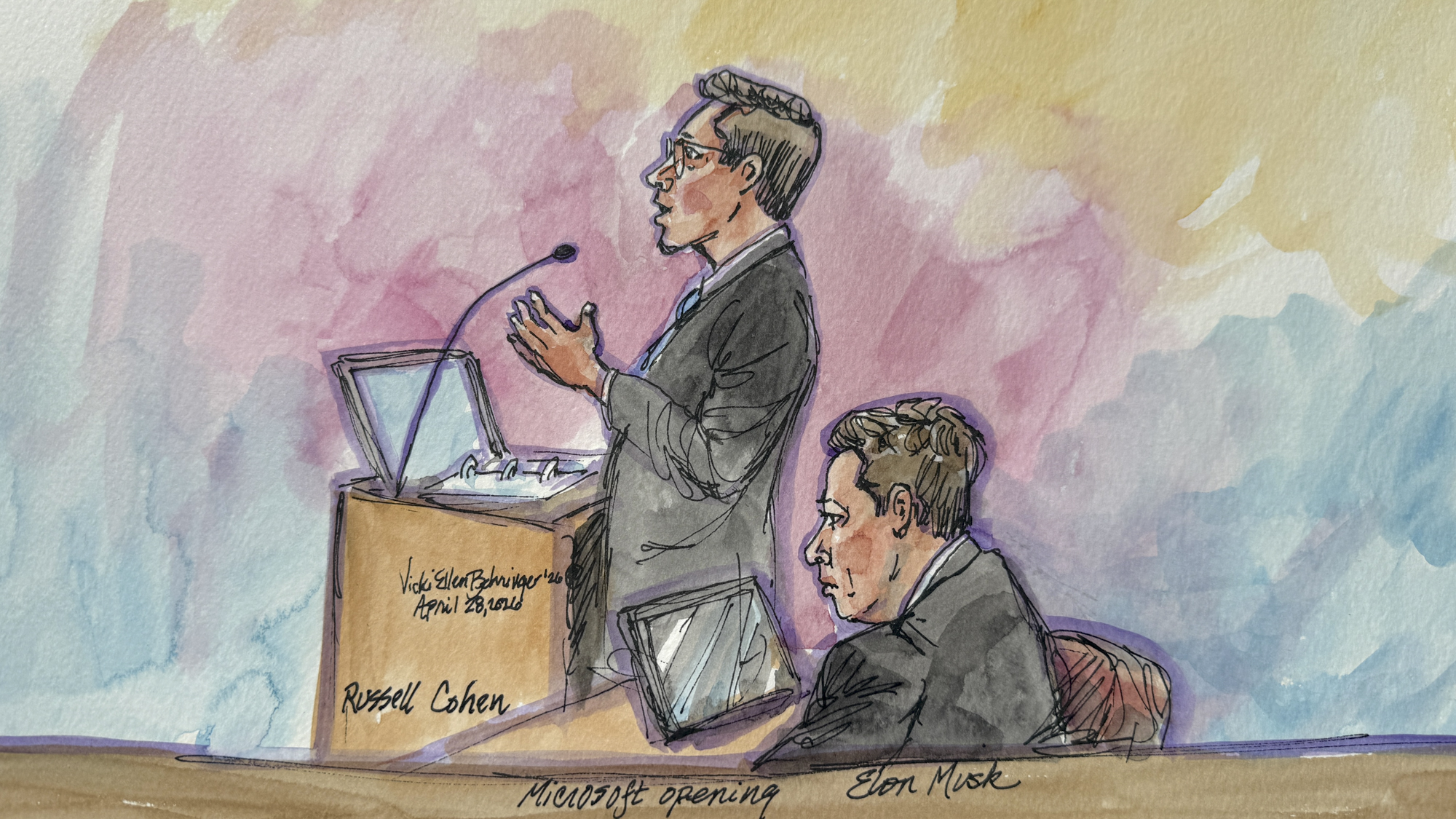
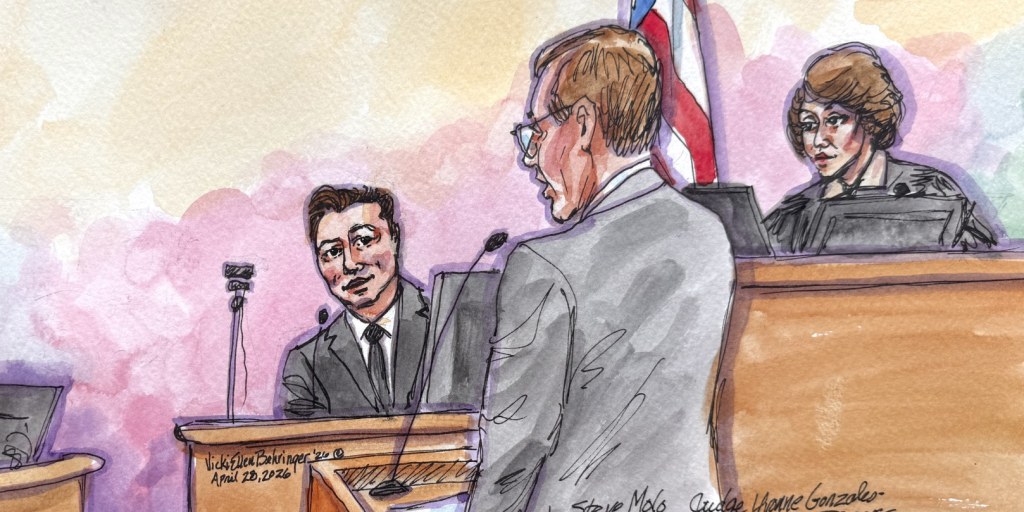
Steve Molo, Elon Musk’s attorney, presents opening statements in the trial in which Elon Musk (center-right) claims that Sam Altman (right) and OpenAI abandoned their founding promise to develop AI for the benefit of humanity, rather than solely for profit, in Oakland on April 28, 2026. (Vicki Behringer for KQED)
Musk denied that was his intention. Instead, he alleged that Altman convinced Brockman and the others to go against his proposal, and that their concern over his desire for control was disingenuous.
“I’m not going to fund something if I don’t have confidence in the people,” he said.
When asked whether he proposed that OpenAI be folded into Tesla, Musk said: “There were a lot of ideas that were brainstormed at the time.”
In an email, he wrote that doing so would be the “only path that could even hope to hold a candle to Google.”
Musk said he left OpenAI in February 2018 because he was focused on Tesla’s survival, and believed that OpenAI intended to continue operating as a nonprofit.
Savitt also laid out a series of exchanges between Musk and Altman, in which the OpenAI CEO kept him apprised of the company’s corporate structure. He said in March 2018, Musk responded to an email that noted the creation of a for-profit entity of OpenAI with “OK by me,” and was sent a term sheet for OpenAI LP that summer.