Siobhán Cleary on composing Canto: ‘I had lost one of my sisters. That changed everything’
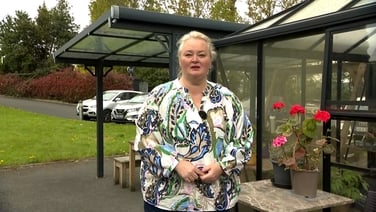
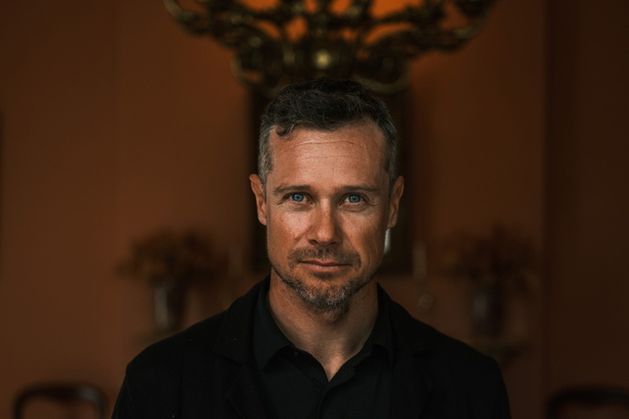
Siobhán Cleary’s new orchestral Canto began life in early 2023 through a request from National Symphony Orchestra Ireland for “a five-minute opener”. The notice was too short, the composer says – and, apart from that, she didn’t want to do that kind of piece. “I said what I would really like is a concerto-type thing.” Her first choice for solo instrument was cello. But the orchestra already had a cello-concerto commission in train, so she chose violin instead.National Symphony Orchestra Ireland, she says, “have been probably the most supportive organisation of my work. They perform my early work, they commission me and they repeat the works. But it was still 17 years since I had got a commission from them.“In that time I would have come up with lots and lots of different ideas in my head for orchestral pieces. I don’t know if any of them have managed to get into this piece. READ MOREHow to behave at the gym: ‘Behaviour is definitely getting worse’Paul O’Connell: ‘I see little difference between a Limerick rugby player and one from a Dublin private school’MasterChef’s new presenter Anna Haugh: ‘I’m really proud I come from Tallaght’Michael Jackson was breathtaking at Páirc Uí Chaoimh. But what was the 10-year-old doing at his hotel?“But when I was formally commissioned, in 2024, I was going through a period of bereavement. I had lost one of my sisters. I think that kind of changed everything about the writing of the piece.”Her sister Eilish, a doctor, died in 2024, at the age of 60. “The piece couldn’t but be dedicated to her. But I think it’s much more universal than that. That’s what art does. It’s not explicitly or intentionally about her. You could analyse where she is in it. But you could analyse where I’m in it or anybody else is in it.”The two sisters were very close. “I was lucky to be the youngest sibling, which meant that I had teachers at home, and she was a born teacher. By the time I went to school she had taught me everything that I needed to know.“I think my mother might have said, ‘Well, yeah, now she’s your baby, and you’re going to have to look after it.’ She took this very, very literally, and there was a time when she wanted to bring me out with her friends! She repeated this up to when she died, that she actually thought in some way that I was hers.”[ Dr Eilish Cleary obituary: Champion of public health who gave a voice to those who didn’t have oneOpens in new window ]The canto of the title is the 39th of the Canti by the early-19th-century Italian writer Giacomo Leopardi. “I was very, very struck by the imagery of the poem,” Cleary explains. “It begins on this absolutely beautiful, magical Italian evening. There’s the sea, there’s the forest, there’s fields, there’s flowers. It’s so sensuous.“And the young woman is setting out to meet her lover. She’s full of hope and anticipation, and the sounds of the village life and any other human life have been kind of stilled.It’s like the piece seeps into you the longer you have with it— Siobhán Cleary“It’s almost like the beginning of a fairy tale or a myth. But, Leopardi being Leopardi, this doesn’t last that long. There’s a huge, terrifying storm that just tosses her about. She pulls herself together to try and go home, to turn back. And she’s turned to stone. “The imagery of that just wouldn’t leave me. It grew and grew and grew until it did become a piece. I had a form and a structure that came from that poem.”Cleary likens composition to a journey. “If you’re driving to somewhere you’re not familiar with, you would have looked at a map, and you would have seen the towns you would have had to pass through. It’s a bit like that with a piece. You kind of see where the stages are, what the structure is.“But the bits in between, when you have the indicator on, when you change gear, when you use the clutch, hit the brake, you’re not aware of these unless you’re a very new driver.It is really touchingly beautiful— Darragh Morgan, on Canto’s long opening line and storm section“At the end of the journey you don’t recall what those things were. But those are the things you’re always asked about. Even in academia, the things you’re asked about are the most uninteresting things about the piece.”Cleary’s musical approach is not pictorial in the detailed manner of Richard Strauss but more on the lines of the symphonic poems of Franz Liszt, whose best-known orchestral work, Les Préludes, was named after a poem by his friend Alphonse de Lamartine.Siobhán Cleary’s Canto, with Darragh Morgan, will be performed at the National Concert Hall. Photograph: Marcus Maschwitz The turning into stone in Leopardi’s poem, the composer says, “is just one very pithy line. And I suppose that’s where language has its limitations, whereas music moves temporarily much differently. So the turning-to-stone section takes over a good bit of the piece.”When we talk the premiere, at the National Concert Hall, is still a month away, and communication between the participants has been via Zoom. The Belfast violinist Darragh Morgan, is, says Cleary, “very collaborative. He had some suggestions about balance with the orchestra. Changing registers and things. There were a handful of moments where things didn’t sit easy under his fingers, and he helped me change them. But in essence everything is the same.”Morgan’s speciality is new music, and he likes to get to work on the scores as far in advance as possible. Canto arrived three months before the premiere. Australian-British conductor Jessica Cottis. Photograph: Kaupo Kikkas “It’s like the piece seeps into you the longer you have with it,” he says. “I’m only part of Siobhán’s piece, just the violinist. There’s a whole orchestra, too. The challenge is how do you put together a piece that you’ve been steeped in for three months with an orchestra that only have two or three days to prepare.”The thrill of his career, Morgan says, is “not just the playing of this brilliant live, visceral new music, it’s more the connections with composers. I really enjoy their company.“So whether it’s people like the minimalists Philip Glass, Steve Reich and Arvo Pärt, or the hard-core Europeans, all of them have presented to me a new landscape of what the violin could or should sound like. And it’s so different always.” It’s a long time since he realised that he could “never go back to playing what people would describe as a meat-and-two-veg concert any more”.He enthuses about Canto’s long opening line and the storm section, “very turbulent material, but which releases this unbelievable melody, so heartfelt. It is really touchingly beautiful.” Morgan has played it for the composer, but “we also have to bring a whole new world to it. The orchestra will cut into that canvas, which is going to be different and difficult. Jessica” – the Australian-British conductor Jessica Cottis – “will be looking at the piece differently, because she sees the scope of canvas. I’m looking at it just in detail, even though I’m hearing everything else in my head, imaginationwise”.Cottis, who is chief conductor and artistic director of Canberra Symphony Orchestra, sees part of her broader role as being “really proactive about shaping classical music as a living art form.” Her orchestra commissions about five works a year, with the aim of “creating a diverse body of new music, but it’s also building long-term processes with composers and new music and really investing in an art form that is absolutely crucial”.It’s a strange thing to say, but it’s like when you read Shakespeare. It’s wonderful— Jessica CottisSometimes, Cottis says, “I look at a new score and I think, Yeah, that looks fun; this will be wonderful. And sometimes I look at a new score and I think, I actually can’t wait to get this in front of the musicians. And this is one of these scores.“It’s a strange thing to say, but it’s like when you read Shakespeare. It’s wonderful. But it doesn’t come fully alive until that Shakespeare, those lines are actually spoken. For me, this is a piece like that.”[ New National Concert Hall boss: ‘I hope to be here for the grand reopening’Opens in new window ]She enthuses about the entire, “hugely eclectic” programme. “It will really work. We’ve got Grieg’s Holberg Suite, very stylised, and then go into this new violin concerto, which will be, I think, such a beautiful shock after the Grieg. You know, a very different way to hear sounds within time. And then there’s Tchaikovsky’s Fourth Symphony. Quite a programme. It’ll be quite a journey.”From another perspective entirely, Cleary says, “The night of the premiere is really hard on a composer. It’s a very vulnerable time. You’re exposing yourself to all these people, and maybe people who are going to criticise it.“The nicest part of the process for me is when I’m working with the musicians, the rehearsal, and it’s just me and them. It’s a really beautiful, beautiful time.”Siobhán Cleary’s Canto, with Darragh Morgan, will be performed as part of NSOI: Jessica Cottis Conducts, at the National Concert Hall, in Dublin, on Friday, May 8th