Audi Is Replacing Its Smallest Models With A New Electric Gateway
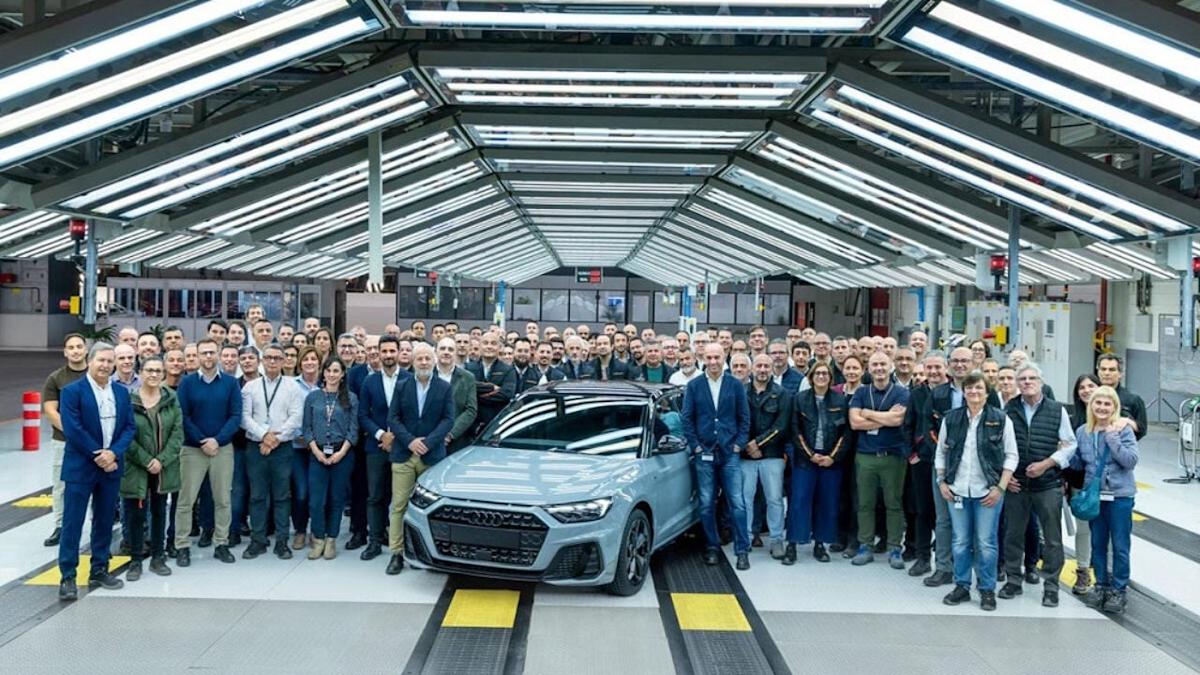
After more than a decade on the market, Audi is closing the book on two of its smallest and most accessible models. The A1 and Q2 are now ending production, a move that signals a clear shift in how the brand wants to define its entry point into the premium segment.Audi says Q2 production in Ingolstadt ends in April 2026, while A1 output is winding down in Martorell, Spain. Over their lifetimes, the two models reached 887,231 and 1,389,658 customer deliveries, showing just how important they were in markets like Germany, the United Kingdom, and Italy.What replaces them will not be another small gas-powered hatchback or crossover. Instead, Audi is pushing its lowest rung upward into the electric age with the new A2 e-tron, an all-electric compact model set to debut in fall 2026 and enter production in Ingolstadt the same year.That makes this more than a simple model shuffle. Audi is trimming the low end of its combustion lineup, putting more emphasis on higher value core vehicles, and using electrification to redefine what an entry-level Audi will look like from now on.Why A1 And Q2 Are EndingPhoto Courtesy: Autorepublika.Audi has been signaling this move for years. The company previously made clear that neither the A1 nor the Q2 would get a direct successor, with the A3 and Q3 temporarily becoming the practical entry points of the lineup before the next small EV arrived.The reason is not hard to understand. Small premium combustion cars have become harder to justify as development costs rise, emissions rules tighten, and buyers increasingly shift toward larger and more profitable crossovers. Audi’s current product strategy reflects that reality much more openly than before.So while the A1 and Q2 were successful in pure volume terms, they no longer fit the direction Audi wants to take. The company is now prioritizing stronger margins, a younger EV portfolio, and a clearer separation between its premium identity and the more affordable products sold elsewhere in the Volkswagen Group.The A2 E-tron Takes OverAudi has already confirmed that the A2 e-tron will become its new entry-level electric model family. It will be unveiled in fall 2026, built in Ingolstadt, and positioned as a compact EV designed for everyday use, urban efficiency, and broader international appeal.That is a very deliberate choice of name. Audi says the new model is meant to carry forward the mission of the original A2, which was known for efficiency and unconventional thinking, but this time in a fully electric form aimed at a much wider audience.Audi has not officially announced pricing yet, but outside reports suggest the car will likely land in the upper $30,000 range, putting it above mainstream compact EVs while still making it the most accessible battery electric Audi. That would fit its role as a younger, more reachable gateway into the brand.Factories And Product PrioritiesPhoto Courtesy: Autorepublika.The production changes also show how carefully Audi is reorganizing its manufacturing footprint. In Ingolstadt, the end of Q2 output opens space for integrated Q3 production and for the arrival of the A2 e-tron, which Audi describes as another key milestone in the electrification of its home plant.At the same time, the A1’s wind down in Martorell closes a long chapter for one of Audi’s most visible small cars. That does not mean the company is abandoning compact vehicles entirely, but it does mean the role of those vehicles is being rethought around electric mobility rather than traditional city car formulas.In practical terms, Audi is moving away from the idea that its cheapest products should be small gas-powered cars. The next step is an EV that feels more modern, more strategic, and more tightly tied to the brand’s long-term priorities than either the A1 or Q2 could be at this stage of the market.A New Halo Is Also ComingPhoto Courtesy: Autorepublika.The reshuffle does not stop at the bottom of the range. Audi has also confirmed that the fully electric sports car previewed by the Concept C will enter production in 2027 at Böllinger Höfe, giving the brand a new halo model at the opposite end of the lineup.That car is expected to sit in the space once occupied emotionally by the TT and, to a degree, the R8, though Audi has already made clear it will not use either name directly. It is another sign that the company is trying to rebuild its identity not only through practical EVs like the A2 e-tron but also through more emotional electric products.Put together, these moves show Audi is not simply deleting old models and replacing them one for one. It is redrawing the shape of the brand. The A1 and Q2 represent the end of one era, but the A2 e-tron and the coming Concept C-based sports car make it clear that Audi sees its future in a lineup defined less by small combustion entry models and more by electric differentiation, stronger positioning, and a much more selective approach to what deserves to wear the four rings.This article originally appeared on Autorepublika.com and has been republished with permission by Guessing Headlights. AI-assisted translation was used, followed by human editing and review.If you want more stories like this, follow Guessing Headlights on Yahoo so you don’t miss what’s coming next.