ATR Daily: China wants to unwind Meta-Manus
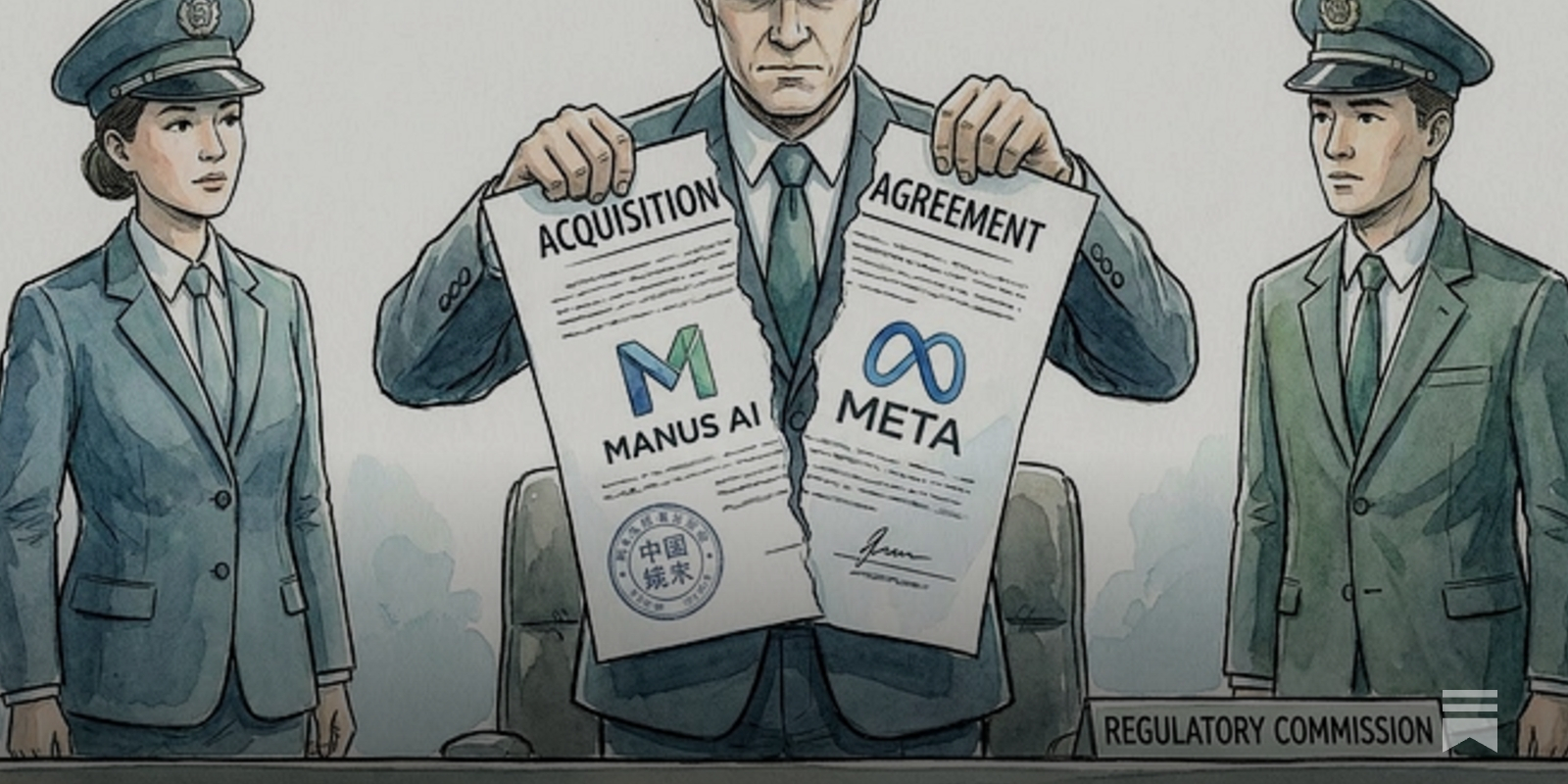
Welcome back to Asia Tech Review Daily, your curated digest to keep up to date with tech news across Asia.Every weekday, we will send you 2-3 of the most important items from Asia Tech from the previous day, and a list of other news you’ll want to know.Hit reply and let us know what you think. What do you like, what do you love and what doesn’t work for you.Perhaps we shouldn’t be surprised, but China moved to block Meta’s $2 billion-plus acquisition of Manus yesterday.The National Development and Reform Commission ruled it would “prohibit foreign investment in Manus in accordance with laws and regulations, and require the parties involved to withdraw the acquisition transaction.” The NDRC has spent much of this year investigating the transaction, which was announced in late December some six months after Manus had relocated from China to Singapore.Meta continues to claim that the deal “complied fully with applicable law.” It told the BBC that it anticipates a resolution to the investigation.China has come out strong on tech issues in the past. Yes, its tech companies are prized assets, but when there’s potential for negative impact, action has been taken.It has fined its biggest companies repeatedly, including a $2.8 billion penalty for Alibaba in 2021, it crippled Alibaba affiliate Ant Group’s $37 billion IPO at the eleventh hour and, looking back more than a decade ago, it suspended key features from microblogging services following political rumours.There may not be one homogeneous organisation controlling all of those decisions but China’s instinct is broadly to take unpopular decisions for the sake of longer-term interests.When it comes to Manus, those interests and the threat is clear. This precedent could see China lose its most promising AI companies if they follow Manus’ lead and relocate to Singapore. Even still, a hardline approach wasn’t expected to be taken based on recent news reports, that’s despite the founders of Manus not being allowed to leave China.It’s notable just how quickly Meta integrated Manus into its business. The US giant added the AI product to its advertising manager service in February, just over a month after it announced the acquisition. Beyond that, Manus employees have already moved into Meta’s offices in Singapore with executives joining Meta’s AI team.Investors have been paid out, too, including Tencent, Hongshan and Benchmark. The US VC, whose involvement sparked initial controversy, has even already delivered returns to the LPs that back its fund, according to the Financial Times.The fast integration may help make the deal seem harder to unwind, but Meta is in urgent need of a consumer-facing AI service as it lags its rivals by some distance.The launch of OpenClaw and the continued development of Claude and Google Gemini clearly show the value of AI virtual assistants, which are sure to be a major new frontier for consumer tech companies. Yet Meta comes up short on this front for now.US-China relations are hard to read at the best of times, let alone with the Trump administration in office. Trump signed off on the US TikTok deal, which saw his position shift from a hardline, outright ban to an outcome that looked like a major win for ByteDance and China.That makes it tough to read what success looks like for the current White House when it comes to Meta-Manus. Likely some kind of deal, a compromise or a counter attack on China. That may mean no quick resolution.Singapore-based Cube Asia, which tracks Southeast Asia’s fragmented e-commerce market, raised $3.7 million in its Series A round to expand its geographical focus and add more products for brands, retailers and investors.Online selling has evolved massively over the last decade in Southeast Asia, going from a market that was created by Lazada and other Rocket Internet-backed ventures, to the current day battle between a US listed company, an Alibaba affiliate and one of China’s new internet powers.A recent Momentum Works report concluded that e-commerce GMV rose 22.8% year-on-year across the region to reach $157.6 billion last year, with Shopee TikTok Shop and Lazada the overwhelmingly dominant players. Grabbing this data is an imprecise science based on estimates, relationships and manual logging, and that’s where companies like Cube Asia focus.Like Momentum Works, four-year-old Cube Asia regularly produces reports on the region’s e-commerce space which include data and numbers that are hard to find elsewhere. The insight comes from its primary focus on tracking the market for brands, retailers and investors to make sense of what is a nascent and growing industry that doesn’t lend itself to the type of measurement that’s common in emerging markets.Data companies don’t tend to attract massive amounts of investor attention in Southeast Asia. Mapping commerce across the region is a tough job that’s creates the data and insights that influences the rest of the ecosystem, be it founders, operators or investors.China has a new framework for the country’s estimated 200 million gig workers, which will provide protections like fair wage payments and better social security [SCMP]Fresh from launching its newest model in preview, DeepSeek has slashed its cost of using all of its models by 90% [PanDaily]Google is building an AI campus in Seoul, according to the office of the President [Reuters]Indian Digital insurance company Acko, which is backed by General Atlantic and Amazon, is planning an IPO in India next year at a valuation of at least $2 billion [Economic Times]Samsung will stop selling home appliances and TVs in China this year allegedly due to tough competition [Reuters]