FactCheck: why did assisted dying bill fail and is that constitutional?
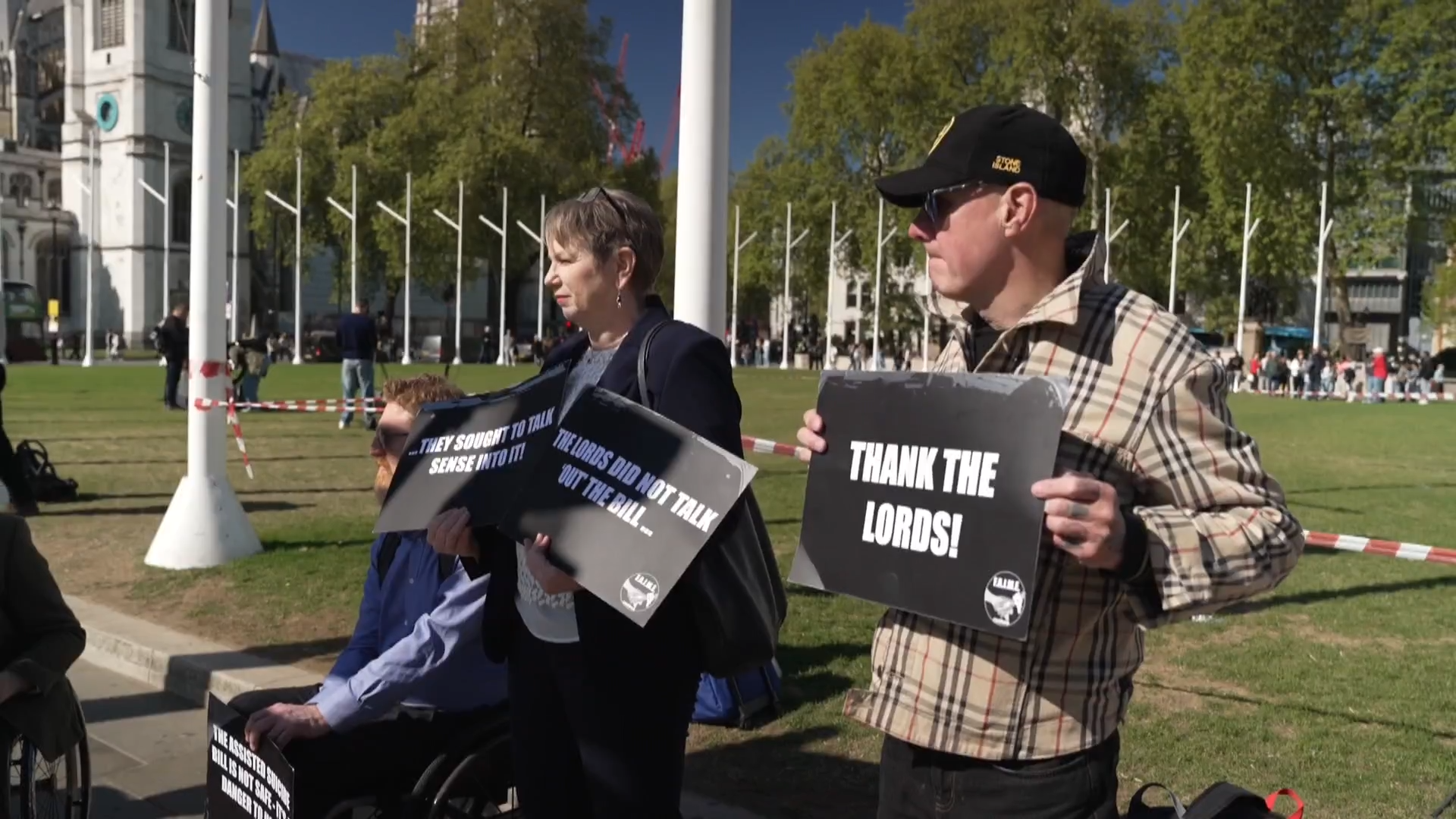
The assisted dying bill is no longer going ahead, with some commentators suggesting its collapse after months in the House of Lords is unconstitutional – or even undemocratic.
We’ve spoken to some of Britain’s leading constitutional experts.
Why did the assisted dying bill fail?
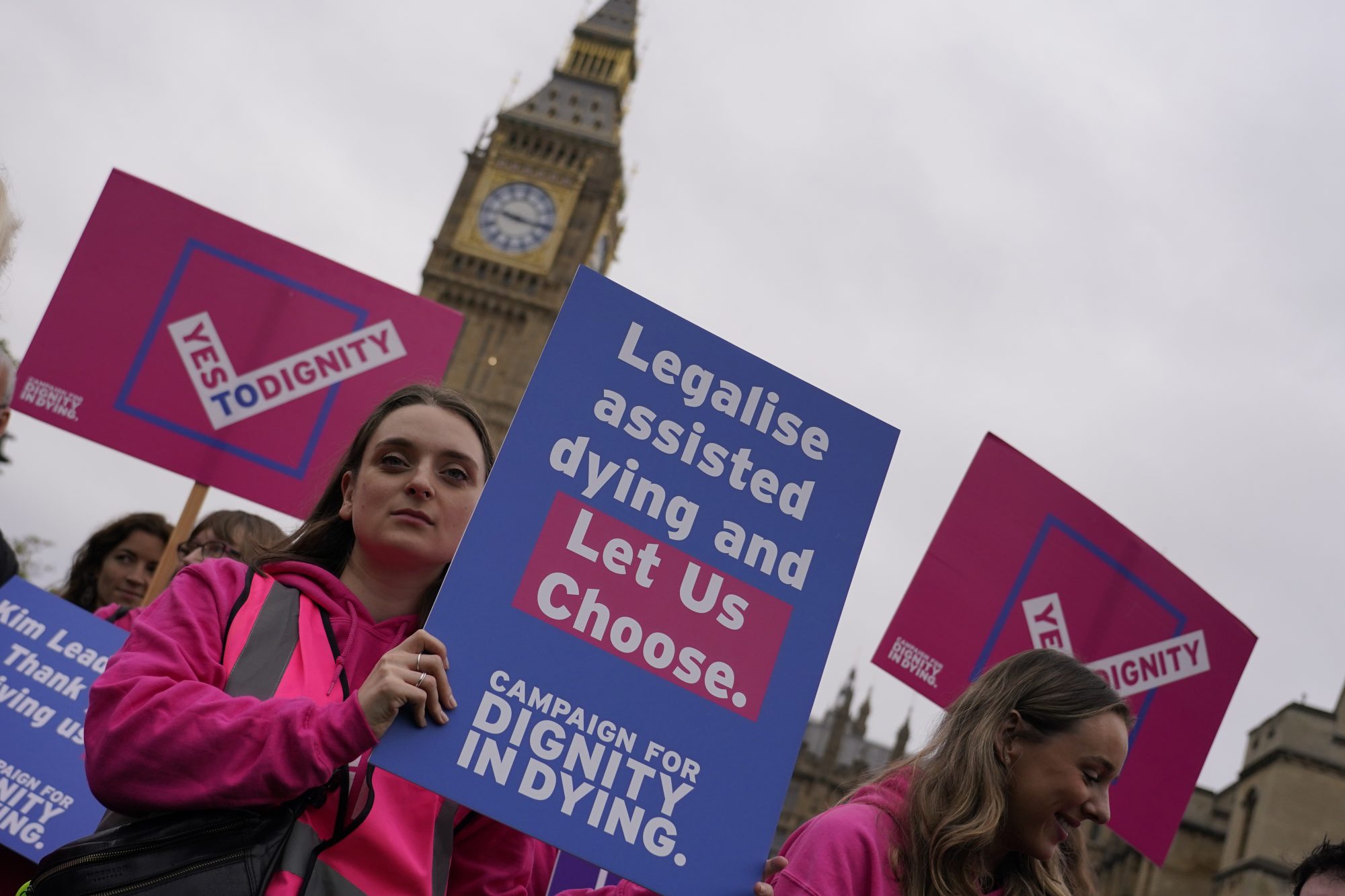
The Terminally Ill Adults (End of Life) bill – more often referred to as the “assisted dying bill” – aimed to allow adults with less than six months to live to “request and be provided with assistance to end their own life”, “subject to safeguards and protections”.
Bills have to pass through the Houses of Commons and Lords in order to become law. The assisted dying bill has been stuck in the Lords for months as peers proposed hundreds of amendments.
The bill has run out of time as we’re now at the end of the parliamentary session, which usually runs for about 12 months and ends in late spring or early summer.
Any bill that’s still making its way through Parliament at the end of the session will be dropped by default.
Governments normally rescue some of their own partially-complete bills at this point and allow them to carry through to the next session without losing their progress.
But as assisted dying is a private members’ bill – brought forward by an individual backbench MP rather than the government – it’s not eligible for that protection.
Has the House of Lords gone beyond its powers?
Supporters of the bill say the hundreds of Lords amendments were designed to destroy the chances of passing legislation in time, while critics argue significant changes would be needed to ensure proper safeguards for vulnerable people.
Campaigners also point to the fact that the elected House of Commons has voted in favour of the legislation. In that context, is it constitutional for the Lords to introduce so many amendments?
We spoke to Jo Murkens, Professor of Law at the London School of Economics, who told FactCheck that the bill’s failure “is constitutionally orthodox, even if politically contentious”.
There are circumstances where the Lords, as the unelected chamber of Parliament, is required to accept the decision of the Commons – for example, when the bill in question is from the government or enacting a manifesto commitment.
But as Professor Murkens explained, “none of the conventions that normally restrain the House of Lords apply here”. Enacting assisted dying was not in Labour’s manifesto, and this bill was brought by an individual backbencher, Kim Leadbeater, not the government.
“In those circumstances,” Professor Murkens told us, “the House of Lords is entitled to subject the proposal to sustained scrutiny, even where that has the practical effect of preventing passage.”
Professor Robert Hazell of University College London’s Constitution Unit agrees that “the failure of the bill was not unconstitutional”.
Is the collapse of the bill undemocratic?
We spoke to constitutional expert Professor Sir Vernon Bogdanor of King’s College London and the University of Oxford. He told FactCheck: “The Lords would say that they have not rejected the bill, but [were] performing their function as a revising chamber.”
Professor Bogdanor points to “medical experts in the Lords” who believe the bill “needs, at the very least, amendment”. He notes that “supporters of assisted dying say that this is an excuse for rejection” and that peers who may want to reject rather than revise the bill slowed down the Lords process with “much longer” speeches.
He points out that “some would say” the fact there was a free vote on the issue in the Commons gives the MPs’ decision “greater weight since [they] were voting as they thought right, and not because of a party whip.”
Though he adds “others would say that the Parliament Acts [which might support the idea that the Lords should step back] were intended to apply only to government bills foreshadowed in a party manifesto.”
Professor Hazell told FactCheck the bill’s failure is “undemocratic”.
He explains his view: “The bill was passed by the House of Commons after serious discussion of the underlying principles and necessary safeguards […] only to be effectively blocked in the Lords by a group of seven peers who moved most of the 1,200 amendments.”
Professor Murkens has a different position.
“Characterising this outcome as ‘undemocratic’ depends on adopting a narrowly majoritarian view of democracy: ‘whatever the elected House of Commons decides should become law’.” (Majoritarian democracy is the idea that the person or issue with a majority of votes behind it carries the day.)
“But,” Professor Murkens continues, “that understanding neither conforms to the UK’s understanding of the constitution or of democracy. The unelected House of Lords is expected to act as a revising and deliberative chamber, and as a constitutional watchdog, if you like, particularly on morally complex questions that Parliament itself treats as matters of conscience rather than popular mandate.”
Could assisted dying still become law?
In order to have a chance of becoming law, the assisted dying bill would have to be proposed again in the next session and start the lengthy process in the Commons and the Lords from scratch.
In theory the government could revive the bill when Parliament reconvenes by reintroducing the policy in a government-proposed bill. But as it’s highly contentious and a matter of conscience, this is unlikely.
Or it could be proposed again as a private members’ bill, but that’s far from straightforward. Private members’ bills are drawn up by individual MPs and have to win a “ballot” of other such bills in order to get parliamentary time.
Assisted dying campaigners say they are looking at using the Parliament Act to bring the bill forward again.
FactCheck verdict
The assisted dying bill has failed after spending months in the House of Lords. Leading experts we spoke to explained that this was entirely in the scope of the Lords’ powers under the constitution. Opinions differ on whether the outcome was democratic.