ICE Agent Admits Possible Mistaken Identity During 10-Hour Vermont Standoff
An Immigration and Customs Enforcement (ICE) agent has been caught on newly released bodycam footage admitting he was uncertain of his target's identity during a marathon 10-hour standoff that paralysed a Vermont neighbourhood.The high-stakes confrontation in South Burlington escalated into a bitter institutional row, with local police commanders and state officials pleading with federal agents to stand down to avoid a potential bloodbath.The footage, part of a massive 100-hour evidence dump, shows Officer Colton Riley shrugging off his inability to name the suspect, stating, 'Assuming that's him, it doesn't matter.'The operation, sparked by a reported vehicle collision involving an Immigration and Customs Enforcement car, drew hundreds of protesters and triggered a total breakdown in inter-agency cooperation.Vermont's Public Safety Commissioner has since blasted the federal response, describing it as being 'out of alignment' with modern policing standards and warned of a permanent erosion of community trust.As the ICE mistaken identity footage goes viral, the incident is being held up as a chilling example of the friction between federal enforcement mandates and local public safety concerns.
ICE Agent Under Fire After Admitting UncertaintyThe tension in South Burlington reached a breaking point as local officers realised the federal agents on the scene were operating with a startling lack of specific intelligence.When pressed by local police for the suspect's name, Officer Riley's admission of ignorance became a central point of the South Burlington ICE standoff controversy.In the clip, a police officer asks a simple question, 'What's the male's name?' Riley, replies only, 'Um.'He then appears to shrug off the significance of that knowledge gap. 'Assuming that's him, it doesn't matter at this point, but I don't really care. It doesn't matter,' Riley says on camera.That exchange is doing the rounds in Vermont precisely because it undercuts the confidence with which the operation was being pushed forward. ICE officials had already been warned by local and state agencies to pause or delay their plans. According to a Vermont State Police report, those agencies quickly concluded that the unfolding scene outside the house was 'a serious public safety risk.'
On the ground in South Burlington, the tone between the ICE agent and local police commanders was often tense. In another bodycam segment, South Burlington Deputy Police Chief Sean Briscoe presses ICE Supervising Agent David Johnston for some sense of proportion.'We're getting a warrant, and we're gonna f------ enforce the warrant,' Johnston answers, clearly angry. 'We're going to f------ take those dudes.'Briscoe tries again, asking, 'At what point does it become not worth it for one person?'Johnston's reply is blunt, 'When my management says it's not. They hit our guys and f---ing run.'A second, unnamed ICE agent chimes in with a warning of his own, 'We're getting them today. There's no question about it. And I think you would feel the same way if they hit one of your guys.'
When Briscoe explains he is 'just asking a question,' the ICE agent snaps back, 'It sounds like you're on their side.' Briscoe answers, 'I'm not on their side. I'm just trying to make sure this s--t doesn't escalate. That's all.'Nothing in the released report confirms the identity of the man in the house or whether ICE ultimately apprehended him.Local Police Clash With ICE Agent Over Safety FearsVermont State Police records describe how, at the height of the stand‑off, an unnamed ICE supervisor contacted an official in Washington, D.C., and put them on speakerphone.The plan approved on that call involved ICE officers entering the residence as soon as they had a signed warrant, carrying an 'inventory' of 'less‑lethal' tools, including gas and projectiles. To Vermont officials on scene, that approach appeared out of step with the mood on the street, where protesters and neighbours were already crowding around the property and shouting at officers.State police wrote that Vermont agencies 'immediately determined that this plan presented an unacceptable public safety risk.' They even considered 'disengaging completely' from the joint operation. In the end, they decided they were 'compelled to remain involved,' a phrase that captures the uncomfortable position of trying to contain an operation they did not control.
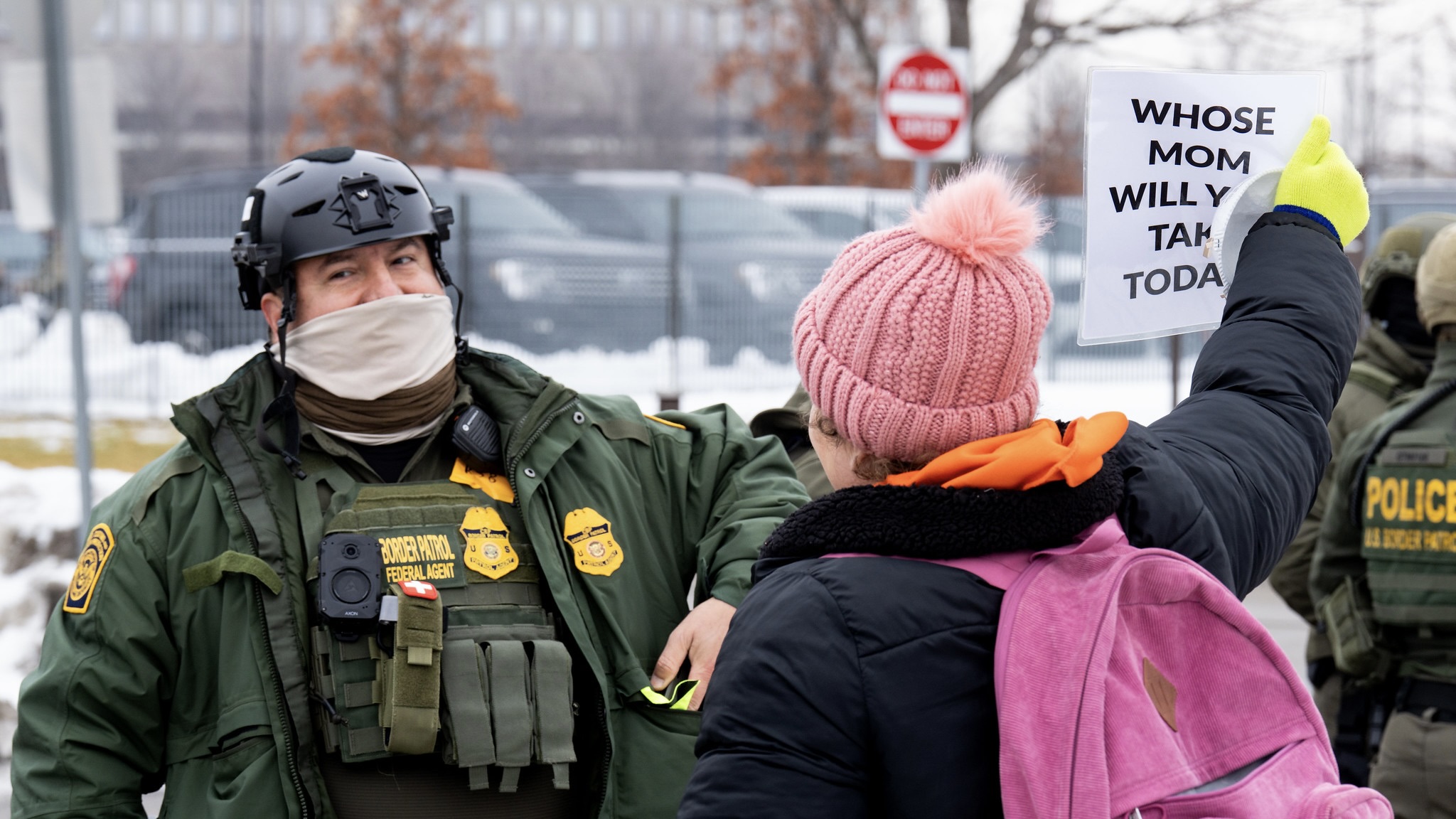
The fallout has reached the top of Vermont's public safety apparatus. Public Safety Commissioner Jennifer Morrison did not disguise her frustration in the official report. She wrote that she had 'never witnessed a multi‑agency operation in which one agency is so far out of alignment with others.'In her view, the consequences go beyond one fraught day in South Burlington. 'The resulting erosion of confidence threatens to undo years of progress in community relations, placing all officers, regardless of agency, into a more volatile and distrustful environment going forward,' Morrison warned.On the streets outside the house, the operation was even messier. Protesters allege that local and state officers used excessive force as the hours dragged on and tempers frayed. Vermont State Police push back on that, saying in their report that troopers used only the 'necessary pushing, pulling, and restraining of individuals.'
What the videos do show is a convergence of pressures that has become familiar in the immigration enforcement debate: federal ICE agents determined to finish an operation, local police trying, not always successfully, to limit the damage, and a crowd convinced that harm is being done in their name.The added twist here is the ICE agent admitting, on tape, that he could not name the man he was trying to pull out of a house, while at the same time insisting that nothing would stop him from 'getting them today.'The South Burlington standoff serves as a stark warning of the volatility inherent in federal-local partnerships when goals differ. While ICE remains determined to enforce federal warrants, local agencies are increasingly wary of the fallout from high-profile, confrontational tactics in their communities.Whether the ICE agent's mistaken identity admission leads to policy changes remains to be seen. For now, the town of South Burlington is left to pick up the pieces of a fractured relationship between its citizens and the officers sworn to protect them.