Tech Bytes: DroneShield rides defence tailwinds, but market still weighing the next phase
A surge on defence policy optimism quickly ran into a reality check for DroneShield Ltd (ASX:DRO, OTC:DRSHF) this week, with shares pulling back even as the company delivered strong quarterly growth.
Shares in the counter-drone specialist jumped more than 5% yesterday after the Albanese government flagged plans to invest up to $7 billion in defence spending on counter-drone capabilities. But that momentum proved short-lived. Despite delivering strong quarterly numbers, the stock slipped in Wednesday afternoon trading after an initial boost, leaving it modestly higher over the past week and up roughly 12% year-to-date — a reminder that, for all the thematic upside, investors are increasingly focused on execution and delivery.
A policy tailwind — but not a contract (yet)
The government announcement itself didn’t name DroneShield. Instead, initial contracts were awarded to AIM Defence and SYPAQ Systems under the ASCA Mission Syracuse program.
Still, there was a clear broader message that counter-drone capability is moving up the priority list, fast.
Recent conflicts — from Ukraine to the Middle East — have shown how quickly relatively low-cost drones can reshape battlefields. The response is a parallel arms race in detection, jamming and interception systems, where software, sensors and electronic warfare increasingly matter as much as traditional hardware.
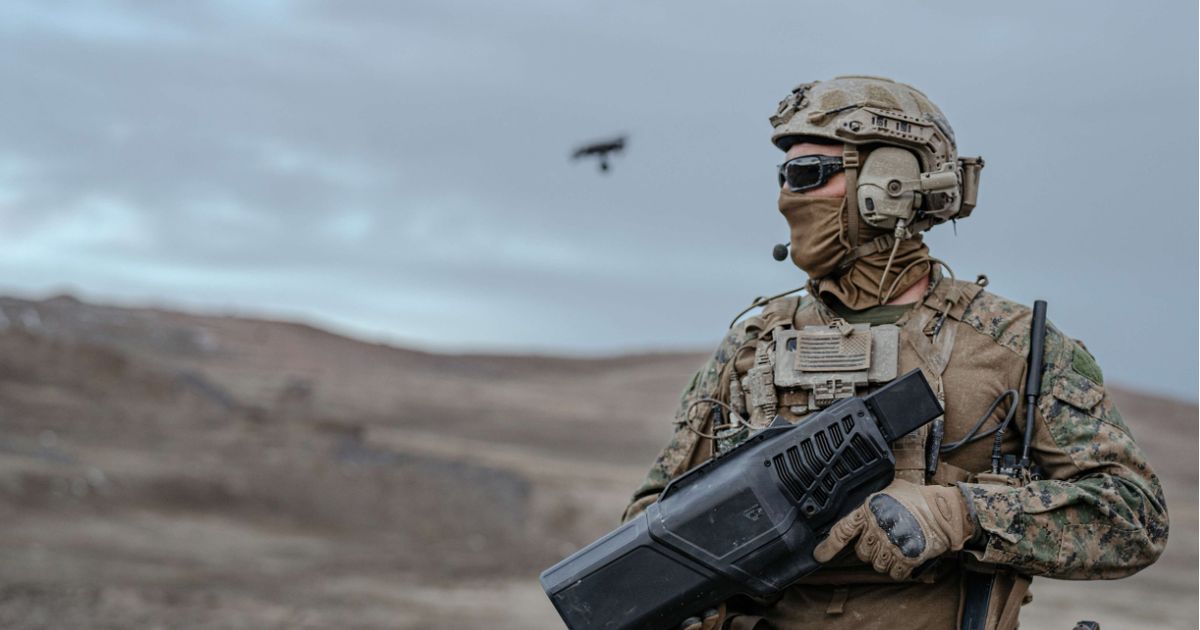
DroneShield has spent years positioning for that shift. Its systems span handheld jammers, fixed-site detection networks and AI-enabled command-and-control platforms, aimed at military, law enforcement and critical infrastructure customers.
The policy direction reinforces the addressable market. But it doesn’t automatically translate into revenue — at least not immediately.
Strong numbers, with momentum carrying through
If the macro backdrop is doing some of the heavy lifting for the share price, the latest quarterly shows the business itself is also gaining traction.
DroneShield delivered:
Revenue of $74.1 million, up 121% year-on-year
Record customer cash receipts of $77.4 million, up 360%
Net operating cash flow of $24.1 million, marking a fourth straight positive quarter
Cash balance of $222.8 million, with no debt
Those figures place the March quarter as the company’s second-best on record for revenue, behind a standout period in late 2025.
There was also a notable uptick in software contribution. SaaS revenue climbed to $5.1 million, now around 6.9% of total revenue, as the company pushes towards a longer-term goal of lifting recurring revenue closer to 30% of the mix.
Hardware sales can be lumpy and tied to contract timing, while software — particularly in defence and security — tends to embed deeper into customer operations.
Pipeline points to scale — eventually
Beyond the headline numbers, the longer-term story still hinges on conversion.
DroneShield is sitting on a reported $2.2 billion sales pipeline across more than 300 projects, spanning military and civilian applications globally. The company has also flagged a steady flow of smaller orders — below the $20 million disclosure threshold — helping to build committed revenue early in FY26.
So far, that’s translating into tangible progress. Committed revenue for FY26 has already reached $154.8 million, well ahead of the same point last year.
But the key question remains how quickly — and consistently — that pipeline turns into booked revenue, especially as larger, more complex defence contracts tend to move on longer timelines.
The geopolitics factor
If there’s a single variable that cuts across both the share price and the fundamentals, it’s geopolitics.
Demand for counter-drone systems isn’t being driven by consumer cycles or enterprise IT budgets. It’s being shaped by conflict, defence spending priorities and evolving threat perceptions.
That creates a powerful tailwind, but also a degree of unpredictability.
Escalations, including ongoing tensions involving Iran and broader Middle East dynamics, continue to reinforce the strategic importance of drone and counter-drone capabilities. Each shift in that landscape can sharpen urgency for governments and agencies to accelerate procurement.
At the same time, markets tend to price those expectations quickly — sometimes ahead of actual contract flow.
Between momentum and expectations
DroneShield’s recent trading captures that tension.
On one hand, the company is delivering rapid revenue growth, improving cash flow and building a substantial pipeline in a sector with clear structural demand.
On the other, the share price reaction suggests investors are becoming more selective — rewarding strong updates, but also quick to reassess when the narrative runs ahead of near-term delivery.
For now, the direction of travel is clear: defence spending is rising, drone threats are evolving, and counter-drone technology is moving from niche to necessity. The next phase for DroneShield is less about proving the market exists than about showing it can consistently convert that opportunity into sustained, scalable revenue.