The Unfading Mirage of Negotiation - International Centre for Defence and Security
For more than four years, the spectre of negotiation in Russia’s full-scale war against Ukraine has hovered persistently over the reality of war itself.
The year before the war, President Biden was determined to engage Putin in wide-ranging efforts to maintain ‘stability’. Even at the June 2021 summit, he sought to ensure that Ukraine would not overshadow other issues that to him were deemed more important. Only gradually did the focus shift to the diminishing possibility of heading off war. As we noted at the time, Biden displayed no understanding of how to deter war. Instead, he tried to persuade Russia not to embark on it, which is a very different thing, and at that, he failed.[1]
By late 2022, the signature policy of the Biden administration was, in the words of National Security Advisor Jake Sullivan, to “put Ukraine in the best possible position on the battlefield in order to be in the best position at the negotiating table.”[2] Nevertheless, the US did not play a visible role in the one substantive series of negotiations that took place that year—in Belarus and Turkey between February and April 2022. These were bilateral Russia–Ukraine negotiations, whose substance and course, to this day, are sharply contested.[3] For the balance of Biden’s presidency, US aims were never defined beyond ‘supporting Ukraine as long as it takes’. The term ‘victory’ was all but taboo. Hence our sobriquet: the fear of victory.[4]
It was not Joseph Biden but the re-elected Donald Trump who has given negotiation its aura of urgency, interspersed with linkages, ultimata, suspensions of US military assistance and, on Europe’s part, damage-limitation exercises. Beginning with the 18 February US-Russian meeting in Riyadh, a bewildering variety of meetings and negotiations have taken place in bilateral, trilateral, and multilateral formats—some relatively transparent, more of them opaque—at none of which Europe was invited to the same table as the United States and Russia. In parallel, a number of plans for ending the war have been produced. Although those searching for commonalities amongst these drafts will find them, they are, in the main, a record of the deep incompatibilities between the objectives of the respective sides. Fifteen months after Trump vowed to end the war “in 24 hours,” it is difficult to avoid concluding that we find ourselves largely where we began.
Fifteen months after Trump vowed to end the war “in 24 hours,” it is difficult to avoid concluding that we find ourselves largely where we began.
In 2023, Chatham House identified “all wars end at the negotiating table” as the first of eight fallacies about the war.[5] So far, this fallacy has not been disproved. It has a long pedigree. In most liberal political orders, peace and war are regarded as antithetical entities, and negotiation is widely equated with the search for compromise and agreement. But in the Clausewitzian-Leninist tradition, which Putin has inherited and refurbished, peace and war are regarded as complementary; negotiation, like war, is seen as a tool of policy. To Lenin, negotiation represented nothing more than the “continuation of war in a different sphere.”[6] The prerequisites for peace that Vladimir Putin set out in 2021, together with the emphasis on the conflict’s “root causes,” continue to be reiterated by Moscow despite hopeful and dogmatic insistence in Washington that the critical issues are territorial.
Ukraine is no stranger to Russian and Soviet tradition and practice. Until now, the priority assigned to negotiation by President Zelensky has owed more to the requirements of Trump management—and the hoped-for provision of US security guarantees—than the resolution of the war with Russia, which most Ukrainian decision-makers believe will take place on the battlefield, if at all.
A Positive Turn?
On 4 April, Ukraine’s top negotiator (and Head of the Presidential Office), Kyrylo Budanov, gave an interview to Bloomberg that has rightly turned heads. In his estimation, talks with Russia are rapidly evolving towards a settlement. “They [the Russians] all understand that the war needs to end…. It will not be long.”[7] Set against the parameters of conflict and diplomacy presented above, these are astonishing statements.
Although Budanov has generally taken a robustly optimistic position about the course of the war, he is the last person who can be accused of softness towards the adversary. Between 2020 and January 2026, as head of Ukraine’s Military Intelligence Directorate (GUR), he devised some of the most daring and devastating special operations against Russia’s forces, not only on the battlefield but in the deep rear of the country. But his qualities of political acumen are comparatively untested, and they merit a dose of agnosticism.
To give them their due, Budanov’s comments derive plausibility from four recent points of context:
The Russian Armed Forces are losing their capacity to conduct offensive ground operations in Ukraine. Even though the spring offensive has not been abandoned, it has failed. Forced into a choice, Russia has given priority to maintaining the offensive rather than repelling Ukrainian counterattacks. Despite this, it has made no progress. Add to this equation the expansion of Ukrainian missile and drone strikes against Russian energy infrastructure, as well as command centres and logistical nodes at operational-tactical depth. According to the Institute for the Study of War, “Russia does not appear to have fully developed or deployed mobile fire teams, drone interceptors, or other low-cost distributable systems to defend against repeated massed Ukrainian drone strikes.” According to its governor, Leningrad Oblast has become a “frontline oblast.”[8] Without a significant change in strategy or policy—e.g., general mobilisation—Russia’s army is unlikely to regain its ability to shape the battlefield. As long ago as February, analysts at Kyiv’s Centre for Defence Strategies forecast that such a train of events might create opportunities to end the war.
The Russian Armed Forces are losing their capacity to conduct offensive ground operations in Ukraine.
Ukraine’s strikes against the ports of Ust Luga and Primorsk—accounting for over 40% of Russia’s oil exports—have reduced its Iran war windfall by two-thirds.[9] If these facilities are not brought back online and secured against future attacks, Russia’s export prospects will also be damaged over the longer term.
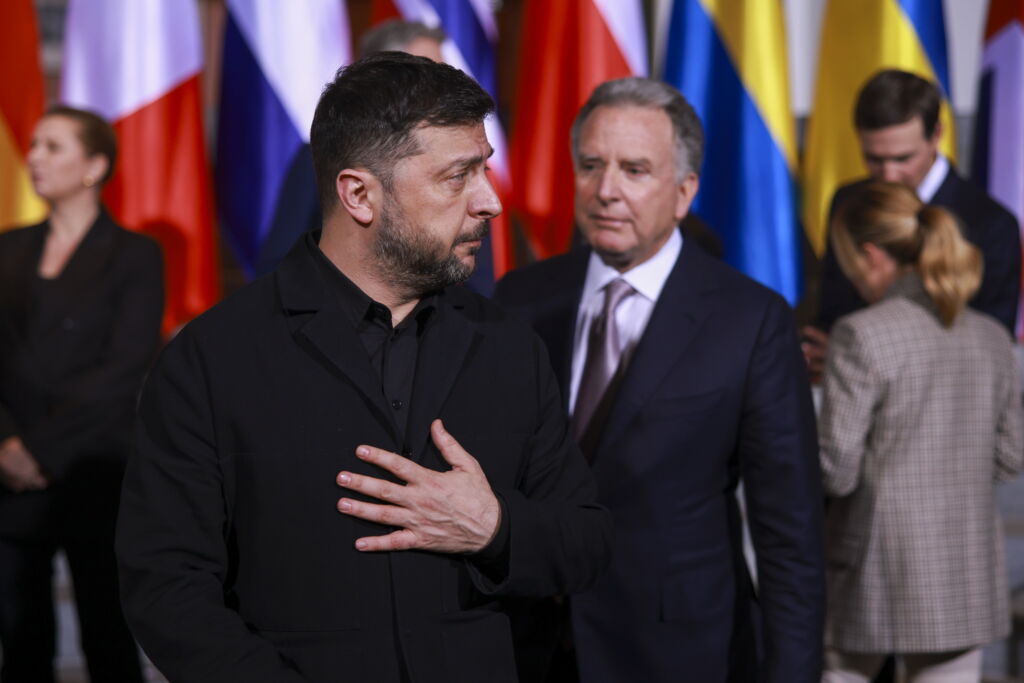
Zelensky is drawing conclusions from his own failure to incentivise the US to be an effective partner. In 2025, the volume of directly financed US military assistance to Ukraine dropped by 99%.[10] Although Europe fully compensated for that, the proportion of its assistance financed through the Priority Ukraine Requirements List (PURL) has now fallen as US weapons are prioritised for the Iran war. About this change, the Pentagon has been unapologetic, if not pugnacious, and Vice President J.D. Vance has stated that cutting off weapons to Ukraine is “one of the things I am proudest that we have done.”[11] The Trump administration’s publicly dismissive comments regarding Ukraine’s assistance to Gulf air defence—which has significantly raised Ukraine’s profile in Saudi Arabia and elsewhere—and US suspension of sanctions against Russian oil exports are also noted in Kyiv. On 9 April, Zelensky pointedly asked:
If sanctions on Russian oil have been lifted because of the war in the Middle East, will the US sanctions now be reimposed because there is a cease-fire?
A second statement by Zelensky referred to pressure from unnamed partners to halt strikes against Russian energy infrastructure. Following up, Budanov stated:
They can be understood—it’s their truth. But there is also our truth and our national interest. And it is exactly what it is. We are not stopping.
Increasingly, Zelensky’s conclusions are underpinned not only by realism but by confidence. According to Deputy Defence Minister Serhiy Boev, “‘unmanned technologies have become the basis of asymmetric defence.” Drones are no longer being produced by startups in garages but by factories and at scale. Ukraine expects to manufacture 7 mn of them in 2026, half of this covered by its own budget and the remainder by European security assistance.[12] On 14 April, Ukraine concluded two substantial defence cooperation agreements: with Germany covering “various types of drones, missiles, software and modern defence systems,” valued at $4.7 bn, and with Norway for $8.6 bn, as part of a $28 bn package of support to 2030.[13] Germany, which will be producing its own Patriot PAC-2 missiles by 2028, has also signed contracts for “several hundred” PAC-2s from Raytheon, an unspecified portion of which (along with indigenous German IRIS-T systems) will go to Ukraine, whose air defence needs remain chronic. The expected unblocking of the EU’s €92 bn loan to Ukraine by Péter Magyar adds further ballast to these efforts.
Mirage and Substance
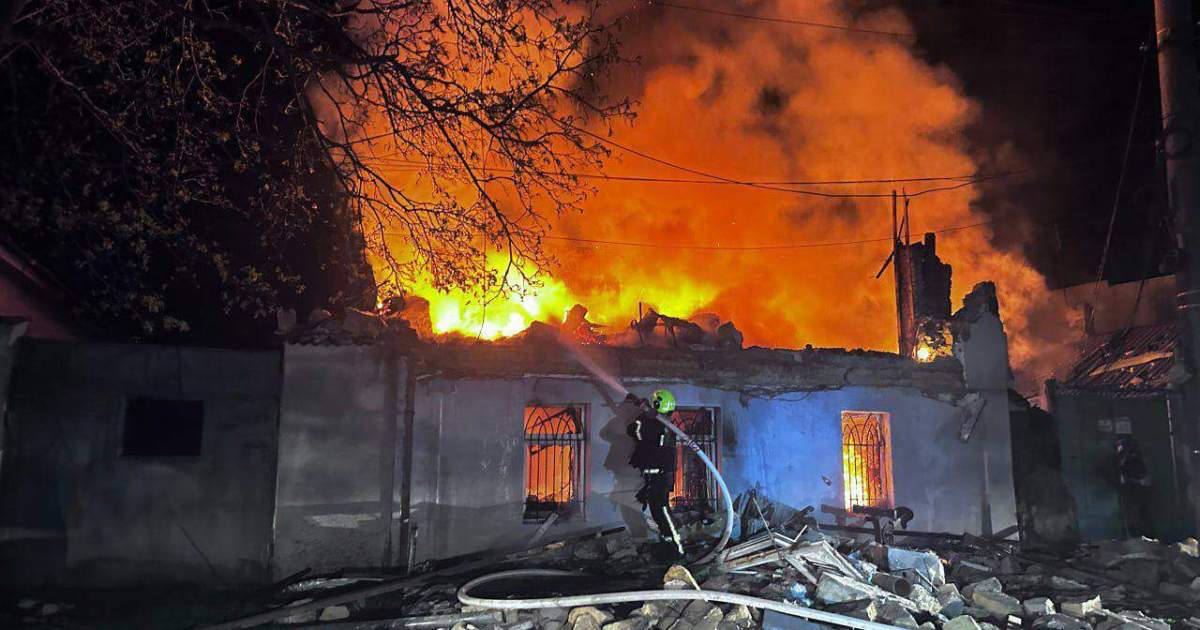
When it comes to the war, it is Budanov’s business to know more than we do. But the fact is that the claims he advances in his Bloomberg interview are unsupported by publicly available evidence. There is no visible sign that Russia is reconsidering its fundamental aims or abandoning its commitment to the war. The latest drone and missile attacks on Ukraine’s civilian population and infrastructure, unprecedented in intensity and destructiveness even by Russian standards, might be the prelude to serious peace proposals. Or they might simply be the latest example of doubling down in response to failure.
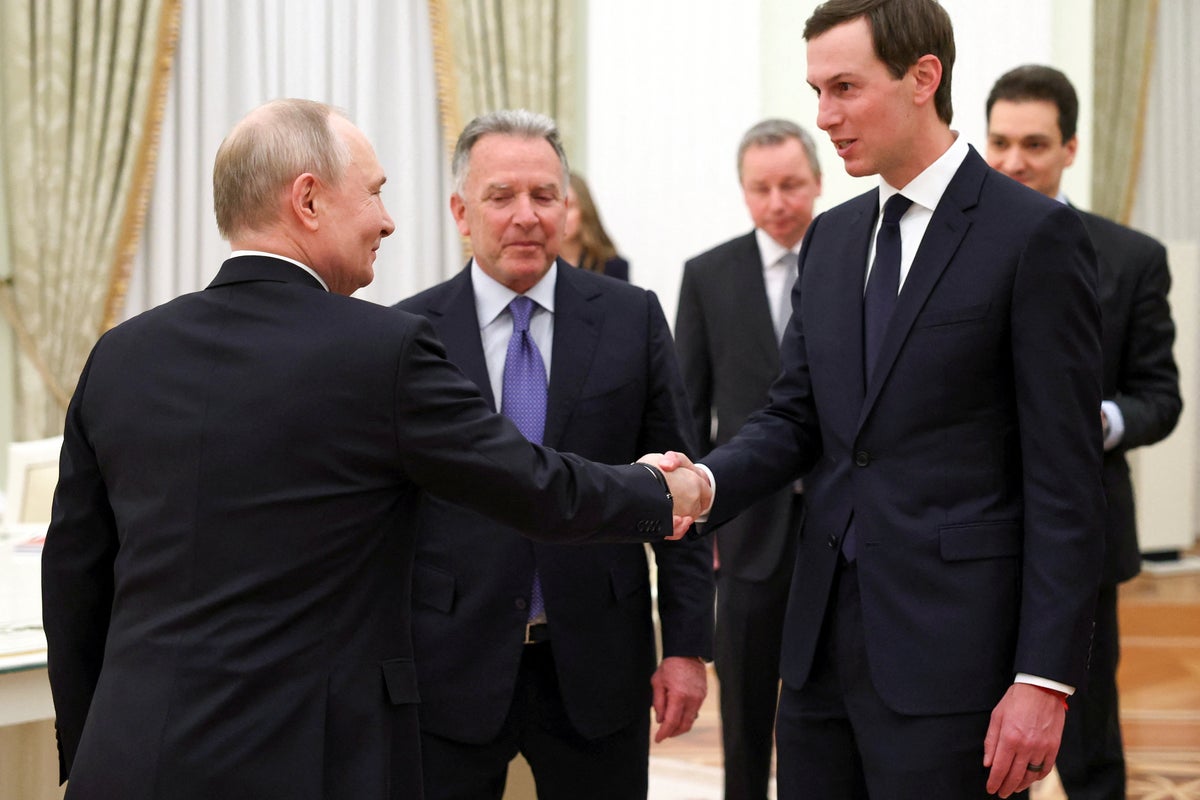
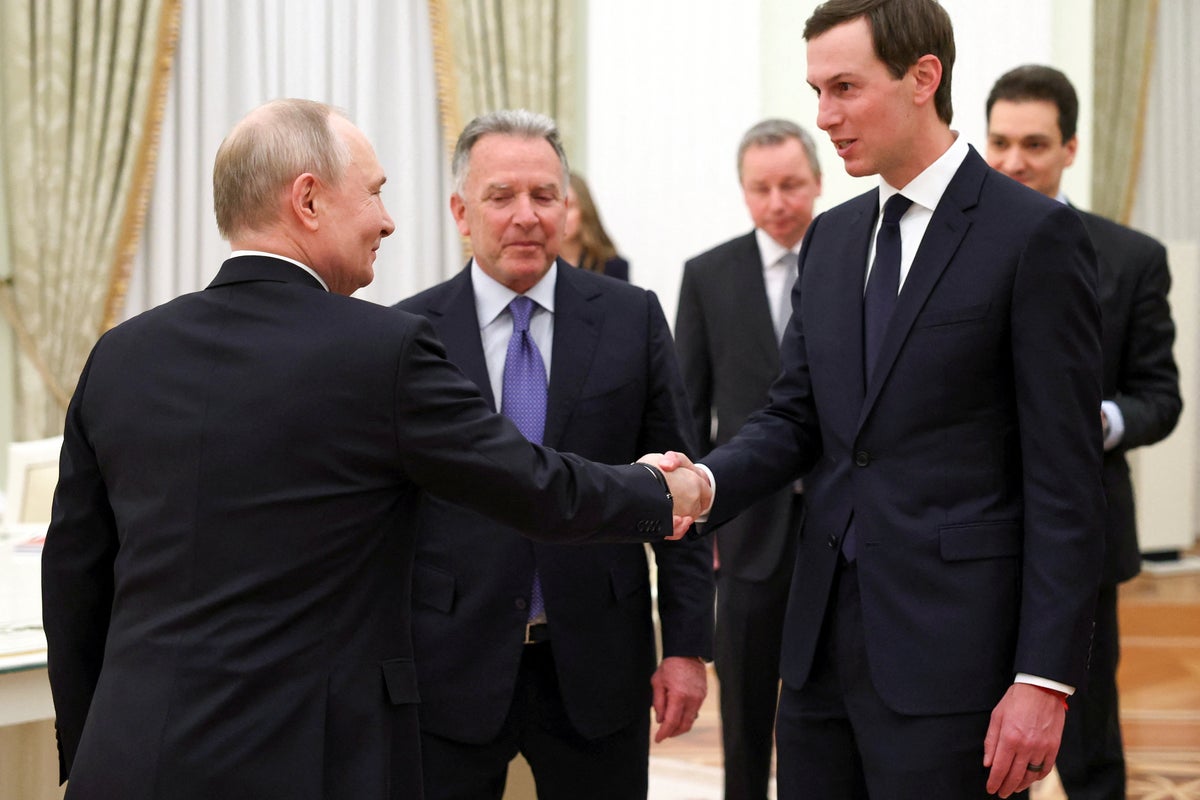
What is less conjectural is that the US commitment to negotiations, once avidly sought in Kyiv, is increasingly viewed with scepticism. It is, in any event, put in doubt by the Iran war, thanks to which the much-anticipated Witkoff-Kushner visit to Kyiv has been postponed. The prospect of the US granting security guarantees to Ukraine, and the value of such guarantees, also arouses greater scepticism in Ukraine than it did several months ago.
The balance of interests suggests that the war is entering a new phase rather than ending.
In the fullness of time, Russia might sue for peace. But it is not doing so yet, and by its own logic, it has no reason to. Its structurally flawed economy is struggling, but it is not collapsing. Despite the damage that Ukraine has inflicted on its oil exports, Russia is profiting from the Iran war, and the west plainly is not. Opinion polls are more critical of Putin than they were one year ago, but they are far from alarming. There are few signs of dissension in the elite, let alone the intelligence and security organs; the country is broadly stable in its grumbling way, soldiers earn good money, and the army secures its needs in Ukraine through plunder. Putin has good reason not to bring these armed plunderers home to Russia. At some point, he might decide that a ceasefire will provide a respite for the reconstitution of Russian military capacity and disincentives to the west to respond in the same vein. In ideological struggle as well as judo, a retreat on one front is usually followed by advance on another. A ceasefire will also provide further dubious triumphs for President Trump, as well as encouragement to the community of hope in the west, which will be more inclined to exploit the opportunity than take actions that could ‘provoke’ Russia. All of this is eminently possible, but for now it is speculation.
The balance of interests suggests that the war is entering a new phase rather than ending. In these circumstances, Ukraine will be best off maintaining its present course: shifting reliance to itself along with European partners genuinely interested in helping rather than constraining it. Ukraine has become a formidable opponent of Russia, and it will remain one. It is also becoming a security provider to Europe, and as this realisation grows, Europe will become stronger.
[1] “How to Maintain Ukraine’s Security in a Trumpian World,” in George Spencer Terry (ed), Strategic Pathways to Ending the Russo-Ukrainian War (Baltic Defence College, 2024), 85-86.
[2] Cited in Constanze Stelzenmüller, “The West’s axis of prudence risks a Kremlin victory by default in Ukraine,”
Financial Times, 20 December 2022, https://www.ft.com/content/7ae8433c-c8c3-4e34-b555-9c1548bcd4cb.
[3] Samuel Charap and Sergey Radchenko, “The Talks That Could Have Ended the War in Ukraine,” Foreign Affairs, 16 April 2024, https://www.foreignaffairs.com/ukraine/talks-could-have-ended-war-ukraine; Contrast this with the account (in Russian) of Polish presidential adviser Jacob Kumoch, who was asked to shadow the negotiations: Martsin Kendyna, “Действительно ли мир был близко? Закулуисье переговоров России и Украины [Was Peace Really Close? Behind the scenes negotiations between Russia and Ukraine],” Novaya Polsha, 23 May 2024, https://novayapolsha.eu/article/deistvitelno-li-mir-byl-blizko-zakulise-peregovorov-rossii-i-ukrainy-v-2022?.
[4] James Sherr, “The Fear of Victory,” ICDS, 21 April 2022, https://icds.ee/en/the-fear-of-victory/.
[5] James Sherr, “Settle now: all wars end at the negotiating table,” in Timothy Ash et al, How to end Russia’s War on Ukraine (Chatham House, June 2023), 12-15.
[6] Cited in James Sherr, “The Future of Russia: The Relationship between External and Internal Change,” ICDS, 13 November 2025. For a recent study, see Iulia Osmolovska, Donald N Jensen, and Graeme P Herd, How the Kremlin Negotiates (George C Marshall Center for Security Studies, July 2025), https://www.marshallcenter.org/sites/default/files/files/2025-09/ct25-03_how-the-kremlin-negotiates_july2025.pdf.
[7] “Zelenskiy’s Top Aide Sees Ukraine Nearing a Deal With Putin,” Bloomberg 10 April 2026, https://www.bloomberg.com/news/articles/2026-04-10/zelenskiy-s-top-aide-sees-ukraine-nearing-a-deal-with-putin; For an updated and unpaywalled analysis, see “Budanov Says War Could End as Soon as US Envoys Might Visit Kyiv Next Week,” Kyiv Post, 10 April 2026.
[8] “Russia’s Leningrad Region Shot Down 243 Ukrainian Drones in the First 3 Months of 2026, Governor Says,” Meduza, 15 April 2026, https://meduza.io/en/news/2026/04/15/russia-s-leningrad-region-shot-down-243-ukrainian-drones-in-the-first-3-months-of-2026-governor-says.
[9] “The Kremlin’s Baltic Hormuz: Ukrainian attacks on Russian ports cut Russia’s gains from the Iranian oil crisis by two thirds,” Re:Russia, 7 April 2026, https://re-russia.net/en/analytics/0412/.
[10] Christoph Trebesch, Taro Nishikawa, “Ukraine Steps Up After Four Years of War,” Kiel Policy Brief No 203 (February 2026), https://www.kielinstitut.de/fileadmin/Dateiverwaltung/IfW-Publications/fis-import/dd24a73f-4270-46c5-9c40-bcc9df4f1672-KPB2023_EN.pdf .
[11] See: Elbridge Colby’s comments at the 17 April Ukraine Defence Requirements Contact Group, Chris Lunday, “Pentagon says Ukraine support cannot rely on US contributions,” Politico, 17 April 2026, https://www.politico.eu/article/pentagon-says-ukraine-support-cant-rely-us-american-contributions/ .
[12] Taras Safronov, “Ukraine Plans to Produce over 7 million drones in 2026,” Militarnyi, 18 April 2026, https://militarnyi.com/en/news/ukraine-plans-to-produce-over-7-million-drones-in-2026/ .
[13] “Ukraine strikes drone production, military support deal with Germany,” Al Jazeera, 14 April 2026, https://www.aljazeera.com/news/2026/4/14/ukraine-strikes-drone-production-deal-with-germany; “Ukraine and Norway Sign Major Drone Deal,” Kyiv Post, 14 April 2026, https://www.kyivpost.com/post/73943.