Skin Cancer Awareness: How well do you know your skin?
As Skin Cancer Awareness Month approaches this May, SkinScan Ireland and Waterford-based GP Dr David Brennan are encouraging people across Ireland to take a more proactive approach to protecting their skin.
Skin cancer is now the most common form of cancer in Ireland, but it is also one of the most preventable.
According to the HSE, there are two main types of skin cancer: melanoma skin cancer and non-melanoma skin cancer. Melanoma skin cancer is much less common than non-melanoma skin cancer, but it has become more common in Ireland in recent years.
Most melanomas are caused by exposure to ultraviolet (UV) light from the sun or a sunbed. However, certain things can increase your chances of developing melanoma, such as having:
lots of moles or freckles
pale white skin that burns easily and never tans
red or blonde hair
a close family member who has had melanoma
Study your skin
To keep on top of your skin health, Dr Brennan suggests building simple, consistent habits around awareness and sun protection, noting that small changes in behaviour can have a significant long-term impact.
Regular self-examination plays a central role in early detection. Become familiar with your own skin and keep an eye out for any new moles or lesions, as well as changes in existing ones. Subtle shifts in size, shape, colour, or texture can be early indicators of concern.
"Early diagnosis is extremely important as it can facilitate timely treatment and improve outcomes," says Dr Brennan. "People often underestimate the significance of small changes in their skin or assume that Ireland's climate reduces their risk, which is not the case.
"By checking your skin regularly, protecting yourself from UV exposure, and seeking professional advice when something changes, you are taking control of your long-term health. These are simple steps, but they can make a life-saving difference."
Mind your moles
If you are worried about any moles or skin changes, contact your GP. Do not wait for symptoms such as pain or discomfort before seeking advice.
Signs to look out for include a mole that is:
getting bigger
changing shape
changing colour
bleeding or becoming crusty
itchy or sore
Melanomas can develop anywhere on your body, but they most often appear on a man's back or a woman's legs. They can also develop under a nail, on the sole of your foot, in your mouth or in your genital area, but these types of melanomas are rare.
The ABCDE checklist can help you tell the difference between a normal mole and a melanoma.
A: Asymmetrical - Melanomas are asymmetrical, meaning that they have two very different halves and are an irregular shape.
B: Border - Melanomas have a notched or ragged border.
C: Colours - Melanomas will be a mix of two or more colours.
D: Diameter - Melanomas are larger than 6mm wide.
E: Evolving - Normal moles do not change. Melanoma moles often change over time. They can change size, shape and colour. They can also become raised and crusty.
Skin safe habits
Awareness of ultraviolet exposure is critical to protecting your skin. In Ireland, it's easy to think that our cloudy weather and bouts of rain keep us from skin damage, but this is not the case.
Harmful UV radiation can penetrate cloud cover and contribute to cumulative skin damage throughout the year.
Dr Brennan advises that people should pay attention to the daily UV index and adopt protective measures when levels are moderate or high:
Wear broad-spectrum sunscreen
Wearing protective clothing
Seek shade during peak daylight hours.
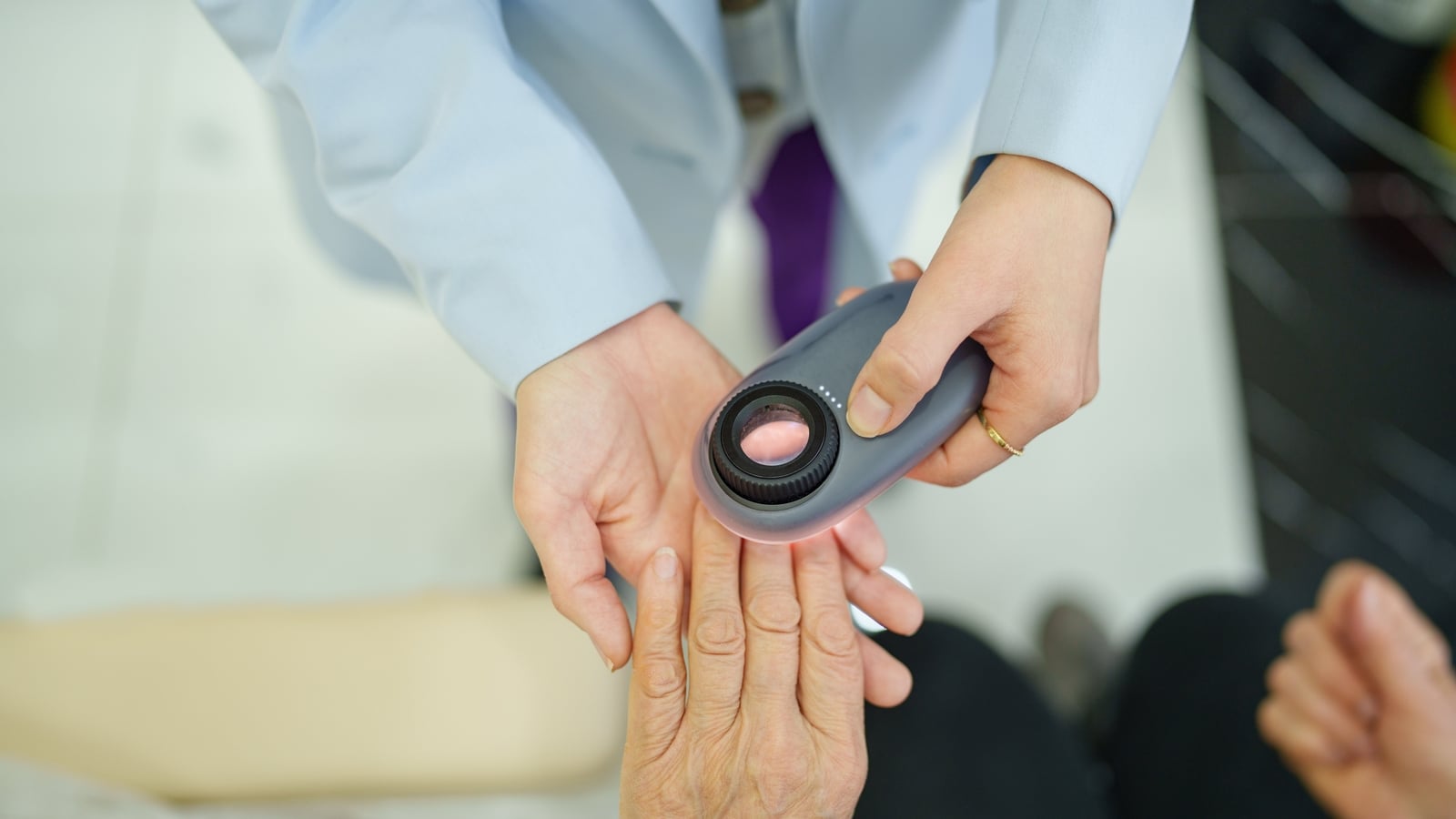
He also stresses that professional skin assessments are an important complement to self-checking. Advances in dermoscopy and digital mole mapping now allow for highly detailed examination of the skin, enabling clinicians to identify subtle changes that may not be visible to the untrained eye.
The key actions Dr Brennan is encouraging people to take are:
Check your skin regularly and become familiar with what is normal for you.
Take note of any new or changing moles or lesions and do not ignore them.
Wear sunscreen daily and protect your skin when UV levels are elevated.
Reduce UV exposure by seeking shade and wearing protective clothing.
Seek professional advice promptly if you notice anything unusual.
For more information on skin cancer, visit HSE.ie.