Why footballers fear Achilles tendon ruptures more than any other injury
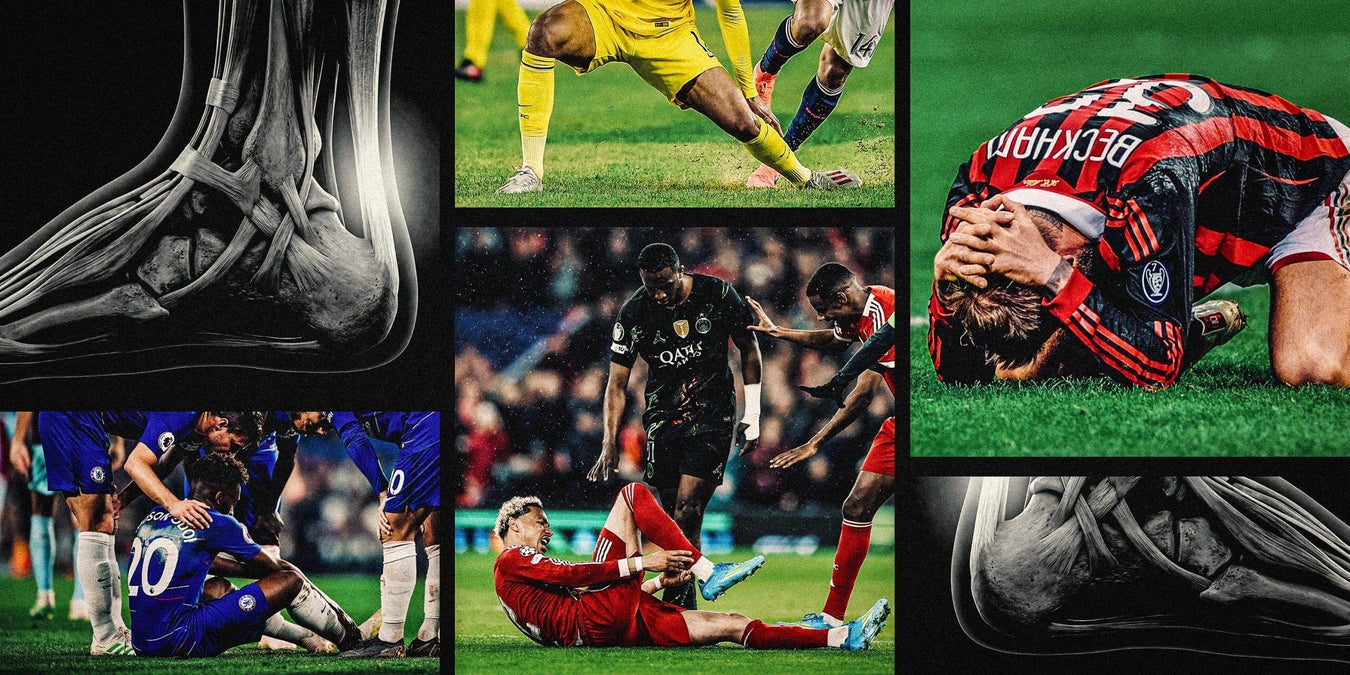
It comes out of nowhere. Like being hit by a sniper. Some people even recall hearing a loud pop, like the sound from a gunshot. Others simply feel it, a sudden, intense pain in the back of their lower leg as their Achilles snaps in two.For Hugo Ekitike, it came, as they often do, in the most innocuous of circumstances. An attempted change of direction, pushing off with his right foot and then, bang. The Liverpool striker crumpled to the turf, believing he had been kicked from behind — surely, a blatant foul from a Paris Saint-Germain defender. When Ekitike rolled over onto his back, he realised that there was no one there.By Thursday morning, the full extent of his injury was confirmed by Liverpool in a statement: a rupture of the Achilles tendon, spelling the end of Ekitike’s season, and of the 23-year-old’s dreams of playing in his first World Cup for France this summer.“The Achilles injury has become the worst injury in football,” said Talksport presenter and former Tottenham Hotspur midfielder Jamie O’Hara, the morning after Ekitike went down during the first half of Liverpool’s Champions League quarter-final second leg against Paris Saint-Germain. “With an ACL (anterior cruciate ligament injury), it feels like you can get back from that — what the surgeons do is incredible. But if you snap your Achilles tendon, it’s a long road back. And you’re a different footballer when you come back.”What makes it such a challenging injury? It partly comes down to the complex nature of the Achilles itself, says Luke Anthony, clinical director of GoPerform and former injury prevention specialist at Norwich City. He explains that the tendon, which connects the calf muscle to the heel bone, needs elasticity and tension to perform its role properly.“It’s heavily involved in acceleration, deceleration, jumping — any plyometric movement,” he says. “It needs to propel you forward, so it has to have some elasticity for that recoil, but it needs tension too, because once you start running, three to five times your body weight is going through that tendon.“Once you start sprinting, those forces are really quite high — the equivalent of hundreds of kilograms.”Anthony uses the analogy of an elastic band to illustrate how an Achilles is most effective: “If you’re trying to flick an elastic band across a room, and you choose one that’s strong and brand new, it’s got a lot of recoil — it will fly. But one that’s been stretched out and is a bit old doesn’t have that recoil. It doesn’t give you the spring.”For an Achilles tendon to work effectively, that spring-like recoil is crucial. “If the tendon were to heal with more elasticity, but less strength, then you don’t get that propulsion. For someone who’s athletic and able to run 11 metres per second, the tendon has to withstand that force and push you forward.“If you don’t have that mechanical property, you can’t restore that. They’d still be able to run, but wouldn’t be able to push through the tendon in the same way. That’s the long-term challenge: to restore the mechanical properties to what they were before the injury.”Recapturing their previous peak is often the most challenging part of recovery for elite footballers.“People don’t realise how difficult it is to regain the same fitness, speed and sharpness,” Callum Hudson-Odoi told The Guardian two years after he ruptured his Achilles in April 2019, during his breakout season at Chelsea. “It takes a lot of muscle out of your calf and other areas of your body. You don’t feel the same. I don’t think you ever will. I pushed everything daily to make sure I was coming back and injury-free. But niggles happen, things happen.”
Callum Hudson-Odoi was enjoying a fine season when he ruptured his Achilles at Chelsea (Richard Heathcote/Getty Images)A few weeks after Hudson-Odoi’s injury, his team-mate Ruben Loftus-Cheek suffered the same fate while playing in a charity fixture in Boston. While Hudson-Odoi returned to playing remarkably quickly — roughly five months — it took Loftus-Cheek nine months to get back on the pitch.“Mine took a bit longer and I had to be patient,” he told Chelseafc.com. “I came back from injury but didn’t feel myself, didn’t feel powerful, wasn’t running past people and felt like I lost a lot of muscle and power.”Pieter D’Hooghe, a leading foot and ankle specialist at Fortius Clinic, has repaired more than 500 Achilles tendons belonging to professional footballers. He says that while research has improved knowledge about the tendon and the mechanism of Achilles ruptures, up to 20 per cent of elite football players still do not return to pre-injury levels after a rupture. “That means one out of five has lost their potential to excel at pre-injury level,” he says. In other sports, it is even higher: “In rugby, it’s 25 per cent, in American football it’s 35 per cent.”The Achilles tendon can heal on its own, without surgery, if placed in a protective boot that contains heel wedges, keeping the toes in a pointed-down position. Over several weeks, the angle of the wedges is gradually reduced, eventually bringing the foot back into a neutral position. But with most elite footballers, surgery is the preferred route for several reasons, as D’Hooghe explains.“The first is that surgery significantly lowers re-rupture risk,” the surgeon says. “Second, there’s a significantly faster return to play. Third, you have a significantly higher rate of return to play. The last one is the most important: you have a significantly better restored plantar flexion strength, which is the strength you need for propulsion, for explosivity, for all the little agility movements required in elite football.”Surgery is only part of the “fix”, though. In fact, D’Hooghe says it is only 25 per cent of the work required for a player to return to fitness. The other 75 per cent is the rehabilitation work that follows.
Hugo Ekitike suffers his injury during Liverpool’s defeat to PSG (Jean Catuffe/Getty Images)Following the operation, the real work begins. Frustratingly for everyone involved, it is a slow process.“The repair is a synthetic one,” says Anthony, the former injury prevention specialist at Norwich City. “It’s not like a cruciate ligament where they have a graft from another part of their body. So it gets stitched together and you have to protect that repair.“The player is non-weight-bearing and immobilised initially. That is quite strict for six to 12 weeks. Then bit by bit, they’re allowed more movement in the boot and can start weight bearing.”With ACL rehabilitation, players are less restricted, even in the early stages of recovery. They are encouraged to progress to walking from two weeks. After four to six weeks, they can train on an exercise bike. With an Achilles rupture, the tendon needs time to repair before it is tasked with any work.
@theathleticfc What is an ACL injury – and why are some football players more at risk than others? 🩼🤕🤔 #premierleague #championsleague #ucl #efl #footballtiktok #soccertiktok @The Athletic FC @The Athletic FC @The Athletic FC ♬ original sound – The Athletic FC
Even once players come out of the protective boot and are allowed to put weight through the ankle, it takes a while for walking to return to normal, says Anthony.At that point, the initial focus of the rehabilitation process is restoring the range of motion around the ankle, and then strengthening the calf and tendon complex. Isometric exercises — when the muscle is held at a certain length — help generate tension in the tendon, which can aid collagen production. “Collagen is the building block of tendons,” explains Anthony.Functional movements can then come into play (three to six months after surgery), including some “soft plyometrics”, which can be band-assisted or done in the swimming pool, taking off some of the load. By the end of the rehab process, players move on to the more challenging plyometrics, such as single-leg box jumps and hurdle bounds.The one thing you don’t want to do, says Anthony, is stretch the tendon. “People think you need to get range back and stretch it, but that’s not what you want from your tendon — you want your tendon to be strong and spring-like as opposed to lengthy and very elastic.”
Nigel de Jong reacts after tearing his Achilles while playing for Milan in 2012 (Giuseppe Cacace/AFP via Getty Images)Overall, the process is not quick, warns Anthony, because tendon tissue takes a long time to recover — it’s much slower than muscle. “For most people, it’s the minimum of six months and often it can be longer than that. It’s probably a bit underestimated in how long it takes to get back and how long it takes to feel good.”The first year back after a rupture is the most crucial, says D’Hooghe, who published a study in 2022 looking at Champions League players over 17 seasons. It concluded that the re-rupture rate in elite football is nine per cent, with most occurring within the first season after returning.Why so high? Many variables go into that, says D’Hooghe. “First of all, surgically, you have to do a good job. Second, there is an evidence-based process that must be followed to restore capacity, speed and elasticity. There’s pressure in clubs and sometimes you take a risk, but it’s all about the risk assessment. If you can follow the proper routes, you have a high chance of success. It’s a bit similar to the ACL — if you go too early, you take a high risk and some get through it, but the other ones don’t.”The fastest return to play, says D’Hooghe, would be five and a half months, with the mean at seven, and the longer end being nine. But, he warns, “we need to respect biology, not calendars. It’s about discharge criteria. If you finish that criteria, we go to the next. And if you can reach that in five months, we will let you go, but most don’t.”Anthony compares it to recovery from an ACL injury, after which it generally takes 12 months for the ACL to mature and for a player to have the best chance of not re-injuring it. “The Achilles is the same. If you take a bit off it at the end, you risk losing that last bit of function. And if the tendon doesn’t recover, you can be plagued with it a little bit.”He sees the most issues in players who are just below the elite level and don’t have the same access to top surgeons and practitioners. “For a 25-year-old semi-professional player, it can be a real struggle to get back to the level they were, more so than someone who has an ACL reconstruction. That’s not straightforward either, but the tendon rehabilitation is a little bit more complex.”Ekitike will have the access that those players do not, and he has age on his side. But Anthony says, “You do need to get it right. It’s not just a given that it will mend – that you have the surgery, then take your time and get back.“There’s quite a lot of work ahead of him, both from a recovery aspect and getting back to being an elite international athletic footballer.”