Elon Musk reveals Tesla’s powerful new AI5 chip — but don't expect it to improve Full Self-Driving anytime soon
Elon Musk took to X to announce the latest Tesla chipThe AI5 chip is destined for “Optimus and supercomputer clusters”Musk says a single AI5 unit has five-time compute power of two AI4 chipsElon Musk took to X to announce the arrival of Tesla’s next-generation chip, which will boast a claimed 40x performance boost over the predecessor.According to Musk on X (below), the Tesla AI5 chip has been “taped out”, which refers to the point at which a chip’s design is lock-in before being sent to semiconductor facility for mass production. The CEO then added that “AI6, Dojo3 & other exciting chips in work (sic)”.Tesla's CEO also confirmed that a single AI5 unit has five times the useful compute power of two existing AI4 chips, according to Not a Tesla App, while Tom’s Hardware reports that the processor module is about half the reticle size of the AI4.Article continues below
You may like
'Tesla's chip game is no joke': Elon Musk confirms it has restarted work on its biggest supercomputer yet - but what will it actually be used for?
Tesla's massive Spring update splits opinion as it leaves older cars behind
Elon Musk wants Texas 'Terafab' plant to produce one terawatt of computing power each year
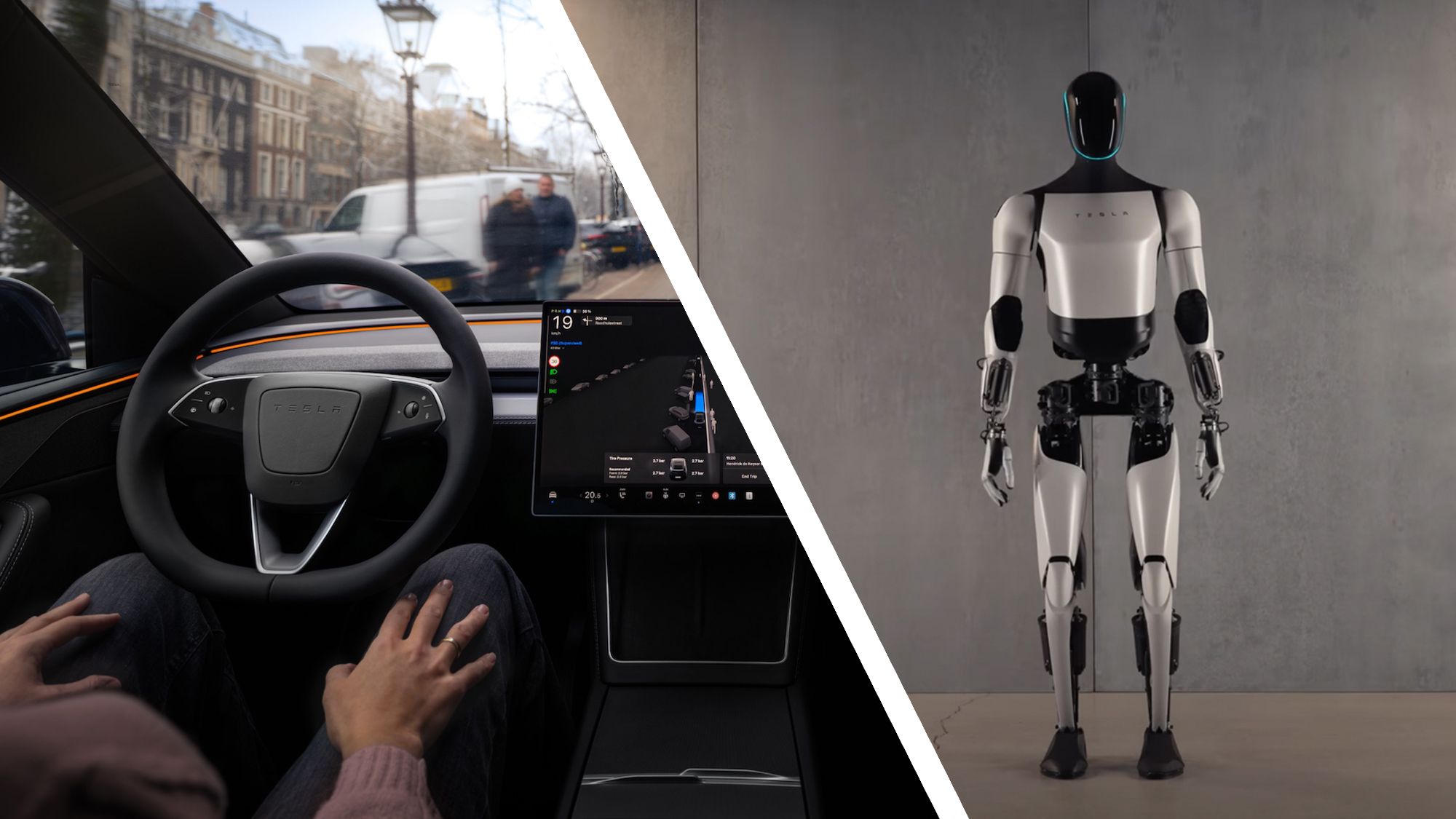
But when quizzed by an X user on when customers can expect these latest chips to arrive in customer vehicles, Musk responded with a statement that confirmed they would be used in Optimus and “supercomputer clusters” first.“AI4 is enough to achieve much better than human safety for FSD,” he added.This tallies with the fact that Tesla plans to stick with the AI4 chip to power its upcoming batch of purpose built Cybercabs.Electrek reports that Tesla needs “several hundred thousand completed AI5 boards line side” before it can switch production lines, and that volume isn’t expected until mid-2027, meaning those expecting a huge leap forward in Full Self-Driving performance are going to have to wait a bit longer.Sign up for breaking news, reviews, opinion, top tech deals, and more.
(Image credit: Tesla)Right now, autonomous driving engineers are somewhat hampered by compute power, as advancing models require an enormous amount of memory to perform.Volvo faced a similar issue with some of its recent releases, including the EX90, which launched without the compute power to effectively run its Lidar-based safety systems.The Swedish company then parked Lidar and physically updated a whole host of models when new system-on-a-chip (SoC) technology became available from partners Nvidia and Qualcomm.
What to read next
Tesla thinks you might mistake its next Optimus robot for a human
Maia 200 points to a future where laptops aren’t held hostage by AI
Two more high-profile Tesla crashes spark fresh Full Self-Driving controversy
Tesla engineers face the same constraints and last year, the company had to admit that its previous generation Hardware 3 (HW3) set-up wasn’t powerful enough to run future iterations of Full Self-Driving.Despite this, Musk has doubled-down on the fact that he thinks the current AI4, which powers HW4, is enough to achieve much “better than human safety”, but it is highly likely customers will have to wait until the AI5 chip is properly introduced before they see giant leaps in capabilities.Plus, Tesla’s planned nine-month development cycle, which Not a Tesla App says could see AI6 chips introduced as early as 2028, effectively makes ‘nearly-new’ vehicles obsolete in terms of their ability to offer fully ‘unsupervised’ self-driving — a dream Musk has been selling for years.Follow TechRadar on Google News and add us as a preferred source to get our expert news, reviews, and opinion in your feeds. Make sure to click the Follow button!And of course, you can also follow TechRadar on YouTube and TikTok for news, reviews, unboxings in video form, and get regular updates from us on WhatsApp too.