Venture philanthropy: revolution through collaboration
Just 75 short seconds. That’s how long we have before the next person in the UK is told “you have cancer”. Their first question will often be: “What happens next?”.
Frequently, the answer is people being lost to a cancer care system that is too slow, impersonal, and unfair; cancer care made better or worse simply because of who they are or where they live. What happens next, all too often, is completely unacceptable.
Combine this with the fact that by 2045 there could be as many as 5.4 million people living with cancer in the UK – a 58 per cent rise on where we are today – and it should come as no surprise that the drive to reinvent UK cancer care has become an urgent one.
That is why Macmillan is fundraising and seeking new partners in a £30m fund that will help us back the brightest ideas, the most promising technologies and ambitious entrepreneurs – all with the goal of helping to reshape the system.
Subscribe to the New Statesman today and save 75%
Through Macmillan Ventures we are going to help deliver our vision of a world in which no one with cancer is left behind. Where potential signs of cancer are picked up at the earliest possible opportunity. Where everyone has the right support, from day one. Where world class care is the norm for all, no matter who they are or where they live.
Delivering that vision will rely on developing the right partnerships – coalitions of philanthropic and corporate partners, innovators and forward-thinking organisations who together can sow the seeds of revolution and drive solutions which could help transform care for people with cancer in the future.
What we’re seeing is venture philanthropy coming of age – donors backing projects with the potential for real, transformative impact, even when they carry a higher degree of financial risk. It’s fast becoming a leading approach for those who want to take on society’s biggest challenges. Those who want to use purpose-driven capital to invest in new ideas, technologies and ways of doing things can deliver real results and real progress for our communities.
Since 2023, Macmillan has delivered a £3.5m pilot investment fund that has seen us focus our financial backing on a diverse range of health innovations designed to deliver significant breakthroughs in cancer care.
Our portfolio includes Lucida Medical and its deployment of AI solutions aiming to deliver cancer diagnoses in minutes rather than weeks or months, cutting through the anxiety of waiting that dominates the current system.
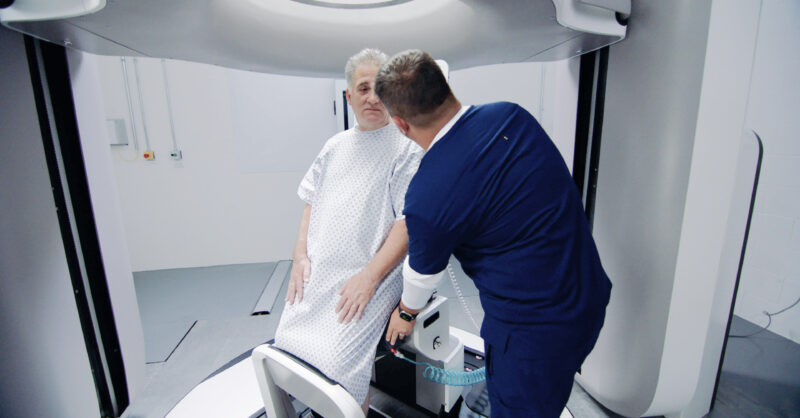
It includes Leo Cancer Care’s development of a new, patient-led and designed, upright radiotherapy technology and all the increased comfort and precision this solution might offer. And it includes Perci Health’s digital cancer support clinic, which holds such promise when it comes to helping people avoid the unfair ‘postcode lottery’ that exists in UK cancer care.
From new blood-tests for hard-to-diagnose cancers, to AI-driven precision cancer treatments and a home sepsis test that may help people going through chemotherapy to avoid unnecessary trips to A&E – this is an investment portfolio with a difference, shaped and informed by people with lived experiences of cancer and designed to push the boundaries of what is possible for the future of UK cancer care.
And now, we want to scale up our ambitions. In 2026 we are launching Macmillan Ventures, our second impact fund which comes with the bold ambition of investing £30 million over the next five years in more innovations that have the potential to transform cancer care.
That ambition will only be made possible by the continued support of our current and future “Venture Partners” – a growing collective of visionary philanthropists and organisations who care deeply about advancing groundbreaking innovation in cancer care and putting their capital to work in achieving it.
This is all part of a wider appreciation that big, new things need to happen if we are going to meet the demand for high quality cancer care in the future. Only recently, the UK Government acknowledged this in its National Cancer Plan for England, which outlines how “science and innovation will be the engine of our reinvention” when it comes to cancer care in 2035.
But that harnessing of science and technology will not be done in isolation. The National Cancer Plan is clear that this will be part of a much bigger mobilisation of the UK cancer ‘eco system’ – with governments, the NHS, communities, charities, businesses and philanthropists coming together to work in real partnership and begin building a system that truly serves everyone, no matter who they are or where they live.
We couldn’t agree more with this approach. Innovation and true partnership have and always will be key. It’s what Macmillan has been doing since 1911.
We have spent more than 100 years pursuing better cancer care. From cycling to people’s homes to dress wounds and deliver coal, to the ground-breaking development of cancer nurse specialists in the 70s, our job has been to find new ways of making the biggest possible difference to the lives of people with cancer in the UK.
What we are doing now is applying that search for innovation and partnership to a world that is so very quickly being reshaped by digital innovation, AI-driven diagnostics and precision medicine.
Right now, the potential to revolutionise cancer care has never been greater. But at the same time, so many innovations are not reaching the people who need them most.
The government’s National Cancer Plan and its call for partnership and innovation offers us an opportunity to shape cancer care outcomes for the next decade and make sure everyone living with and affected by cancer receives the world-class care and support they need.
But that will only be achieved if we bring together the right coalitions. The right people, technologies, communities and organisations who in working together can make cancer care fair, support those who need it the most and improve not just cancer survivorship, but people’s overall and long-term ability to live well following a cancer diagnosis.
Macmillan Ventures has the potential to help transform what cancer diagnosis, treatment and recovery looks like for the millions of people who will hear the words “you have cancer” in the future.
It has the potential to act as a true partner for the NHS by developing and scaling the technologies and solutions needed to meet an ever-increasing demand for world-class treatment.
And it has the potential to rewrite the story of “what happens next” for everyone living with cancer in the UK.