Transforming Indonesia’s Iconic Bromo Tengger Semeru National Park into a Sustainable World-Class Tourism Destination - Travel And Tour World
Home
»
ASIA
»
Transforming Indonesia’s Iconic Bromo Tengger Semeru National Park into a Sustainable World-Class Tourism Destination
Image generated with Ai
The beautiful scenery of Bromo Tengger Semeru National Park has long been known as one of Indonesia’s most important natural treasures. The Ministry of Forestry recently announced a big change in how this famous tourist spot is run and developed. The Director General of Natural Resources and Ecosystem Conservation (KSDAE) said that this park has been chosen as a top priority for becoming a world-class tourist destination. This big goal is part of a bigger plan by the government to bring several of Indonesia’s 57 national parks up to international standards by doing high-level work on them.
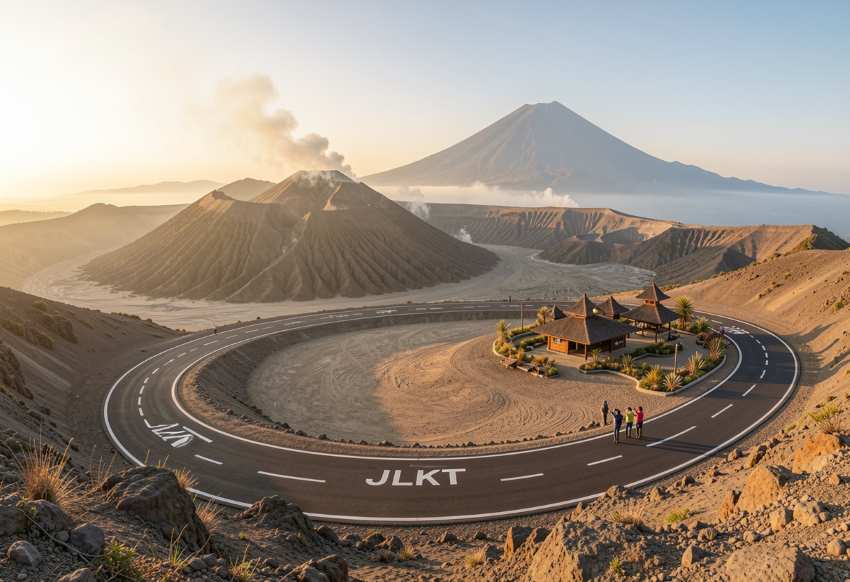
The announcement was made at a ceremony on April 13 that marked the start of the Tengger Caldera Ring Road, which is known locally as Jalan Lingkar Kawah Tengger (JLKT). People see this project not just as a construction job but as an important part of a complex, integrated management plan. The government wants to set an example for how to share natural wonders with the world while keeping the environment as healthy as possible by putting Bromo Tengger Semeru first.The JLKT: More Than Just a PathThe development of the JLKT is being framed as a multi-dimensional strategic instrument. While its primary function involves the enhancement of tourist accessibility, it is also designed to address complex ecological requirements. Concerns regarding biodiversity protection, water resource management, and the empowerment of local economies are all being integrated into the project’s overarching goals. The road is intended to serve as a bridge between the necessity of conservation and the undeniable drive for community economic advancement.
It is believed that by creating a structured route around the caldera, the delicate balance of the ecosystem can be better managed. The JLKT is expected to provide a framework through which various interests—ranging from environmental science to local entrepreneurship—can be aligned. This holistic approach ensures that the park’s evolution is not one-dimensional but rather a comprehensive upgrade to the region’s infrastructure and environmental safeguards.Integrating Local Wisdom and Cultural IdentityA significant emphasis is being placed on the preservation of local cultural identity within the framework of national park management. It is maintained that the principles of conservation must be deeply rooted in respect for local communities and their traditional wisdom. The construction of the JLKT is being viewed as an initial step toward a future where nature is preserved as a means of ensuring community prosperity and cultural longevity.
The Tenggerese people, who have inhabited these highlands for centuries, are considered central to the park’s identity. It is argued that sustainable management can only be achieved when the cultural fabric of the region is treated with the same level of protection as its flora and fauna. By honouring these traditions, the project aims to create a tourism model where visitors do not just witness a landscape but also engage with a living, breathing heritage that is supported, rather than eroded, by modern infrastructure.AdvertisementAdvertisementEngineering Sustainability and Reducing CongestionFrom a technical perspective, the JLKT is a substantial undertaking designed to alleviate the pressures of over-tourism. The project involves the construction of a roadway approximately 13 kilometres in length and 18 metres in width. To support the influx of global travellers, the inclusion of three specialized rest areas and four expansive parking zones has been planned. Furthermore, the safety and organization of the route will be bolstered by the installation of nearly 10,000 lane markers.
Environmental sustainability is being physically built into the road’s design. To mitigate the impact of runoff and support local water tables, 60 infiltration wells are being integrated into the construction plan. This focus on “green” engineering ensures that the road assists in water management rather than disrupting natural drainage patterns. Additionally, the new route is expected to provide much-needed relief to existing transit points, offering alternative paths that will distribute tourist traffic more evenly across the caldera, thereby reducing the environmental strain on high-density locations.Advertisement
AdvertisementA Model for Future National ParksLocal leaders, like the Probolinggo District Head, are pushing for the Tengger region to be able to last for a long time. It is thought that the JLKT project’s momentum will be very important for the province’s health in the future. The balance between tourism development and environmental preservation is often a precarious one, yet this project is being positioned as a model for how such equilibrium can be successfully reached.
As the project moves forward, Bromo Tengger Semeru should become stronger not only as a top tourist destination but also as a model for modern conservation management. The goal of the area’s transformation is to show that economic interests can coexist with protecting the environment when they are managed with sustainability and respect for culture in mind. For the global traveller, this means a more refined, thoughtful, and lasting way to see one of the most beautiful volcanic landscapes on Earth.
AdvertisementAdvertisement