BBC breached editorial standards by broadcasting Tourette sufferer's racial slur outburst during Baftas, investigation finds
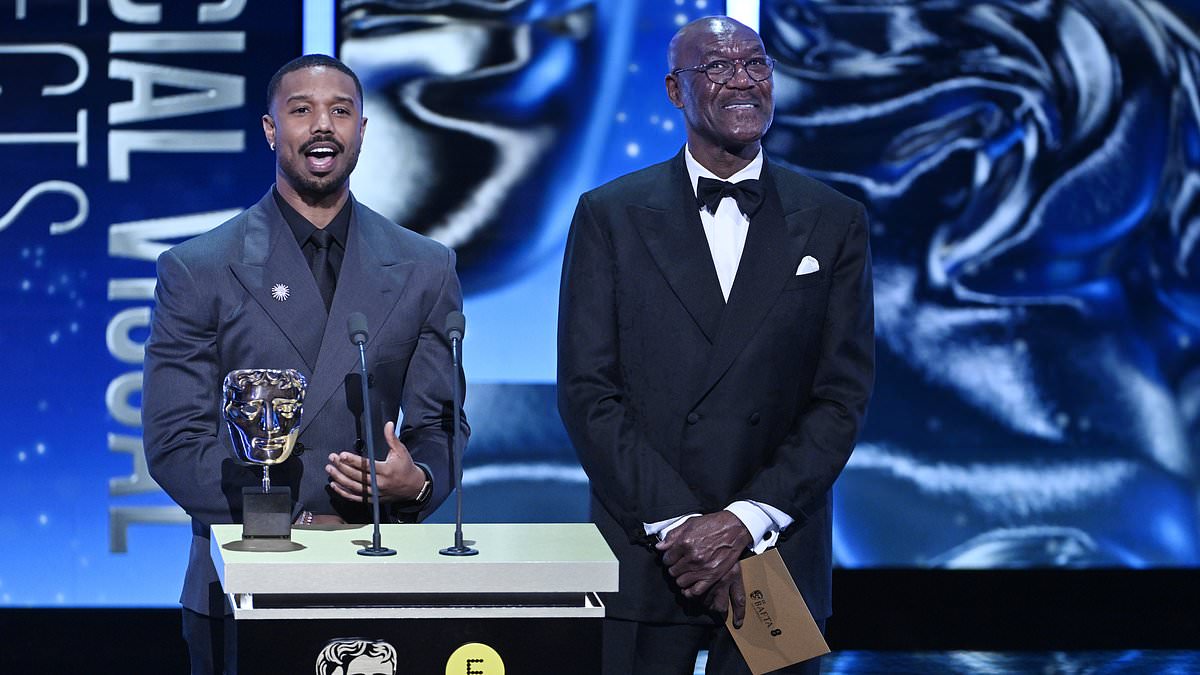
The BBC breached its editorial standards by broadcasting a Tourette's sufferer's racial slur during the Bafta film awards ceremony in February, an investigation has found. The corporation's Executive Complaints Unit (ECU) said the inclusion of John Davidson shouting the N-word 'was highly offensive' and had 'no editorial justification'.However, the ECU said the breach was 'unintentional'. Mr Davidson, 54, blurted out the offensive word while Sinners stars Michael B. Jordan and Delroy Lindo were presenting an award at the Royal Festival Hall in London. Scotsman Davidson, whose life story inspired the film I Swear, suffers from uncontrollable tics which see him sometimes shout expletives or deeply offensive language.He left the auditorium 'so as not to cause any more upset' and apologised for the outburst. Davidson later told Variety there was a microphone 'right in front of me' and the BBC should have 'worked harder to prevent anything that I said'.There was considerable backlash to the incident after BBC bosses failed to edit out the outburst prior to the awards ceremony airing, despite it not being broadcast live. Sinners stars Michael B. Jordan and Delroy Lindo were presenting the first prize of the night at London's Royal Festive Hall on Sunday when the outburst took place John Davidson, who yelled the N-word during the BAFTAs while two black actors were on stage, said he was 'deeply mortified' by his outburstThe BBC's outgoing director-general Tim Davie had ordered a fast-tracked investigation and called it a 'serious mistake'. The BBC previously apologised to staff for failing to edit out the word, after it was broadcast on TV and also audible on the ceremony on iPlayer for around 12 hours before being removed. It led to the Culture, Media and Sport committee writing to Mr Davie 'seeking an explanation' for how a racial slur ended up in the broadcast 'in spite of a two-hour time delay'.In a response letter to committtee chair Dame Caroline Dinenage, Mr Davie said: 'I'd like to make clear: although the racial slur was symptomatic of a disability and an involuntary tic, it should never have been broadcast.'It was a genuine mistake, and we take full responsibility for our error.'The ECU said members of the production team who had been monitoring the event in an outside broadcast vehicle all said they had not heard the slur. It found editorial standards were unintentionally breached via the broadcast of the offensive term and in failing to edit it out of the time-delayed showing of the ceremony.A third breach occurred when the word was not removed from the iPlayer version of the programme until the following morning, a delay the ECU described as a 'serious mistake'.The ECU report said: 'There was a lack of clarity among the team as to whether the N-word was audible on the recording.'This resulted in there being a delay before a decision was taken to remove the recording from iPlayer; that decision was not taken until approximately 9.30 the following morning.'In the ECU's view, this delay was a serious mistake, because there could be no certainty that the word would be inaudible to all viewers, and because there was a greater likelihood of its being found intelligible by viewers coming to the iPlayer in the knowledge that it had been spoken.'The report added: 'The fact that the unedited recording remained available for so long aggravated the offence caused by the inadvertent inclusion of the N-word in the broadcast.'The ECU said the initial broadcast of the offensive term 'was highly offensive and had no editorial justification' but accepted that members of the production team monitoring the event in the outside broadcast vehicle 'did not hear or recognise the N-word'. Bafta host Alan Cumming thanked the audience for their understanding of Tourette's as I Swear's John Davidson let out involuntary shouts during Sunday's ceremony - Davidson also yelled 'paedophile' during a segment by the hostThe report said: 'The ECU accepted their account, for two reasons. Firstly, the use of the N-word in that instance was extremely indistinct, to the point where it might well not have been recognised by the production team.'Secondly, there was another occurrence of the N-word about 10 minutes later, which was recognised by the production team and immediately edited out in accordance with the protocols on offensive language which were in place.'There is no reason to conclude they would have applied the protocols in one case while deliberately ignoring them in the other.'Davidson said he had ticked 10 different offensive words during the ceremony but said 'what you hear me shouting is literally the last thing in the world I believe'.One included calling host Alan Cumming a 'paedophile' when the actor joked about taking Paddington Bear home with him. He told Variety: 'I have made four documentaries with the BBC in the past, and feel that they should have been aware of what to expect from Tourette's and worked harder to prevent anything that I said — which, after all, was some 40 rows back from the stage — from being included in the broadcast.' The BBC was also accused of breaching editorial standards by editing out 'free Palestine' from the acceptance speech of Outstanding Debut winner Akinola Davies Jr at the ceremony in February.Although the ECU report found Mr Davies had a right to express his views, the removal of the words 'did not hinge on the considerations of impartiality'.The report said: 'The principal consideration was that approximately three hours of recorded material had to be edited to fit a two-hour transmission slot.'The priority in the editing was to focus on the main thrust of the event, namely the content being celebrated.'As is usual in coverage of events of this kind, cuts were made in some of the longer acceptance speeches, including that of Mr Davies.'The report added: 'It appeared to the ECU that the content of what was cut from Mr Davies' speech played no part in the decision to edit it except to the extent that it was remote from the event's main thrust and the likely focus of the audience's interest.'The corporation said in a statement in February: 'Some viewers may have heard strong and offensive language during the Bafta Film Awards.'This arose from involuntary verbal tics associated with Tourette syndrome, and as explained during the ceremony it was not intentional.'We apologise that this was not edited out prior to broadcast and it will now be removed from the version on BBC iPlayer.'BAFTA also told members in a letter that it had launched a 'comprehensive review' after apologising to Jordan and Lindo and admitted it had put guests in a 'difficult situation'.After the awards, Davidson told how he felt a 'wave of shame' over his tic, issuing a swift apology and saying he was 'deeply mortified'. He was attending the ceremony after the film based on his life, I Swear, was nominated in five categories.Following the ceremony, Lindo hit out at Bafta for failing to address the incident with him.He said he and Jordan 'did what we had to do' while presenting, but he wished 'someone from BAFTA spoke to us afterward'.And film-maker Jonte Richardson said he was stepping down as a Bafta judge over the academy's handling of the incident. In its letter to Bafta members, a spokesperson went on to say: 'We are in contact with the studios involved and conversations are ongoing.'We want to assure all our members that a comprehensive review is underway. You may have also seen the BBC have issued their own apology for the broadcast.'It was a very complex situation and we understand you will have many questions – please rest assured how seriously we are taking this.'Davidson, who has suffered from a severe form of Tourette's since the age of 12, also shouted 'paedophile' at host Alan Cummings, he has said.One of Davidson's biggest symptoms is coprolalia which makes him involuntarily say socially inappropriate words or phrases, including when he famously shouted 'f*** the Queen' at Elizabeth II when he was awarded his MBE in 2019. Campaigners emphasise that the shouting of such offensive language does not imply any meaning on behalf of the sufferer and is entirely involuntarily. I Swear won three awards at the ceremony - best leading actor and rising star for actor Robert Aramayo, who plays Davidson, and best casting. WHAT IS TOURETTE'S SYNDROME?Tourette's syndrome is a neurological condition characterised by a combination of involuntary noises and movements called tics.It usually starts during childhood and continues into adulthood. Tics can be either be vocal or physical.In many cases Tourette's syndrome runs in families and it's often associated with obsessive compulsive disorder (OCD) or attention deficit hyperactivity disorder (ADHD).Tourette's syndrome is named after the French doctor, Georges Gilles de la Tourette, who first described the syndrome and its symptoms in the 19th century. There's no cure for Tourette's syndrome, but treatment can help to control the symptoms. Source: NHS Choices