How NASA's historic Artemis moon mission nearly WASN'T seen by the world...as top space executive fought to put cameras on board
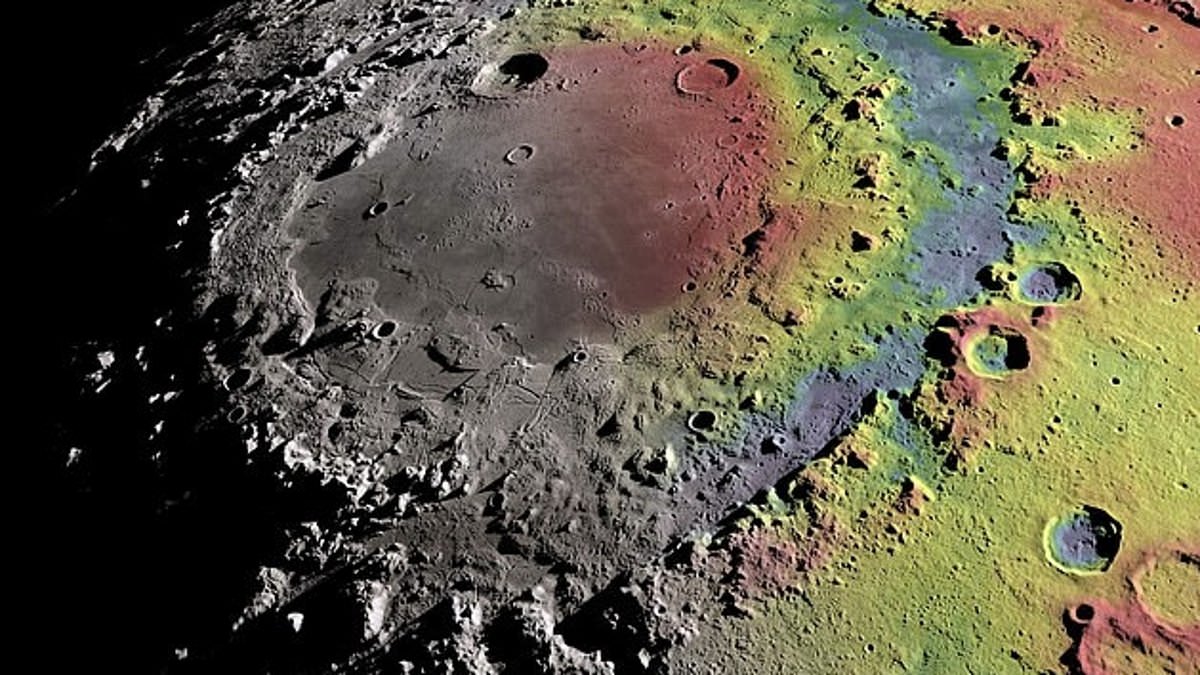
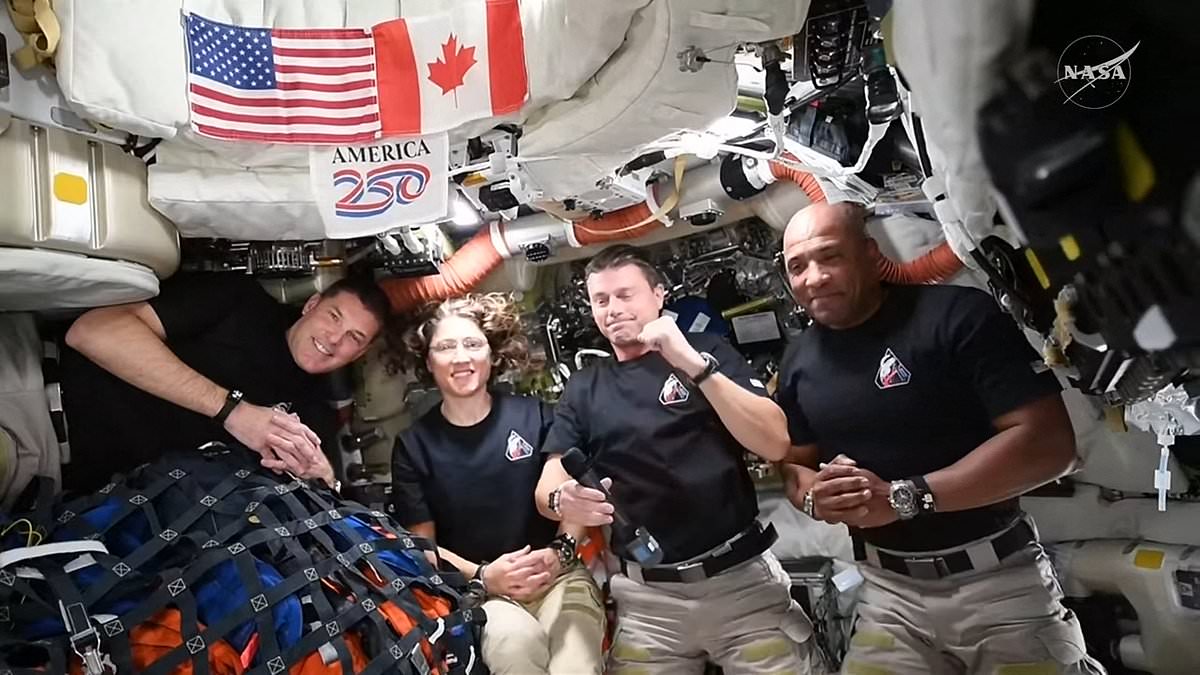
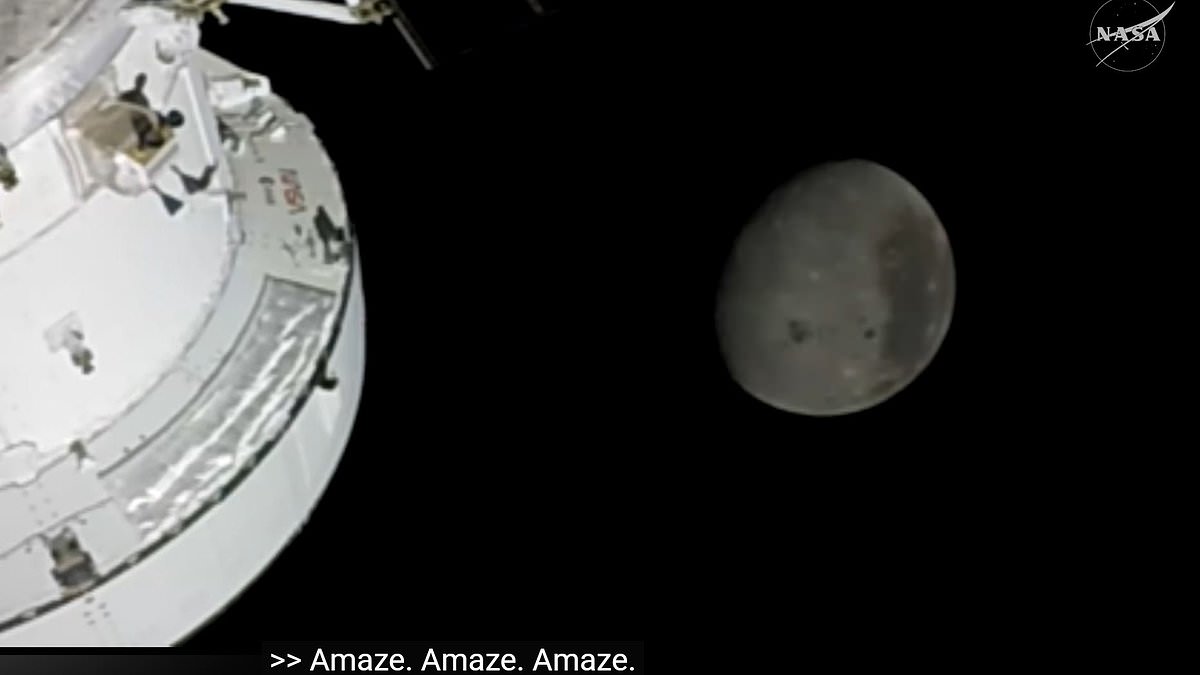
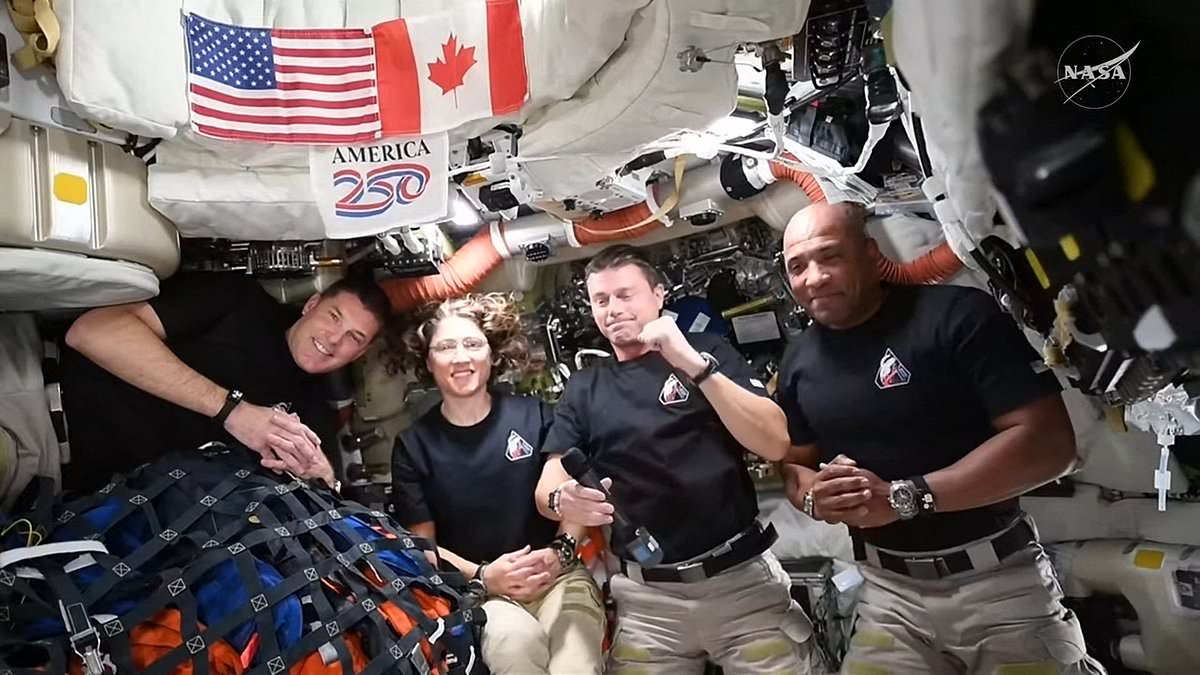
A top space executive has revealed he had to 'argue strenuously' with NASA to include cameras on the Artemis mission, meaning the world nearly missed seeing humanity's return to deep space. Mike Gold, president of Redwire Space and a former NASA associate administrator for space policy and partnerships, told Daily Mail he pushed back against engineers who argued that cameras were not worth the precious weight and power on board, despite the mission marking the first time humans have traveled toward the moon since 1972.'Without those visuals, the mission isn't real,' Gold said. 'We can't all be astronauts, but with the cameras, we're able to take the whole world on the mission.'Gold said spacecraft design is a constant balancing act, with every component competing for limited resources.Engineers, he said, questioned whether cameras justified their place on the spacecraft at all, arguing that every ounce of weight and unit of power should be reserved for life-support systems, propulsion or core scientific instruments.'Mass and energy are at an absolute premium,' he said. 'You have to argue relative to scientific value… for what are visuals?'But Gold ultimately convinced NASA leadership that cameras were not just a luxury, but a critical part of the mission itself.'We built 11 cameras, external and internal, and they are critical not just for visuals, but for spacecraft operations, because you need to see what's happening in case of any anomalies or problems,' he said. The Artemis II crew (pictured from left) Canadian astronaut and mission specialist Jeremy Hansen, Commander Reid Wiseman, mission specialist Christina Koch and pilot Victor Glover The Mare Orientale will loom before the astronauts as a 200-mile-wide crater, formed 3.7billion years ago by an asteroid smashing into the surface at nine miles a second Mike Gold, president of Redwire Space and former NASA associate administrator, said he pushed to include cameras on Artemis II despite concerns over weight and powerRedwire, the company Gold now leads, went on to manufacture the cameras that are capturing real-time footage from deep space, offering the public a front-row seat to a journey not seen in more than half a century.The Artemis mission marks the first time humans have traveled toward the moon since the final Apollo mission in 1972, pushing astronauts beyond low Earth orbit into a far more extreme and unpredictable environment.'With Artemis, humans will literally go where no one has gone before,' Gold said.'We have been stuck in low Earth orbit for my entire lifetime… the purpose of NASA was always to explore.'As the spacecraft ventured farther from Earth, astronauts left behind the planet's protective magnetic field, exposing them to increased radiation and unfamiliar conditions. 'We are leaving the magnetic shield of Earth and learning how to live in an entirely new environment,' Gold explained.During the mission, the crew passed behind the far side of the moon, temporarily losing all communication with Earth.'They are literally alone in the universe at that moment,' he said. The first image, titled 'Earthset', was taken from the far side of the moon and shows the Earth dipping beyond the lunar horizon The second photo is titled 'The Artemis II Eclipse' and shows the moment the moon eclipsed the sunWhile out of contact, the astronauts on Artemis II observed parts of the lunar surface rarely seen directly by human eyes, including the mysterious far side - the half that permanently faces away from Earth and differs dramatically from the side visible from our planet.They viewed it in a way no human has in decades, combining direct observation with modern imaging technology.'They are seeing things no human has ever laid eyes on before,' Gold said. Now, those cameras are already delivering historic results.NASA on Monday released the first images captured during the Artemis II mission, including a stunning shot dubbed 'Earthset' showing Earth dipping beyond the moon's horizon.The image is a modern echo of the iconic 'Earthrise' photograph taken during the Apollo 8 mission more than 50 years ago.A second image, known as 'The Artemis II Eclipse,' captured the moment the moon passed directly in front of the sun as seen from lunar orbit.'Totality, beyond Earth,' the White House said as it shared the image. A third photo, meanwhile, shows the rings of the Orientale basin. 'At the 10 o’clock position of the Orientale basin, the two smaller craters – which the Artemis II crew has suggested be named Integrity & Carroll – are visible,' NASA explained This photo shows Earth setting over the Moon's curved limb at 6:41 PM EDT (10:41 GMT), April 6, 2026, as seen from the Orion spacecraftThe photos were released just hours after astronauts Reid Wiseman, Victor Glover, Christina Koch and Canadian astronaut Jeremy Hansen became the first humans in more than half a century to travel around the far side of the moon.During the flyby, the crew reached a distance of more than 252,756 miles from Earth, setting a new record and venturing farther than any Apollo-era astronauts.From their position above the lunar surface, the moon appeared about as large as a basketball held at arm's length.As they passed over the far side, astronauts reported seeing terrain unlike anything visible from Earth, including heavily cratered regions, winding formations and unexpected shades of green and brown.Appearing like a giant bullseye, the Mare Orientale, or Eastern Seam, loomed into view as a 200-mile-wide crater formed 3.7 billion years ago when an asteroid slammed into the lunar surface at roughly nine miles per second. Although satellites have previously photographed the far side, some of these features have never been observed directly by the human eye.Astronaut Christina Koch described the view as resembling 'a lampshade with tiny pinprick holes and the light shining through,' referring to newly formed craters scattered across the surface.Gold said the case for cameras goes beyond public inspiration and spacecraft safety, arguing the images could help document mysteries on and around the moon that scientists still do not fully understand.One example he pointed to was lunar horizon glow, a strange light effect first detected by Surveyor probes in the 1960s and later seen by Apollo astronauts, who described both a sunrise-like glow along the horizon and vertical streaks of light rising from the lunar surface. A view of Earth passing the Moon as photographed through the Orion spacecraft window April 6, 2026 'Earthset' is a nod to Earthrise – the famous photo captured by NASA's Apollo 8 mission more than 50 years ago'And I would categorize this as UAP in the literal sense,' Gold said. 'These are unidentified anomalous phenomena.'Gold said Redwire's cameras also captured the effect during Firefly Aerospace's Blue Ghost mission, for which his company supplied the imaging systems.'We got some beautiful shots of the lunar horizon glow,' he said.He stressed that there is a conventional explanation: that solar radiation may excite lunar dust, causing it to levitate and glow. But he said the phenomenon has not been successfully reproduced in laboratory conditions.According to Gold, there does not appear to be enough dust for the effect to occur as expected, and exposing dust to sunlight alone has failed to recreate what missions have observed.That uncertainty, he said, is exactly why the cameras matter.They are not just there to produce dramatic images for the public, but to capture fleeting, poorly understood phenomena that could reshape scientific understanding of the moon.Gold said the same thinking applies more broadly to what are now known as unidentified anomalous phenomena, or UAP, a term used in place of UFO to reflect objects or activity observed not just in the air, but in space and even underwater. Mike Gold testified before Congress on UAP in November 2024 and flashed the Star Trek hand sign as he was sworn in The astronauts spotted newly formed craters on the lunar surface that stand out like tiny holes in a lampshade‘When we say UAP, we’re not necessarily saying extraterrestrial,’ he said. ‘We’re saying these are phenomena that are unidentified and that we don’t understand.’He said there is already significant evidence of such phenomena, including footage captured by pilots, radar systems and military sensors, arguing the issue deserves serious scientific attention despite the longstanding stigma.Gold’s interest in the unknown has extended beyond Artemis. In November 2024, he testified before Congress on UAP, urging lawmakers to take the subject seriously.As he was sworn in, he flashed the iconic Star Trek hand sign, a nod to the science fiction that helped inspire generations of space exploration.The topic is also set to take center stage at the Space Symposium in Colorado Springs on April 16, where Gold is expected to appear on a panel discussing unidentified anomalous phenomena.Hosted by journalist Jeremy Corbell as part of his Weaponized podcast, the discussion will include voices from science, government and popular culture, including Star Trek creator Gene Roddenberry’s son, Rod Roddenberry.The panel will examine the intersection of space exploration, national security and unexplained phenomena, as well as the role of private aerospace companies in studying them.Mike added that the lunar surface, particularly the far side, still holds 'many mysteries and anomalies,' from unexplained features to questions about water ice, composition and resources such as helium-3.'The greatest surprises about the moon we can't even imagine at this point,' he said.The Daily Mail has reached out to NASA for comment.