To kick or not to kick: “I think there’ll be more kicking as the weather gets better”
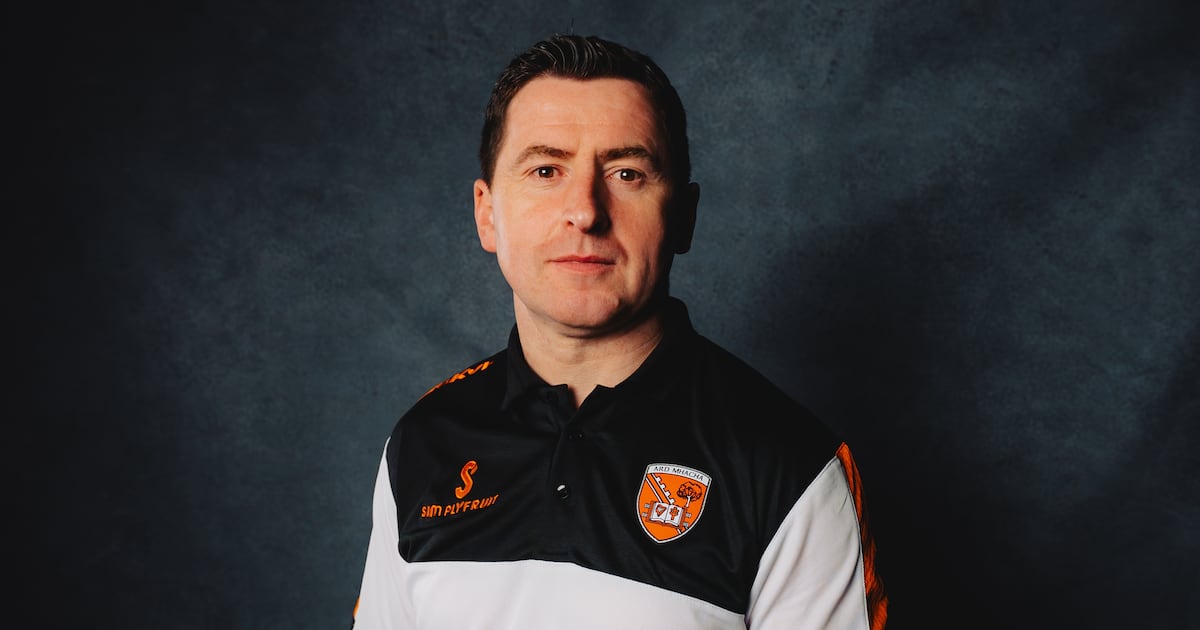
IN terms of their All-Ireland winning year, a lot of coach Conleith Gilligan’s role revolved around speeding up Armagh’s transition play and making it more effective.Nothing moves the ball faster than a kick pass.The hardliners cannot see wood for trees when it comes to kicking the ball.There remains a prevailing attitude that it’s no harm turfing the odd one in because even if you lose it, it’s 120 yards down the field.But it’s not only the rules that have changed. The terms of engagement have too.Donegal’s performance in the league final will have everyone re-evaluating. They lost just five turnovers in 70 minutes. They got shots off in almost every single attack.It was a warning shot: give us the ball and you’re not getting it back until your next kickout.So, kicking. Or rather not kicking. A safety mechanism too far, or just good sense?“That’s all the top teams. Donegal’s numbers were through the roof [in the league final] but when you look across Division 1 and 2, I think it’s 8.1 shots off every 10 possessions,” said Gilligan.“The numbers are there with the new rules, it’s very hard to defend to the scores it used to be. The future is going to be 20 points and upwards.“As the weather and pitches gets better, that’ll go to 25 and upwards. I don’t see that changing any time soon.“I think there’ll be more kicking as the weather gets better. The league is always played in winter time. This has been an incredibly cruel winter in terms of wind and rain.“Our own games, it was a poor day the Monaghan game, Clones was very soft. It was a poor night in Mayo. Roscommon was a monsoon.“Really the only game we played in any sort of decent weather was the Kerry and Dublin games, and there was a wee bit more kicking in those games and they were a bit faster paced.“I think there will be more kicking, particularly as teams press harder and higher, the easiest way to get out of it is to kick forward. It’s something everyone is looking at but it’s risk-reward. “The more you kick, there’s probably more chance of you losing the ball, and you lose the ball, as Kerry found out against Donegal, they’ll get a score off every possession you give them.“It’s that balance of risk-reward.”Media events like the one organised by Ulster GAA can get very quickly get very tedious for everyone involved. This one thankfully did not. A great spread of chicken tenders helped all survive a really valuable evening.Gilligan was the first interviewee delivered to a pack of fresh, and at that time hungry, wolves.So, er, what about using AI or ChatGPT to help with prepping the team?“From the statisticians’ point of view, you feed it numbers and it throws you out stuff, but in terms of coaching and gameplay, it’s not really something we’d be big into.“You can sort of see now online, some of the stuff some of the guys are doing, you can tell a lot of it is AI generated and that’s brilliant, it gives you a real feel for other games.“When you’re at your own game, the numbers are one thing that you get a feel for it. It’s something that will evolve and become increasingly part of the game, but more from a background point of view and not so much from a coaching perspective.”Regardless of how far from the seats of power the debate moves, the split season will forever remain a discussion point among players and coaches.It is subject to biases, not least those of recency.When Gilligan is asked about the anecdotal evidence that the churn is getting tougher for players and that there are more taking time away than ever, his inclination is to agree.“I think that’s fair. When players come off a county season, now more than ever, they haven’t play many club games so the pressure from clubs is that they come back in straight away because they’re important.“What I see is that players want to do that, everybody wants to do that, but it comes at a cost somewhere for somebody.“This year we’ve lost Barry McCambridge for the whole league based on a club injury, and that’s only one in recent times.“Last year Conor Turbitt came back with an injury after they [Clann Eireann] had a good run into Ulster Club. “Once you go into club championship it’s week on week, then Ulster Club, and every player who maybe hasn’t won a glut of club championships or an Ulster Club, it’s so important.“They’re huge within communities and every player wants to play every minute and they risk their own fitness. Ultimately when they come back to the county season, they have to be nursed and treated.“A lot of our players would have missed pre-season last year and this year because they came back injured or been overloaded. That’s before you look at Sigerson Cup and the pressures there.“For the top players, there is no split season. The split season’s a fallacy. If you have your Scotstown players from last year, in fairness to Monaghan they gave them a long break, but if you look at previous the Glen players were back with Derry six or seven days after. “Some players want to do that and I’d imagine the Scotstown players had to be held back from playing with Monaghan and those are the decisions that management makes based on what’s best for players in the long-term.“Ultimately I can only speak in terms of county management but everything that’s done for the player is based around long-term.”It is worth recalling that when Gilligan and his Ballinderry clubmates won an All-Ireland club title in 2002, they almost all missed the entire National League as Derry were relegated from Division 1B.Only goalkeeper Mickey Conlan, whose place was under threat, returned for the final league clash with Down, with all having missed the previous week’s game with Mayo.Whether it’s kicking the ball or the split season, there is no perfect answer, no magic potion to fix all.Armagh avoided the drop from Division One on the final day this year, fighting back from a nightmare 0-10 to 0-0 start against Kerry to grab a draw and survival.The drop would impact next year but as Tyrone have found out, there’s no guarantee that it won’t knock on into the year after as well. Whatever about the gap from 1st to 8th, the gap from 5th to 12th in Gaelic football can be fractional.“It was very, very important to stay up. It’s not the end of the world if you don’t but if you go into Division Two and something happens, you lose players through injuries, you get a couple of bad results and all of a sudden Sam Maguire and Tailteann Cup becomes a question midway through the league.“At least when you’re in Division One, if you have a bad start there’s a bit of protection in that. For ourselves, a lot of those players playing those games, you learn an awful lot even from the ones you lose.“Even that day in Mayo, we’d some very good performances. The Dublin game, Tomas McCormack came in and was excellent. That’s where the learning happens, he plays the Kerry game in a very similar vein.“For younger players, it’s way more important than for the experienced players because you’re just getting way more exposure to better teams and bigger games and crowds, and it gives you slightly better preparation ahead of championship.”