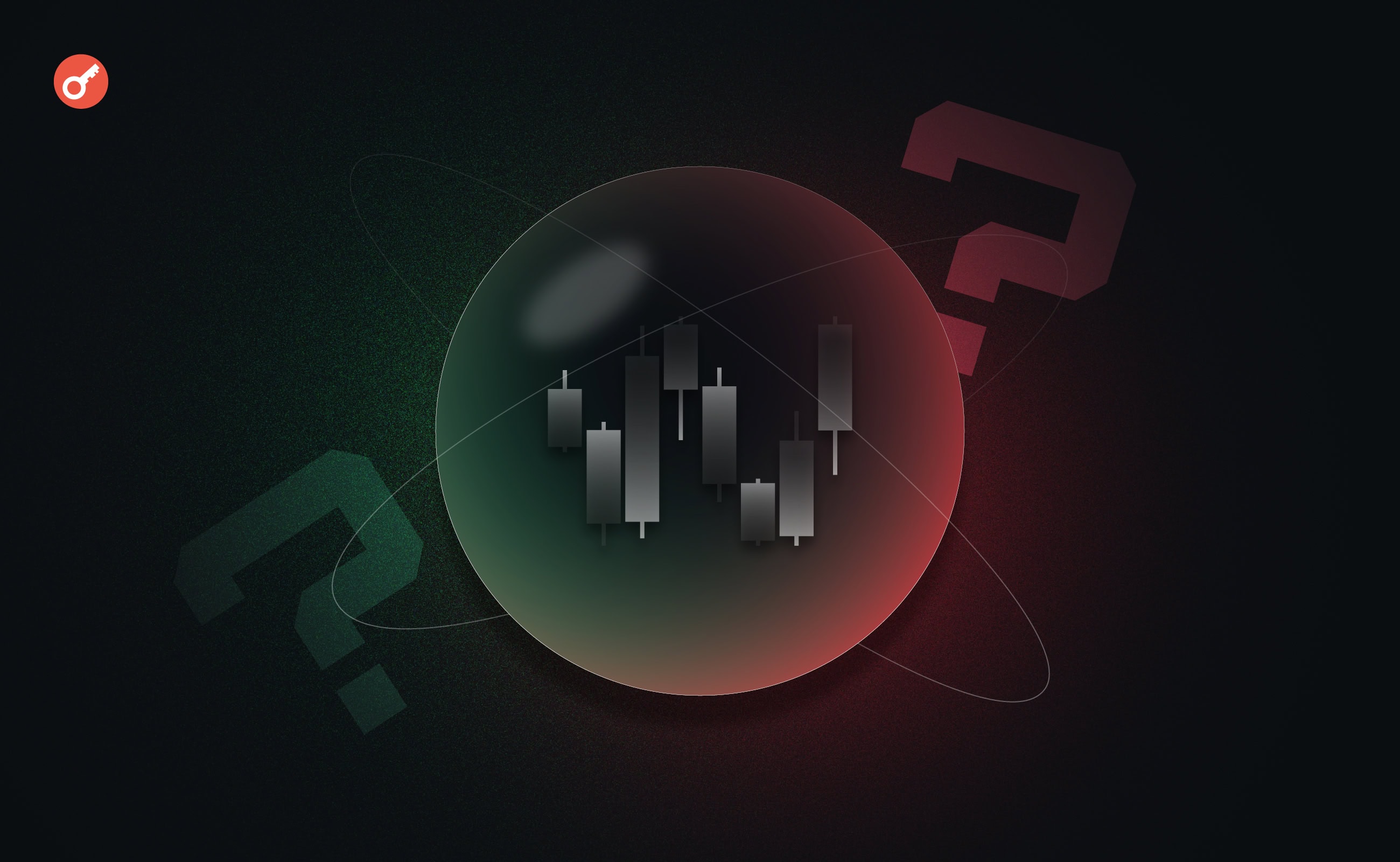
Prediction Markets Became an Indicator for Crypto Investors Amid the War with Iran
Investors are increasingly turning to prediction markets.
A Sygnum executive compared them to a real-time “macro radar.”
He believes prediction markets are no longer a niche product.
Amid escalating tensions around Iran, the crypto market has gained a new risk-assessment tool — prediction platforms that are increasingly being used by professional investors as a real-time “macro radar.” Fabian Dori, Sygnum Bank’s chief investment officer, said this in an interview with Cointelegraph.
This refers to services such as Polymarket and Kalshi, where users place bets on the likelihood of specific events — from a war escalation to a ceasefire. According to Dori, these markets provide a fundamentally new type of signal for crypto traders:
“Prediction markets price discrete, named outcomes with real capital behind them. For crypto in particular, where so much price action is driven by specific binary events, regulatory decisions, geopolitical developments [and] protocol upgrades, that is a categorically different signal.“
During the latest escalation around Iran, probabilities on these platforms shifted faster than traditional media could react. According to Dori, these changes “had a direct link” to bitcoin’s price action.
The market reacted almost instantly:
U.S. President Donald Trump’s statements about a possible end to the war in “two to three weeks” supported the crypto market’s rise
The very next day, after the announcement of new strikes, bitcoin posted a drop
Analysts also noted a shift in the asset’s role. According to JPMorgan, bitcoin began acting as a “safe haven” amid geopolitical instability, while traditional defensive assets delivered weaker performance.
Today, prediction markets are already being integrated into the investment processes of major players. In particular:
ARK Invest uses Kalshi data in its analysis
In March 2026, the number of transactions on these platforms exceeded 200 million, according to Dune;
Monthly trading volume exceeded $25 billion;
Intercontinental Exchange invested $600 million in Polymarket.
According to Dory, such platforms are increasingly being used alongside classic metrics such as funding rates, options markets, and liquidity flows.
“The goal is to decide what to do before the event happens,” he explained.
At the same time, as popularity grows, scrutiny is also intensifying. For example, six traders made about $1 million betting on the timing of potential U.S. strikes on Iran, raising suspicions of insider trading.
Meanwhile, bets on Iranian leader Khamenei stepping down on the Kalshi platform sparked a scandal in the U.S.
Fabian Dory concluded that prediction markets have already moved beyond a niche product:
“This is no longer a niche product. The question is no longer whether to watch Iran-linked markets at all, but how to integrate them in a way that adds genuine analytical value rather than simply adding a new source of noise.“
Disclaimer: This material is for informational purposes only and is not advertising gambling or a call to participate in it. Polymarket is mentioned solely as part of a digital asset market overview and is not intended to popularize or promote the platform.