Trump says Iran war will end 'shortly' as he rips into allies for lacking 'courage' on Strait of Hormuz: 'Just take it'
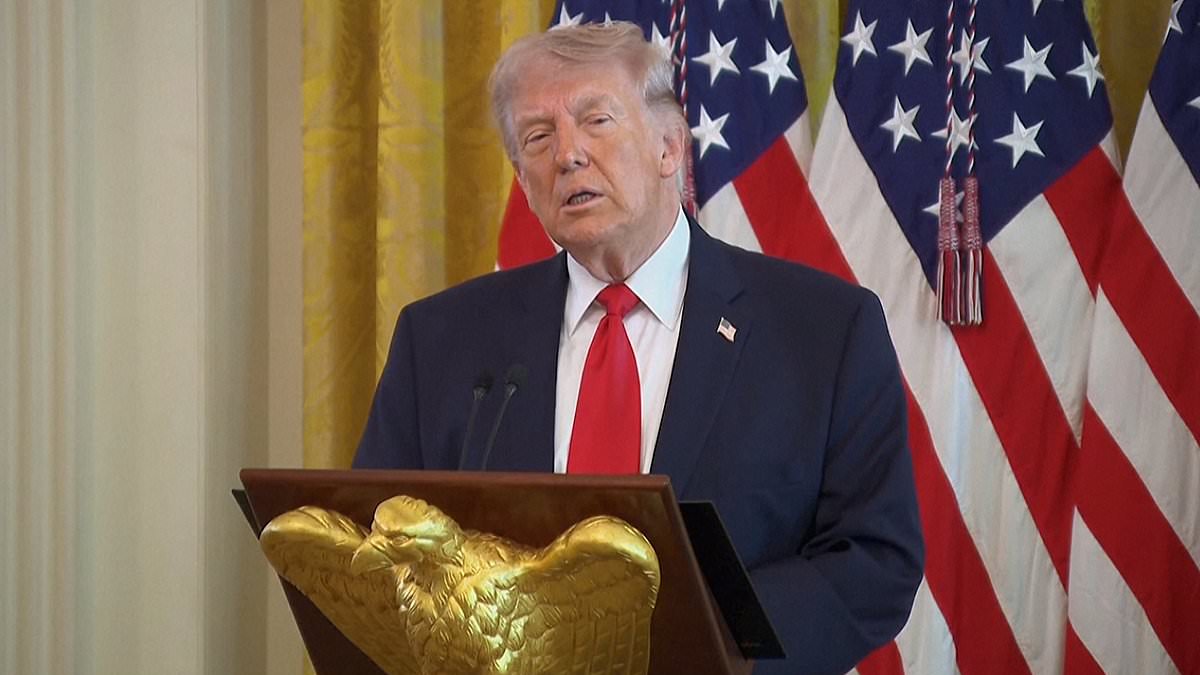
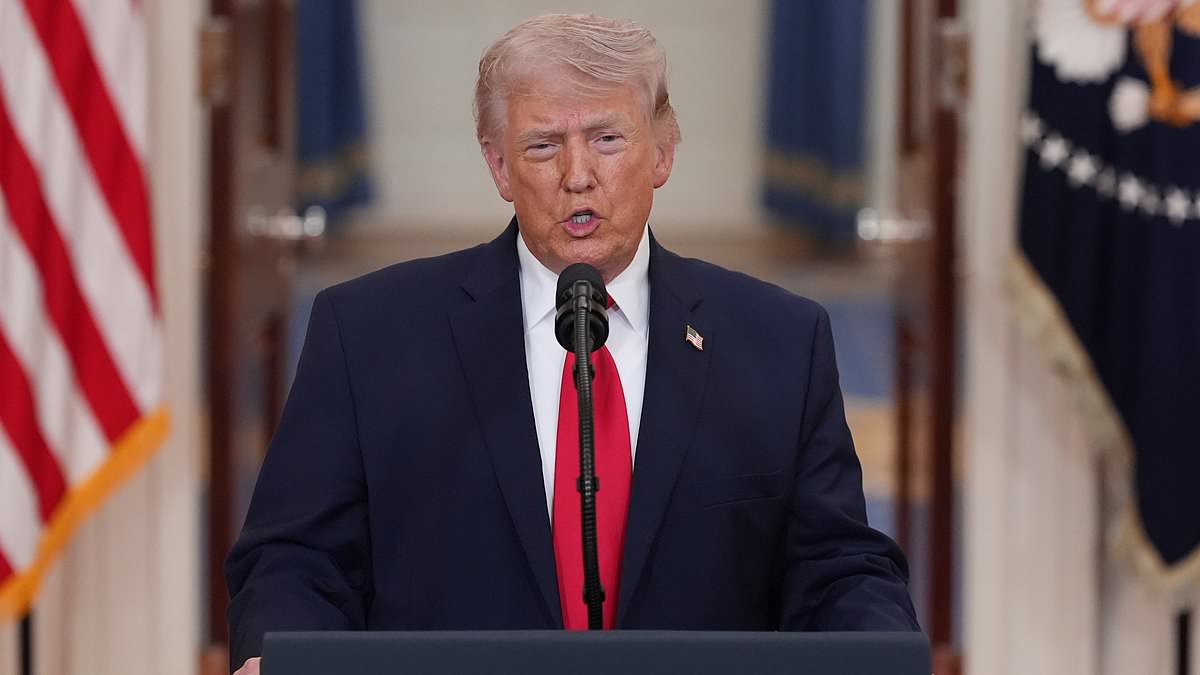
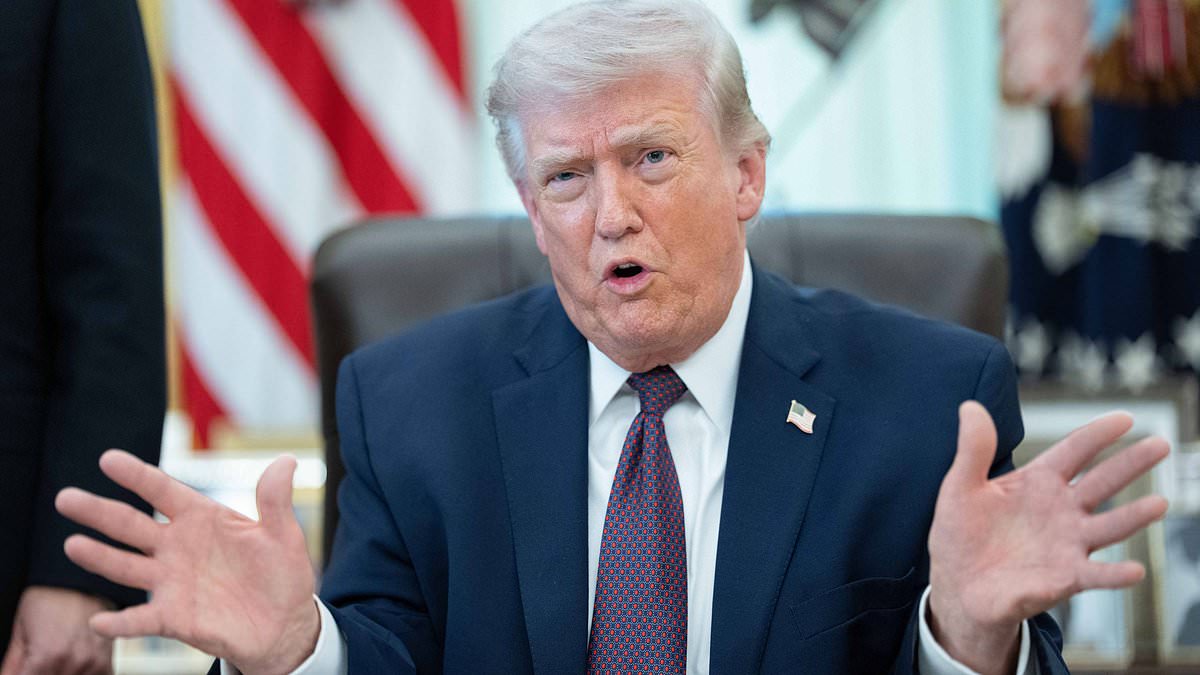
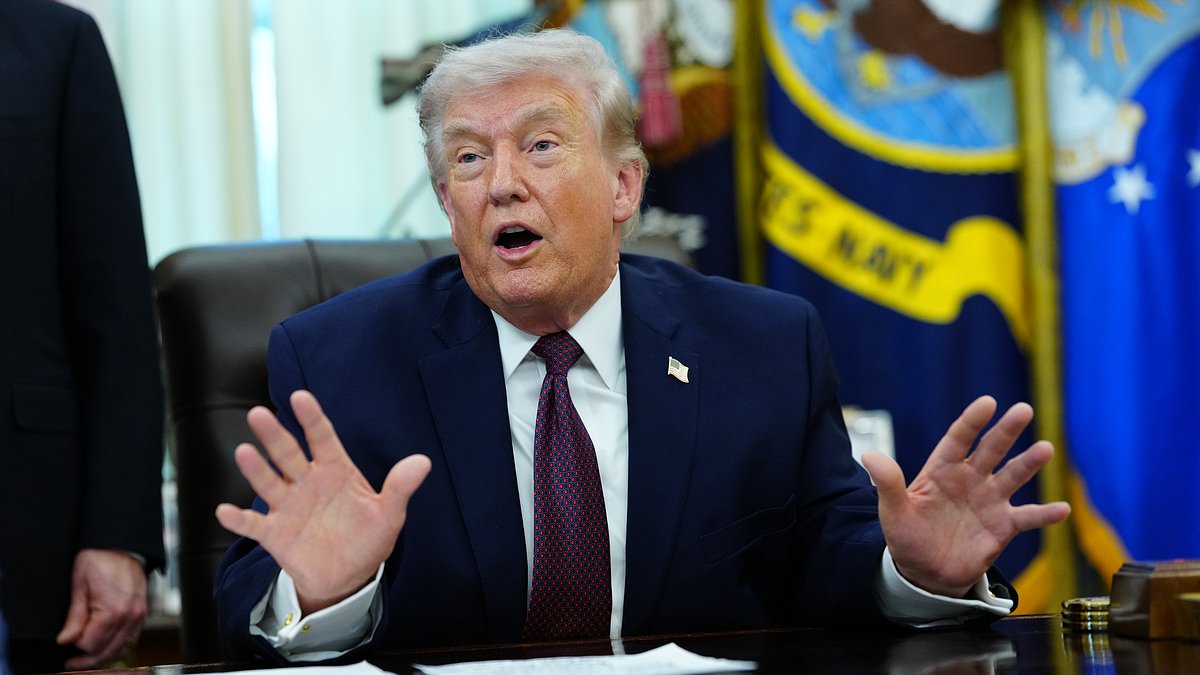
President Donald Trump claimed near victory in the Iran war during a low-energy address to the nation Wednesday night in the White House's Cross Hall. The President spoke for under 20 minutes and didn't announce any major developments - including whether ground troops would need to be deployed or who would take over leadership of the country. Instead, he repeated that Operation Epic Fury would conclude 'shortly,' noting that the US's military objectives were 'nearing completion.'He also didn't say what would signal an end to the conflict - just that the fighting would be more intense before it ended. 'We are going to hit them extremely hard over the next two or three weeks, we're going to bring them back to the Stone Ages where they belong,' Trump warned.He challenged US allies to go and 'take' the Strait of Hormuz, proclaiming that the US didn't need the oil from the ships that had been blocked by Iran since the conflict began in late February. 'I have a suggestion. No. 1, buy oil from the United States of America, we have plenty, we have so much,' Trump said. 'And No. 2, build up some delayed coverage - should have done it before, should have done it with us as we asked - go to the Strait and just take it. Protect it. Use it for yourselves,' he continued. President Donald Trump addresses the nation on the Iran war Wednesday night from the White House's Cross Hall Trump has blasted NATO leaders - and in the past 24 hours threatened to pull out of the historic military alliance - over allies' refusal to help patrol the Strait of Hormuz. Now he said they could do it themselves, saying that 'Iran has been essentially decimated.' 'The Strait will open up naturally,' Trump claimed. 'It will just open up naturally.' 'They're going to want to be able to sell oil because that's all they have to try and rebuild,' the President said of Iran. 'It will resume the flowing and the gas prices will rapidly come back down and stock prices will rapidly go back up.' But European fears he would use the speech to remove America from Nato proved unfounded, instead he didn't mention the alliance by name once.Trump did speak of Americans' concerns about high gas prices and blamed the spike entirely on the Islamic regime.'Many Americans have been concerned to see the recent rise in gasoline prices here at home,' the President said. 'This short-term increase has been entirely the result of the Iranian regime launching deranged terror attacks against commercial oil tankers in neighboring countries.' The Iran war helped drive Trump's poll numbers last month to their lowest ever, according to the Daily Mail/JL Partners polling, bringing him down to 42 percent approval.Once he started floating a possible ceasefire deal, his numbers quickly climbed back up to 46 percent. Secretary of Defense Pete Hegseth (center) and Secretary of State Marco Rubio (right) can be seen in attendance at President Donald Trump's address to the nation on the war in Iran Director of National Intelligence Tulsi Gabbard, a former Democratic congresswoman who had previously spoken out against military engagement in Iran, was in attendance at Wednessday night's address to the nation on the war in Iran Trump didn't mention the ceasefire talks during his speech tonight. The Daily Mail's March poll showed that Americans largely blamed gas price increases on Trump and not on the Iranian regime. Before tonight's remarks, the President hadn't made a major address from the White House on the Iran war since it began last month. He used a portion of his address to justify the strikes again - pointing toward the Islamic regime's history of violence against Americans, Israelis, and their own people.'This murderous regime also recently killed 45,000 of their own people, 45,000 dead,' Trump said. 'For these terrorists to have nuclear weapons would be an intolerable threat,' he said.He called Iran the 'most violent and thuggish regime on earth' and said they should never be able to hide behind a 'nuclear shield.' The President also suggested that Iran was building up additional military capabilities.'Iran's strategy was so obvious,' he said. General Dan Caine, the chairman of the Joint Chiefs of Staff (center) listens to President Donald Trump's remarks on Iran from the White House's Cross Hall Attorney General Pam Bondi arrives in the White House Cross Hall to watch President Donald Trump make remarks on Iran Wednesday night The small audience can be seen watching President Donald Trump deliver remarks on Iran from the White House's Cross Hall 'They wanted to produce as many missiles as possible and they did with the longest range possible. And they had some weapons that nobody believed they had. We just learned that out,' the President described.Trump also bemoaned that he was the only President forced to do something about the regime.'This situation has been going on for 47 years and should have been handled long before I arrived in office,' he said. Trump staged the 18-minute speech in the Cross Hall, where he had delivered remarks in the aftermath of the assassination of Iranian General Qasem Soleimani during his first term in January 2020. He brought up Soleimani Wednesday night, calling him the 'father of the roadside bomb.''If he lived, we probably would have had a different conversation tonight, but you know what, we'd still be winning and winning big,' Trump said. As he had in 2020, Trump invited a small audience to watch his address - including many Cabinet members. Vice President JD Vance, Secretary of State Marco Rubio, Defense Secretary Pete Hegseth and Director of National Intelligence Tulsi Gabbard, who previously spoke out against striking Iran, were all there to watch. Smoke rises after explosions struck parts of Tehran, Iran amid Israeli strikes on Wednesday, ahead of President Donald Trump's address to the nation where he delivered an update on the war A huge smoke cloud rises from a building in Tehran, Iran earlier this week It was much more formal than the overnight video clip filmed at Mar-a-Lago and posted on Truth Social that Trump used to announce the US and Israel's joint strikes on Iran on February 28. He opted to do the same throughout the opening weekend of the war, while also making himself available to reporters through phone calls. The Daily Mail spoke with him on March 1, where he broke the news that he expected the Iran war to go on for about four weeks.'It's always been a four-week process,' he said. The deadline has been extended since then. The conflict hit its month mark on Saturday. It was unlikely that Trump would announce anything other than a victory in the war, though the goals have shifted over a month's time. While Trump originally promised the Iranian protesters that 'help is on its way,' that suggested he would make moves to get rid of the oppressive Islamic regime that took over the country after the 1979 Iranian revolution. Iranian Red Crescent workers gather near an apartment hit by an airstrike on Monday in Tehran, Iran The US and Israeli air strikes did take out Iranian Supreme Leader Ali Khamenei - with Iranian leaders replacing Khamenei with his son, who hasn't been seen in public - it doesn't appear that the American military intervention will easily pave the way to an elected democracy.Still, Trump has boasted that he's accomplished some form of 'regime change.' 'We've knocked out one regime. We knocked out the second regime. Now we have a group of people that's very, that are very different. They're much more reasonable, I think much more - much less radicalized,' Trump said in the Oval Office Tuesday. He made similar claims on Wednesday.'Iran's New Regime President, much less Radicalized and far more intelligent than his predecessors, has just asked the United States of America for a CEASEFIRE!' he posted to Truth Social Wednesday, ahead of his address. 'We will consider when Hormuz Strait is open, free, and clear. Until then, we are blasting Iran into oblivion or, as they say, back to the Stone Ages!!!' the President added. Iranian officials continue to deny that they're engaged in negotiations with Iran, including asking for a ceasefire. Trump also made conflicting statements about Iran's nuclear threat. A fire is seen in the distance in Isfahan, Iran on Tuesday amid the United States and Israel's war against the Islamic Regime The aftermath of a drone attack on a residential building in which one civilian was killed is seen in Tehran on Tuesday Last June, after the completion of Operation Midnight Hammer, he stood in a different spot in the White House's Cross Hall and said the nuclear sites had been 'obliterated.' As he launched Operation Epic Fury, he said he did so to stop Iran's nuclear threat and ensure the Islamic Regime never got its hands on a nuclear weapon. On Wednesday, Trump shrugged off Iran's nuclear threat in an interview with Reuters.He said Iran's uranium, which was enriched to up to 60 percent purity, meaning it could quickly be turned into weapons-grade uranium, wasn't a big problem.'That's so far underground, I don't care about that,' he told Reuters. 'We'll always be watching it by satellite,' he added, saying the country is 'incapable' of developing a nuclear weapon now. As for the Strait of Hormuz, even before he gave his address, he made it clear that it was somebody else's problem.