Shroud of Turin mystery deepens: Scientists discover DNA from 'multiple people' on the material said to be wrapped around Jesus' body
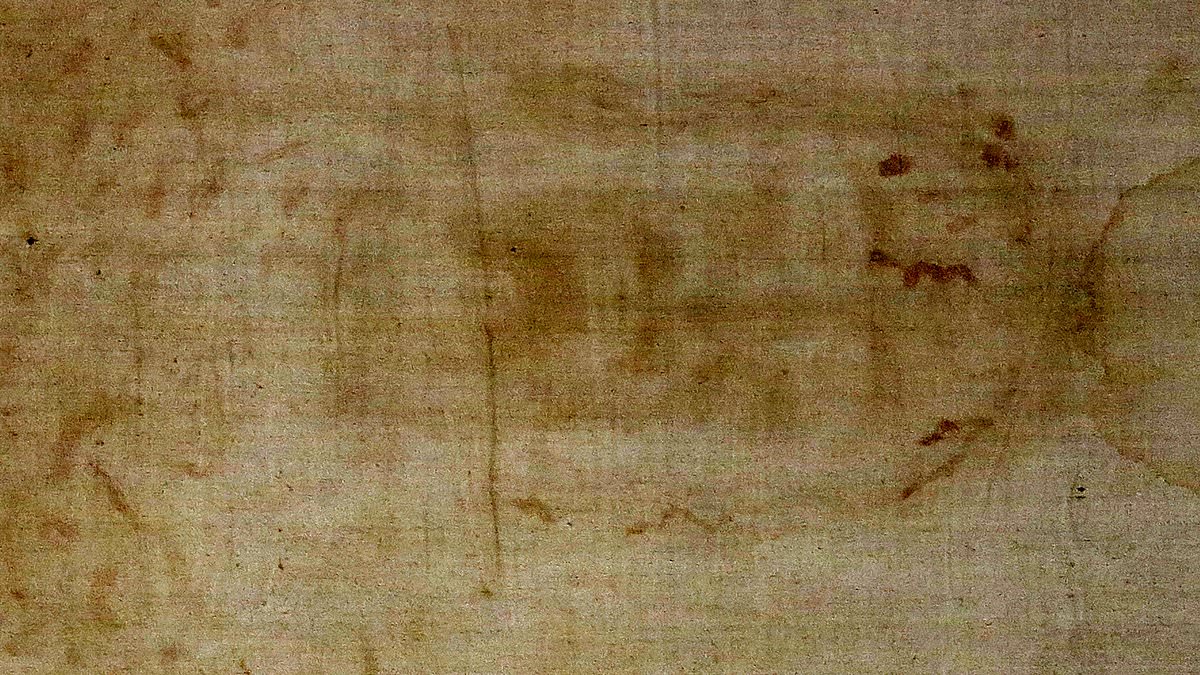
The Shroud of Turin mystery has deepened yet again, as a new analysis has uncovered DNA from 'multiple sources' on the material. For centuries, Catholics have flocked to the Italian city of Turin to be in the presence of its famous shroud. The venerated piece of linen bears a faint image of the front and back of a man – interpreted by many as Jesus Christ. Believers say it was used to wrap the body of Christ after his crucifixion, leaving his bloody imprint, like a photographic snapshot. In their new study, researchers from the University of Padova found DNA from several sources on the cloth.This includes multiple humans, as well as animals, plants, and fungi. 'This research provides original insights into the diversity of DNA extracted from samples collected in 1978 from the Turin Shroud, revealing its biological complexity through rigorous DNA and metagenomic analyses,' the researchers explained.'Our findings highlight its preservation conditions and environmental interactions, offering valuable perspectives into the identified genetic variants, which originated from multiple biological sources.' The Shroud of Turin mystery has deepened yet again, as a new analysis has uncovered DNA from 'multiple sources' on the material In their new study, researchers from the University of Padova found DNA from several sources on the cloth. This includes multiple humans, as well as animals, plants, and fungiCurrently stored at the Cathedral of St. John the Baptist in Turin, the Shroud of Turin is a 14ft–long linen cloth with a faint image of a man.The image on the shroud is believed to reflect the story of Jesus' crucifixion, giving rise to the belief that the cloth is the burial shroud of Jesus himself.However, the authenticity of the shroud has been frequently brought into question over the years. Writing in their study, published as a preprint in bioRxiv, the researchers, led by Gianni Barcaccia, said: 'The true nature of the Shroud has been highly debated among historians, theologians, and scientists.'Several hypotheses regarding its origin have been proposed, but as of today, no one has yet been able to establish to any degree of certainty when and where this textile originated from.'To get to the bottom of it, the researchers analysed DNA extracted from 12 samples collected from the shroud in 1978. Given how many people have handled the shroud, the researchers were unsurprised to discover 'clear signatures' of modern DNA contamination. However, what was more surprising was the amount of older human DNA on the shroud. Currently stored at the Cathedral of St. John the Baptist in Turin, the Shroud of Turin is a 14ft–long linen cloth with a faint image of a man The image on the shroud is believed to reflect the story of Jesus' crucifixion, giving rise to the belief that the cloth is the burial shroud of Jesus himself Shroud of Turin: The burial cloth of Jesus Christ? The Shroud of Turin is a 14–foot–long linen cloth with a faint image of a crucified man.The image on the shroud is believed to reflect the story of Jesus' crucifixion, giving rise to the belief that the cloth is the burial shroud of Jesus himself.The authenticity of the shroud has been frequently brought into question over the years but there are also many studies claiming to validate its origin.It is considered to be one of the most intensely studied human artefacts in history.Since it first emerged in 1354 Vatican authorities have repeatedly gone back and forth on whether it should be considered the true burial shroud.The shroud is currently stored at the Cathedral of St. John the Baptist in Turin but is only publicly displayed on special occasions. 'Our analyses revealed several human mtDNA lineages, including one common in Western Eurasia and another prevalent in the Near East,' the researchers explained. Unfortunately, this suggests we may never be able to find out if the shroud really was used to wrap Jesus' body, according to the experts. 'The occurrence of an unusually high number of human heteroplasmies and the coexistence of different mtDNA variants confirm that the Shroud came into contact with multiple individuals, thereby challenging the possibility of identifying the original DNA of the Shroud,' the team added. As well as human DNA, the researchers found traces from multiple animals, including cats, dogs, chickens and cows. While this might not sound like much, it could help to unravel the mystery of where the shroud came from. 'Concerning the Shroud’s journey, the presence of red coral, livestock (e.g. chickens, cows, pigs, goats, sheep, rabbits, horses), and domestic cats and dogs suggest Mediterranean origins or transit through Mediterranean regions,' the team explained. What's more, the cloth was found to contain DNA traces of carrots and cereals – crops that aren't usually associated with the Middle East. 'The prevalence of Mediterranean crops and the absence of typical Middle Eastern flora raise questions about the agricultural landscape when the Shroud was created or used as a burial cloth,' the researchers added. 'Comparative analyses with other ancient textiles and artifacts could further illuminate cultural and historical interactions with plants and animals.'Overall, the findings suggest that the Turin Shroud has a 'complex history'. 'The overall DNA results – derived from rigorous methodological handling in clean rooms and metagenomic analyses supported by robust bioinformatics – suggest a diverse mosaic of genetic traces,' the team concluded. The Daily Mail has contacted the researchers for further comment on the implications of the findings. WHY IS JESUS DEPICTED IN DIFFERENT WAYS?No physical description of Jesus is found in the Bible.He's typically depicted as Caucasian in Western works of art, but has also been painted to look as if he was Latino or Aboriginal.It's thought this is so people in different parts of the world can more easily relate to the Biblical figure.The earliest depictions show him as a typical Roman man, with short hair and no beard, wearing a tunic.It is thought that it wasn't until 400AD that Jesus appears with a beard. This is perhaps to show he was a wise teacher, because philosophers at the time were typically depicted with facial hair.The conventional image of a fully bearded Jesus with long hair did not become established until the sixth century in Eastern Christianity, and much later in the WestMedieval art in Europe typically showed him with brown hair and pale skin.This image was strengthened during the Italian Renaissance, with famous paintings such as The Last Supper by Leonardo da Vinci showing Christ.Modern depictions of Jesus in films tend to uphold the long-haired, bearded stereotype, while some abstract works show him as a spirit or light.