What China’s cow dung hotpot is really made of – and it’s not what you think
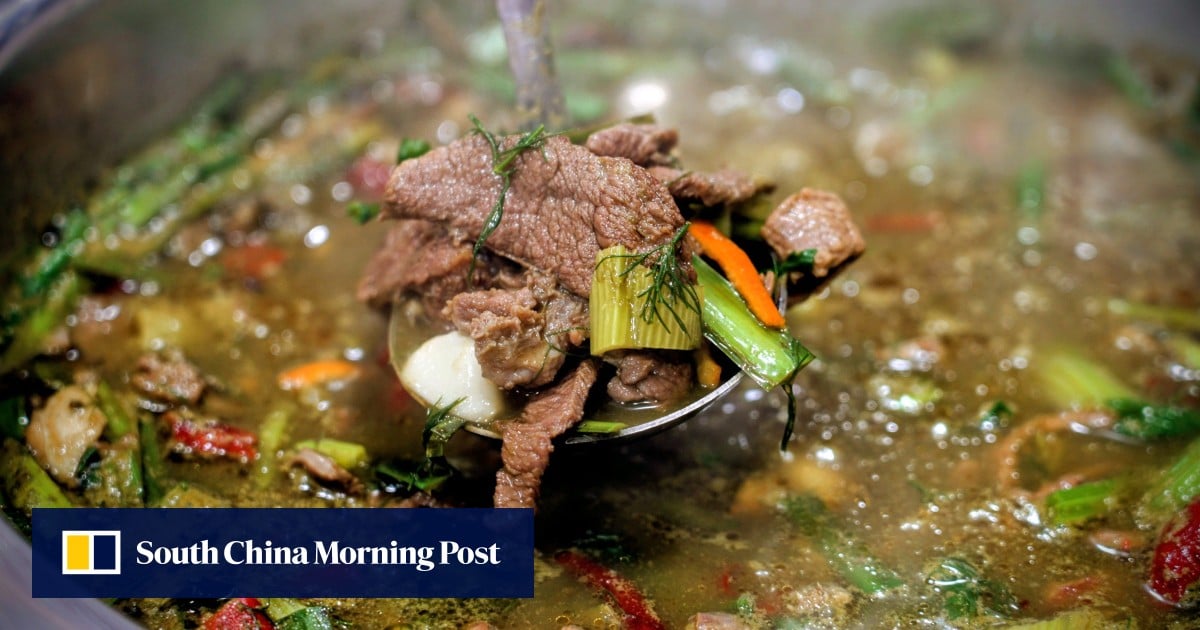
The concept of this dish alone may be enough to make you sick to your stomach. Hailing from southwest China’s mountainous Guizhou province, the notorious cow dung or niubie hotpot is a stew that is made out of undigested grass from a cow’s stomach and intestines, as well as cow bile.Also known as bitter or cow bile hotpot, this creation often falls into the category of “dark cuisine” in Chinese gastronomy, which refers to unconventional food combinations that challenge culinary norms.Dishes under this umbrella can span from experimental dishes to “disgusting” ingredients that have gained popularity for their shock value or social media shareability. Yet, often, they are surprisingly pleasant to consume.Upon entering the premises of several niubie specialists, we were surprised to find they were like any other hotpot restaurant – with no particularly unpleasant smells, and just a lot of people sitting down to green hotpots for dinner.Curious to find out how it is prepared, we head to Rong Jiang Niu Bie Huo Wo Dian in Zunyi, 140km (87 miles) north of Guizhou’s capital Guiyang. In the restaurant’s kitchen, we see the chef stir-frying aromatics such as garlic, ginger, spring onions and Guizhou’s famous chillies, followed by the beef and offal, before pouring in the infamous grass-and-bile mixture. All this is brought to boil in a wok before serving.There is nothing repulsive about the smell of the concoction; if anything, it smells like Chinese herbal soup. Upon tasting, the first flavour is the familiar umami of spicy beef broth, but then the bitter notes of Chinese herbs soon bloom at the back of the palate.