Humans Were Already Dog People 16,000 Years Ago, DNA Suggests
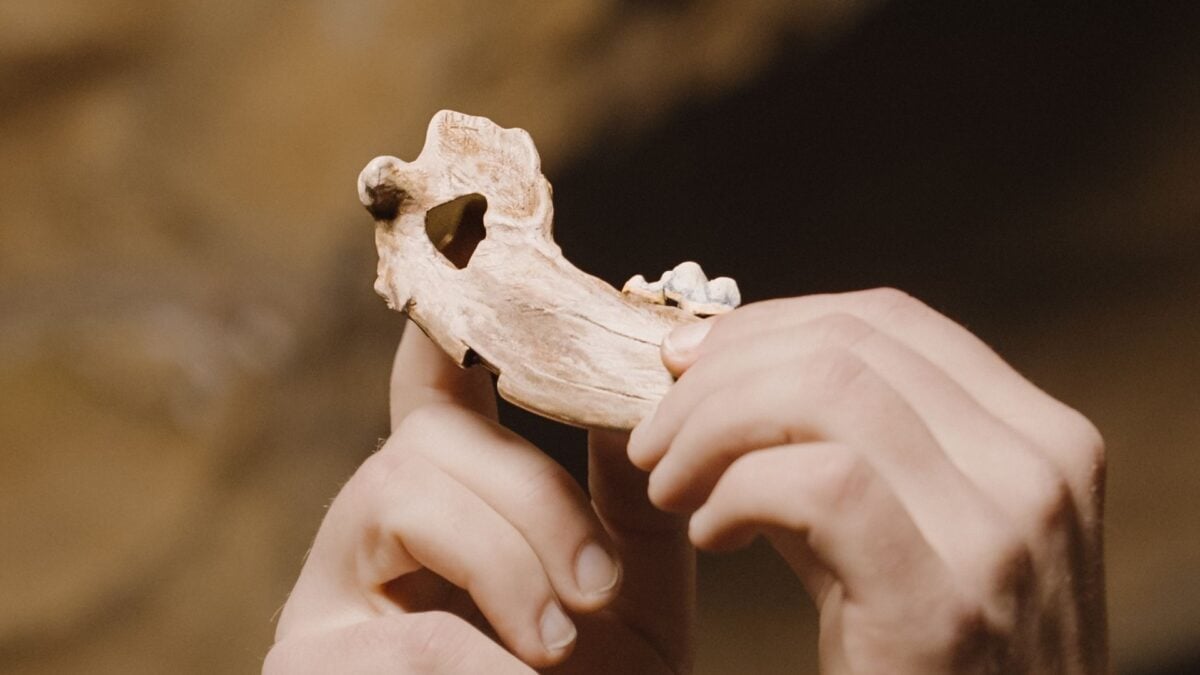
The bond between humans and dogs has long been a scientific mystery. When and where did humans domesticate dogs? Why? Scientists uncovered the latest clues in bones from dogs that lived between 14,000 and 16,000 years ago, a time when humans were still hunter-gatherers. Found in sites in the UK and Turkey, the bones represent the oldest dog genomes to date and push back the earliest direct existence of dogs (Canis lupus familiaris) by more than 5,000 years. Besides rewriting dog history, scientists found that the genomes of the ancient specimens were closely related genetically—even though they were separated by roughly 1,800 miles (3,000 kilometers).
This suggests that dogs may have been integrated in and passed on between diverse hunter-gatherer communities, according to a new study, published on Wednesday in Nature. The dogs may have also held a cultural significance. “The fact that people exchanged dogs so early means these animals must have been important. With limited resources, keeping them implies they served a purpose,” Laurent Frantz, a professor of animal paleogenomics at LMU Munich and a co-lead senior author on the study, said in a statement.
The ‘Rosetta Stone’ of ancient dogs While scientists have established that dogs emerged from populations of the grey wolf (Canis lupus), determining when they were domesticated has been a more difficult endeavor. Estimates vary widely, with some placing the domestication of dogs as far back as 135,000 years ago or as recently as 15,000 years ago.
Part of the challenge lies in differentiating the remains of dogs from grey wolves, which can be difficult to do based on morphology, especially during the early phases of domestication. Another challenge has been the amount of genetic evidence available. Previous studies have mostly relied on very short DNA sequences and skeletal measurements to evaluate the earliest presence of dogs. © National History Museum As such, recovering whole genomes from a 14,300-year-old dog in Gough’s Cave in the UK and another from a 15,800-year-old dog in Pinarbasi, Turkey, was game-changing.
Lachie Scarsbrook, a paleogeneticist at the University of Oxford and one of the co-authors of the new study, compared the discovery to “the Rosetta Stone, for lack of a better term, that then unlocked all of the stuff that we already had in our database,” in an interview with The New York Times. A peek into the lives of ancient dogs In addition to the dog genomes from the UK and Turkey, the researchers also analyzed DNA from ancient dogs found in Germany, Switzerland, and Italy. They found that each of the dogs was associated with three genetically and culturally distinct human populations in the Late Upper Paleolithic: the Magdalenian, the Epigravettian, and Anatolian hunter-gatherers.
Although the role the dogs played in these communities remains unclear, clues found at the sites suggest they were significant to ancient humans. For instance, both Magdalenian and dog remains at Gough’s Cave exhibited similar funerary characteristics, indicating that they were treated in the same way. At Pinarbasi, dogs were buried in the same place as humans. An illustration showing how ancient dogs may have been integrated in human communities. © Illustration by Kathryn Killackey / National History Museum Dogs were not only culturally significant to humans in death, though. Scientists also found evidence of close association between humans and dogs during the animals’ lifetime. An analysis of dietary isotopes of remains at Pinarbasi, for instance, indicates that humans likely fed dogs fish.
Importantly, while the human groups that dogs were associated with were genetically distinct, the dogs found in these countries were genetically similar, indicating that the animals were widely distributed across western Eurasia during the Late Upper Paleolithic (at least 14,300 years ago). How many types of ancient dogs were there? Given the point in history we’re talking about, which was before humans discovered agriculture, another question emerges: What about other dogs? A second study, also published in Nature on Wednesday and co-authored by Anders Bergström from the UK’s University of East Anglia, tackled this question. In particular, the study aimed to determine how the Neolithic transition, which involved the large-scale migration of people and domestic animals from Southwest Asia to Europe, affected the local dog population. For their research, scientists analyzed the remains of 216 dogs and wolves, including a 14,200-year-old specimen from Switzerland.
Their results found that instead of replacing local Mesolithic dogs, incoming farmers largely incorporated them. The finding is in stark contrast to other dramatic expansions in human history, such as the arrival of Europeans to the Americas in the colonial era. In that case, European dogs “rapidly and almost completely replaced native American dogs,” the scientists wrote. Overall, there are still many questions that remain unanswered about the domestication of dogs, including which specific population of grey wolf all dogs descend from and why humans decided to keep them close by. But given the enduring legacy of dogs and their continued role by our side today, it’s likely only a matter of time until scientists solve the puzzle.