37 is the age you start sounding like your mother. Now, experts reveal exactly when you start to look like her - and the lifestyle tweaks to help soften those 'family wrinkles'
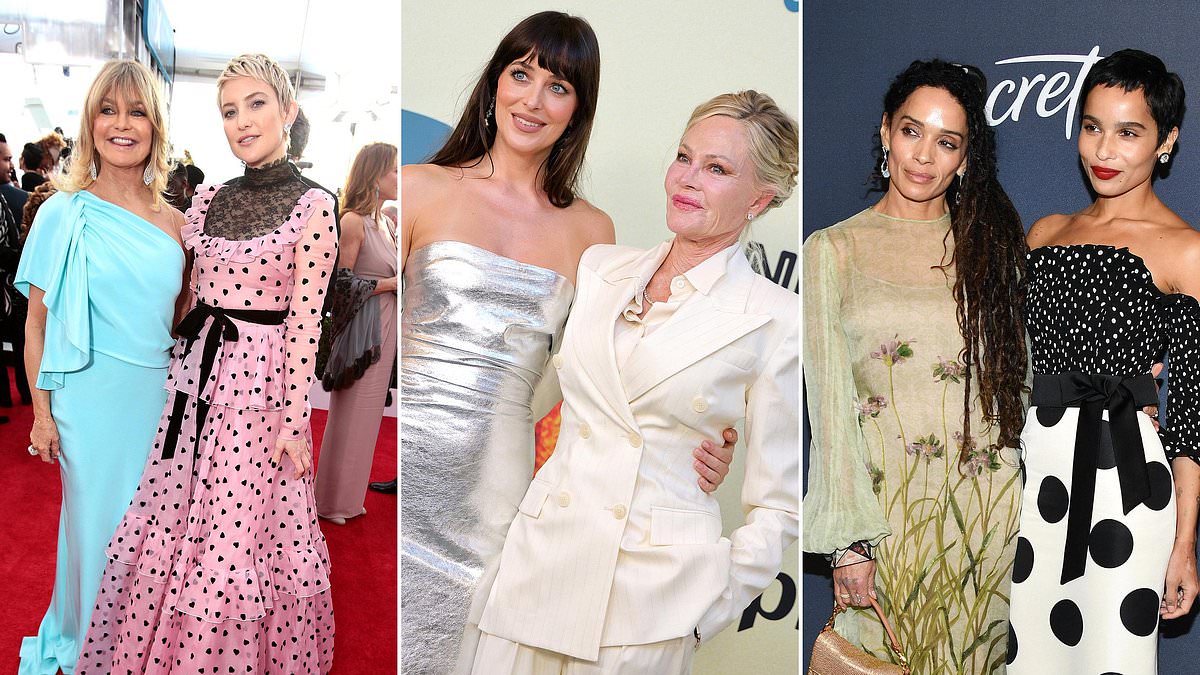
Do you ever find yourself saying something out loud and then internally thinking – oh my god, I sound just like my mother? If so, you are not alone, because according to a new survey, 37 is the age at which many adults begin repeating the familiar phrases their mothers.Researchers discovered that more than half of adults (56 per cent) repeat phrases their mother used at least three times a week, highlighting how deeply embedded those expressions can be. But while we may start to sound like our mums from our late-thirties, another question is: when do we start looking like them?The obvious answer is from birth, because anyone who has had a baby will know that all visitors love to analyse your beautiful newborn for ‘their mum’s eyes’ or ‘dad’s nose’. Some children look so much like a particular parent its almost uncanny. Perhaps the question instead should be – what age do you start looking like your parent as you remember them from your childhood?My own mum had me when she was 31, and so now, at the age of 38, I can definitely remember her at exactly the same age I am now. Do I find myself saying the same things she said? The answer is certainly yes, although I think that is largely because I have my own children now, and in moments of doubt you find yourself falling back on those familiar wisdoms (‘How can you be bored when there’s so much tidying to do?’ was a favourite in my home). As I’ve got older, I’ve also noticed my face age in exactly the same way my mum’s (still lovely) face too; for example, I have developed what we call ‘the family wrinkle’ which is a vertical frown line at the start of the right eyebrow. This is very normal at my age, according to Dr Anjali Mahto, Consultant Dermatologist and founder of Self London). She says she typically sees clients who say they are starting to look like their parents ‘around the mid-to-late thirties and early forties.’ Zoe Kravitz, age 37, with her mother Lisa Bonet.It’s no surprise really, because ‘this is the exact decade where our natural collagen production drops significantly enough that structural changes, like early hollowing around the eyes, become visible even when the face is at rest. It is often a specific photograph or catching their reflection in certain lighting that triggers the sudden realisation that they are inheriting their parents' facial patterns,’ says Mahto.Of course, the reason for my ‘family wrinkle’ and other signs of ageing shared in common with your parents is genetics. ‘Genetics play a massive role in our underlying bone structure, fat distribution, and skin thickness, which heavily dictate how our faces will age,’ says Mahto. ‘If your mother has a genetic predisposition to volume loss under the eyes or specific dynamic expression lines, you are highly likely to inherit those same structural tendencies.’So what can we learn from looking at our mothers' faces? Dr Vishnu Nathan is a dual-qualified doctor and dentist at Taktouk Clinic, says ‘It offers a valuable blueprint—not only of how you may age structurally, but also how you feel about those changes. Some patients see continuity; others focus on features they would prefer to soften. What I often encourage is a more balanced perspective: identify the features you admire, whether that’s bone structure, expression, or skin quality, and look to preserve and enhance those. At its best, aesthetic treatment is not about distancing yourself from that resemblance, but refining it in a way that feels confident, modern and entirely your own.’ Dakota Johnson, age 36, with her mother Melanie GriffithOf course, if you’re concerned about ageing, there is a lot you can do. Mahto points out that ‘lifestyle factors like sun exposure and smoking account for up to 80% of extrinsic ageing, meaning you still have a huge amount of control over when those inherited signs actually appear.’ Nathan says ‘In clinical practice, we often see that lifestyle can either accelerate or soften these genetic tendencies. It is a continuous interplay between nature and nurture.’Optimising skin health through sticking to certain products and maintaining a healthy lifestyle will help. ‘The absolute most effective preventative measure is the daily, diligent use of a broad-spectrum sunscreen, as UV radiation is the primary destroyer of your natural collagen,’ says Mahto. ‘Secondly, you should look to incorporate a well-formulated retinoid into your evening routine to actively stimulate new collagen production and increase cellular turnover. Finally, maintaining a balanced lifestyle with adequate sleep and varied diet will be very beneficial.’ Kate Hudson, then aged 38, with her mother Goldie Hawn (2018)She is not a fan so-called preventative Botox, with some people have injections to stop certain wrinkles before they take hold. ‘It’s not something I advocate for,’ says Mahto. ‘Botox works so incredibly well that it is worth waiting until you have lines you want to soften before having it. Starting injectable treatments prematurely in your twenties does not act as a magic pause button on the ageing process, it simply risks unnecessary facial muscle atrophy over time. You are far better off focusing your early preventative efforts on diligent sun protection and a retinoid to protect your collagen instead’.Of course, looking like your mum is far from a negative thing, and we shouldn't forget how many people would do anything to see their mothers’ faces again. But while some love it, others may not. ‘In my clinic, I often see mothers and daughters with clear similarities in how they age, particularly around the eyes, midface and jawline, reflecting shared genetics,’ says Nathan. ‘However, patients tend to fall into two camps: those who recognise and embrace familiar features, and those who feel a strong aversion to certain traits, often with an emotional association.’Mahto concludes: ‘We really need to reframe how we view the ageing process, moving away from seeing our inherited features as flaws that constantly need to be erased or injected. Seeing your mother's smile lines or the exact shape of her eyes reflected in your own face is a beautiful biological connection.’