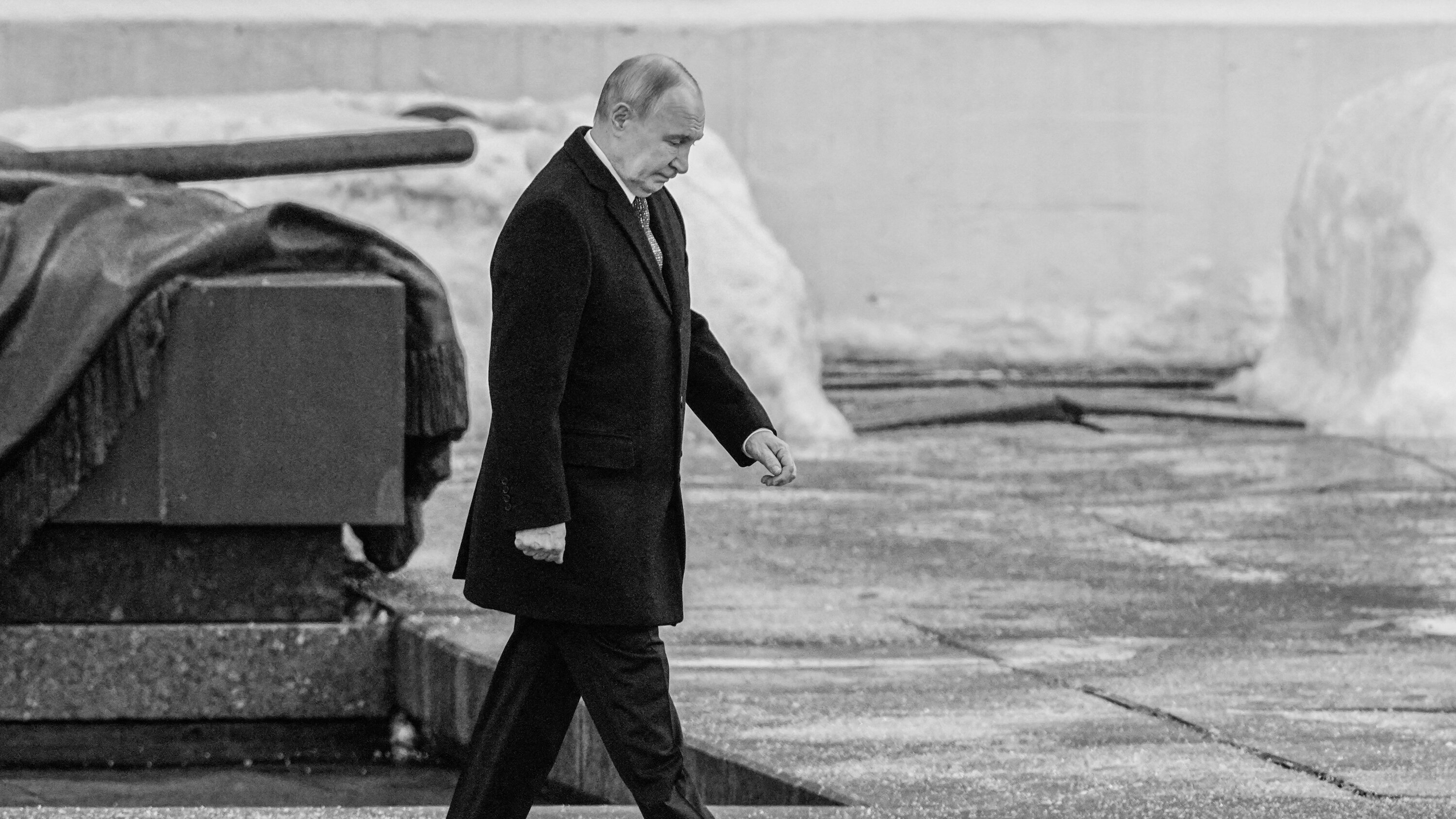
Viktor Orbán, Putin and Trump’s man in Europe, cements his role as the EU’s internal antagonist
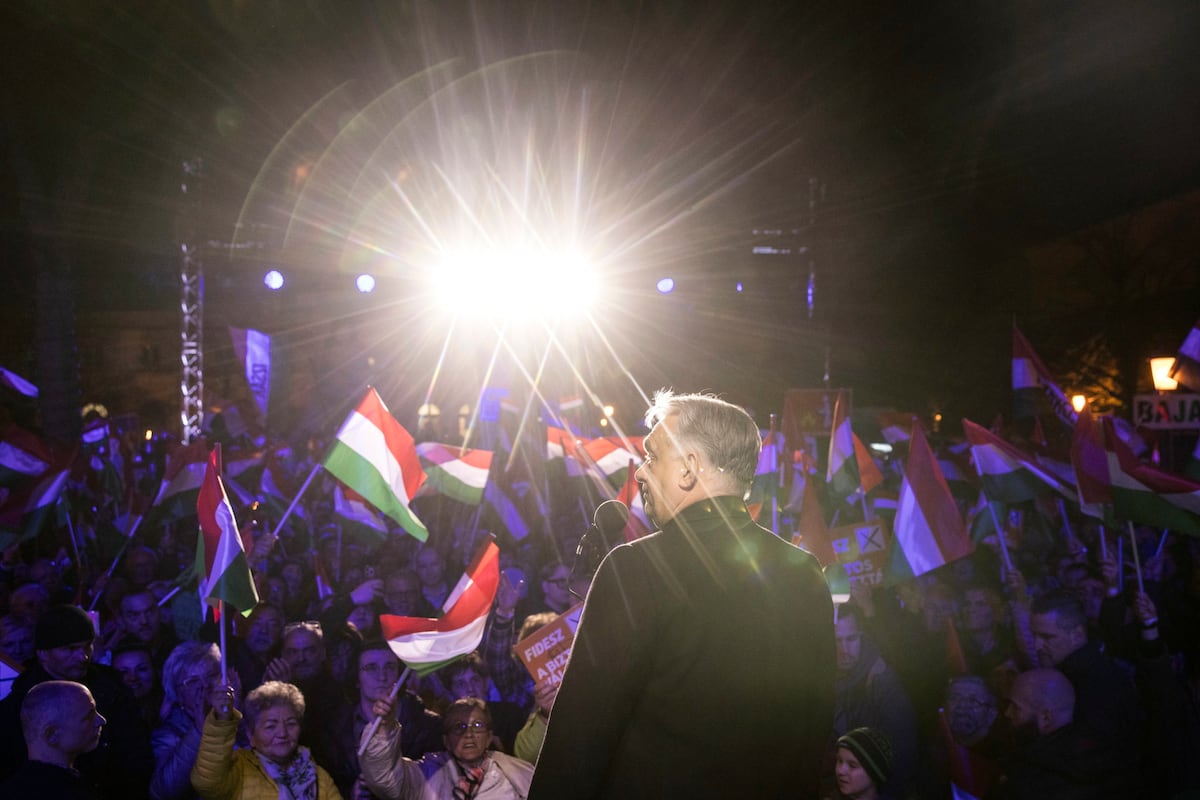
Viktor Orbán, Brussels’s great provocateur, has become a nightmare for the European Union. The Hungarian prime minister, who envisions a Christian Europe, free of immigrants and based on traditional values, has made coercion of the EU the hallmark of his government while engaging in ugly disputes with the European Commission over his attacks on the rule of law and the almost constant blocking of support measures for Ukraine. For weeks now, in an unprecedented maneuver, he has been blocking a multi-billion euro European loan for Kyiv, despite having already approved it and despite Hungary not even contributing any funds. Orbán, the European leader closest to Moscow and with ties to Donald Trump’s MAGA movement, has once again brought the European Union to a standstill.His breaking of his promise has fueled the fury of his European counterparts to unprecedented levels. So much so that at the last European Council meeting, Orbán received a severe reprimand from virtually all EU leaders, according to several EU sources. Usually loquacious, the Hungarian prime minister even seemed affected by the attacks from his colleagues at what many would like to see as one of his last EU summits: he faces parliamentary elections on April 12 in which his party, Fidesz, is facing difficulties for the first time in a long time.Orbán has been the maverick of the EU for years. But now, following a journalistic investigation that implicates his Foreign Minister Péter Szijjártó in informing Russia, virtually in real time, about confidential EU talks, he has further strained an already seriously deteriorated relationship. It is a serious case, and the European Commission has requested clarification from Budapest.In the middle of the election campaign, the nationalist-populist prime minister maintains that it is all a maneuver by the opposition and foreign governments to “install a pro-Ukraine government” in Hungary, although Szijjártó has acknowledged contacts with Russian Foreign Minister Sergey Lavrov, which he does not consider to be out of the ordinary. “What I’m saying may sound harsh, but diplomacy is about talking to the leaders of other countries,” he stated on Monday at a campaign event, according to a video he uploaded to his social media accounts.“No one was naive; it was known that Orbán and his team were talking to Moscow, but having concrete proof is another matter,” says Domènec Ruiz Devesa, a researcher at CIDOB and former MEP. “The same applies to the veto on the loan for Ukraine. Countries may have vetoed various decisions for many reasons, many of them unmentionable, but they have never publicly acknowledged it, which is what he has done by linking his decision to the reopening of the gas pipeline that carries Russian oil to Hungary through Ukraine… and that violates the principle of loyal cooperation. A common European position, which is also enshrined in the conclusions of the European Council, cannot be broken,” Devesa points out.With polls showing his rival the Respect and Freedom Party (Tisza) holding a several-point lead, Orbán, the longest-serving leader on the EU Council after 16 years in power, has called in the cavalry. While he is isolated in the European Council (except for the other two populist leaders, Slovakia’s Robert Fico and Czech Prime Minister Andrej Babiš), in recent days he has surrounded himself in Budapest with major figures from the global far-right constellation: from Argentine President Javier Milei to Marine Le Pen and the leader of Spanish far-right party Vox, Santiago Abascal. In the coming days, the Hungarian government also expects a visit from U.S. Vice President J.D. Vance, who considers Orbán one of his European allies and is eager for national-populist, Trump-aligned governments like his to lead a Europe he despises.Santiago Abascal (left) and Viktor Orbán, on March 21 at the CPAC meeting in Budapest. VOX (VOX)For Brussels, the far-right politician is no longer just a maverick. He is someone who constantly vetoes and sabotages measures to support Ukraine, such as the €90 billion financial lifeline to keep the country afloat and help it confront the Russian invasion, or the sanctions against the Kremlin’s sphere of influence. Orbán — with his policies and attacks aimed at dismantling the rule of law in Hungary and controlling the media and the judicial system — has become a valuable lesson for the European Commission and the other member states as they prepare for the next major enlargement, in which they plan to include clauses for candidate countries to prevent a similar situation from recurring.“Using the European agenda to wage internal political battles, and doing so after having turned society itself, through propaganda, against a struggling Ukraine, is, in my opinion, a violation of European solidarity,” said Polish Foreign Minister Radoslaw Sikorski, alongside Prime Minister Donald Tusk, one of the most outspoken critics of Orbán in the EU.The European Commission has a significant arsenal at its disposal to prevent Budapest or any other entity, (at one time, the Polish ultranationalist government), from jeopardizing the integrity of the EU or violating the rights of millions of citizens and businesses. Measures such as sanctions and legal action, which have resulted in the loss of billions of euros — something the Orbán administration has already experienced — have become a crucial tool with Russia’s ongoing war against Ukraine and the urgent need for Europe to punish Moscow and support Kyiv.Orbán, with his vetoes and blocking of important decisions on European foreign policy, has also become an example, a catalyst for those who advocate changing the European system of unanimous votes. The Hungarian nationalist-populist has provided glorious, sad, and simultaneously comical moments in the EU: such as when then-German Chancellor Olaf Scholz convinced him in 2024 to go for a coffee during the vote to approve a major financial package for Kyiv, thus exercising what is known as “constructive abstention.”Thus, Brussels and the member states are analyzing different ways to circumvent that unanimity: from enhanced cooperation, which allows progress in teams, to a revision of the treaties that, for the moment, is not to anyone’s liking.In recent months, however, with the Hungarian election campaign, relations with Brussels have deteriorated even further. So much so that in some diplomatic and parliamentary circles, the idea of triggering the “red button” against Hungary has been floated: Article 7 of the European treaties, which allows for the suspension of a country’s voting rights in the Council if it violates the club’s fundamental values. However, this maximum penalty requires unanimity. And that complicates matters: many countries are not open to applying it to Budapest because it would create a precedent that could also harm them in the future.With the Hungarian elections on the horizon and Orbán constantly playing the card of European persecution, no one is keen to open another legal battle against the nationalist-populist leader over the loan to Ukraine. But there are options, Ruiz Devesa points out. It could be taken to the Court of Justice for abuse of power. And even linked to the espionage case, he notes. That, moreover, would establish a precedent regarding the limits of the veto.Sign up for our weekly newsletter to get more English-language news coverage from EL PAÍS USA Edition