How the idea of human superiority over nature was invented
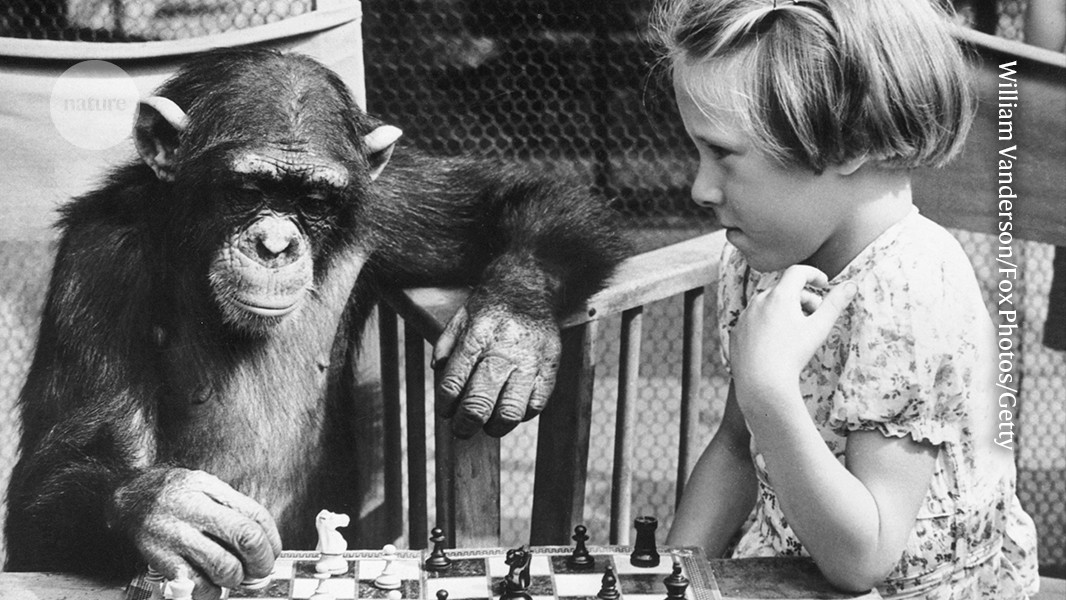
A young girl plays a game of chess with a chimpanzee at London Zoo in the 1950s.Credit: William Vanderson/Fox Photos/GettyAnimate: How Animals Shape the Human Mind Michael Bond Picador (2026)Humans are animals. This statement, although true, is unsettling for many people. Such discomfort reveals a deep ambivalence about how we see ourselves — a part of nature, yet somehow different from the rest of it.Could tracking animals’ health help to avert the next pandemic?In Animate, science writer Michael Bond explores how human relationships with other animals have changed over time, and what those shifts mean for both them and us. The topic has never been more urgent. As the environmental consequences of our actions increasingly threaten our own survival, humans are reminded that we are part of Earth’s system, not its masters. Animate challenges the supposed boundary between humans and other animals, arguing that it is neither fixed nor ancient.Our ancestors’ fascination with animals is vividly preserved in cave art that depicts many more beasts than it does people. Only in the past few millennia — under the influence of classical philosophy, Christian theology and Enlightenment-era rationalism — did humans come to see themselves as distinct, set apart by reason, language and the possession of a soul. As Bond argues, this separation was not accidental: human exceptionalism and the belief that we could transcend our bodily limits helped to ease anxieties about our mortality, and legitimize the widespread use of animals for labour, warfare and entertainment.The great divideHumans increasingly cast themselves not as part of nature, but as its masters and stewards. Although people had been hunting and eating animals for millennia, farming animals for consumption only emerged during the Neolithic period, some 10,000 years ago.How ‘forest bathing’ keeps lungs healthyThe divide has also shaped human society. As early world views that saw humans, animals and spirits as one interconnected system gave way to more abstract, hierarchical ideas about life, people applied the same logic to human groups. Dehumanization — portraying people as more ‘animal-like’ — justified domination, exclusion and selective empathy. Moral concern became conditional; inequality was normalized; and animal metaphors were used to rationalize colonialism, imperialism and interventions, which were often framed as ‘civilizing’ missions. Distancing ourselves from animals created a chasm that some people eventually fell into, suggests Bond.Forays into psychologyReinforcing a sharp boundary between humans and other animals has had unintended costs, but it has also created space for modern explorations of human psychology. Naturalist E. O. Wilson’s biophilia hypothesis — the idea that humans are naturally drawn to life and lifelike processes — which was published in his 1984 book Biophilia, has since gained empirical support. Studies show, for instance, that children pay more attention to animals than to objects, and prefer interacting with live animals over engaging toys1.Although Bond does not directly cite the biophilia hypothesis, he documents a similar evolved attentional bias towards animals, drawing on research on visual perception, neuroscience and evolutionary psychology. He argues that the long amount of time that our predecessors spent living among wild animals shaped our swift detection of and strong emotional responses to animate beings. However, recognizing this evolved sensitivity only highlights how inconsistent our attitudes towards different animals can be. As psychologist Hal Herzog notes in his book of the same name, and as Bond reiterates, “Some we love, Some we hate, Some we eat”. These inconsistencies reflect human needs as much as animal characteristics.A guide points out cave paintings of animals at a site in eastern South Africa.Credit: David South/Alamy