Just outside Joshua Tree, this art fair set in a desert motel is building something you can't get in L.A.
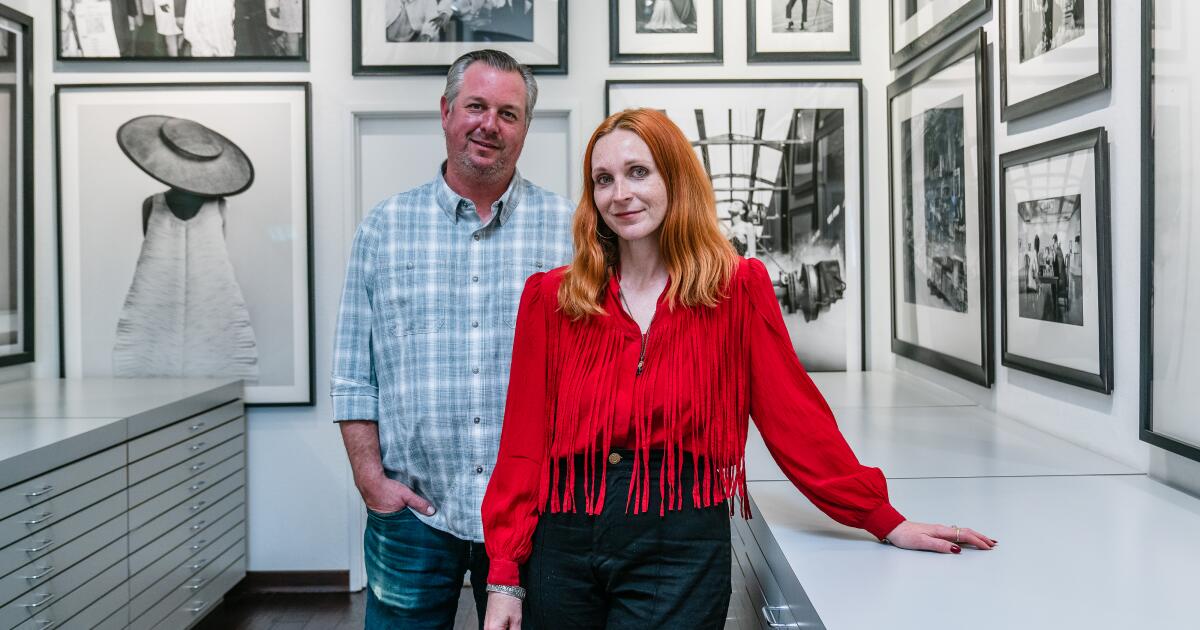
Devo frontman Mark Mothersbaugh is headlining a much-anticipated Saturday night event in Pioneertown. But this isn’t a music festival. It’s an art fair.Now in its fifth year, the High Desert Art Fair transforms the rooms of the historic Pioneertown Motel into exhibition spaces for 20 galleries and publishers, while expanding into a broader mix of programming — something akin to a mini Coachella Valley Music & Arts Festival. This year’s edition includes an opening night party with a DJ set by street artist Shepard Fairey, panel discussions, guided meditation and even a sound bath.Mothersbaugh’s performance, just weeks before Devo is set to play at the actual Coachella, captures the weekend’s experimental tone: When he takes the stage at the iconic honky-tonk roadhouse Pappy & Harriet’s, he won’t be joined by his band. Instead, he’ll perform with “The General,” described as “part instrument, part sculpture.”The event reflects the ambitions of its founders — veteran Los Angeles art dealer Nicholas Fahey and artist manager Candice Lawler — who launched the fair in 2019, hoping to cement the high desert’s growing status as a cultural destination.Fahey’s vision is unapologetically big: He wants the region to become the “Marfa or the Hamptons of L.A.” — wealthy enclaves where art and tourism converge. Long term, the pair hope the fair will expand beyond visual art to include film and other media, becoming a permanent fixture on the desert arts calendar alongside events like Modernism Week and Desert X. Rooms at the Pioneertown Motel are temporarily transformed into gallery spaces during the High Desert Art Fair, now in its fifth year outside Joshua Tree. (High Desert Art Fair) The fair’s growth has surprised even its organizers. What began with roughly 50 people gathered in Lawler’s living room is expected to draw between 2,000 and 3,000 visitors per day this year.“I thought we’d be this size five years [from now],” Lawler said during a recent interview at Fahey/Klein Gallery, the La Brea Avenue space Fahey’s family has operated for four decades. The fair’s rise mirrors a broader shift in the high desert, which in recent years has attracted not only artists and musicians but a wider influx of new residents — including those who arrived during the pandemic, drawn as much by lifestyle as by creativity. Fairey was among them.“The high desert has a fascinating blend of hippie and libertarian sensibilities,” he wrote in an email. “It’s more affordable [than L.A.] and a peaceful, inspiring environment for creative work.”The area has long drawn artists seeking space and solitude. Twentieth century painter Agnes Pelton created luminous abstractions in nearby Cathedral City, while assemblage artist Noah Purifoy spent the final decade of his life building the Noah Purifoy Outdoor Museum of Assemblage Art in Joshua Tree.For Fahey and Lawler, the fair emerged from years spent persuading friends and collectors to visit the region. Both purchased second homes in the desert in the mid-2010s and found themselves frequently extolling what Lawler calls the “magic of the desert.”“We needed to give them a reason to come here,” Fahey said.The event paused for a few years because of COVID-19. When it returned in 2023, it occupied several Airbnbs before settling into its current home at the Pioneertown Motel.Opened in 1946 by Roy Rogers and Gene Autry as part of a western movie set town, the motel is now owned by brothers Mike and Matt French. Art will be hung on the walls of the “cowboy core” rooms named after stars including Autry, Rogers and Dale Evans. Exhibitors often remove the western-style furniture to make room for the art. The main office at the Pioneertown Motel, which is opening its doors to the High Desert Art Fair for a three-day event featuring a performance by Devo frontman Mark Mothersbaugh and a DJ set by street artist Shepard Fairey. (High Desert Art Fair) This year’s exhibitors lean toward younger Los Angeles galleries, including Megan Mulrooney, John Doe Gallery, Gross! Gallery and curatorial platform Wienholt Projects, alongside Mothersbaugh’s MutMuz Gallery and local organizations such as BoxoPROJECTS and Yucca Valley Material Lab.The programming extends well beyond the gallery rooms. Panels on collecting and arts institutions in the desert will feature speakers including Jenny Gil, executive director of Desert X, the biennial exhibition of large-scale artworks installed across the Coachella Valley and in AlUla, Saudi Arabia.VIP tours will take visitors to notable works of art and architecture in the region, including Rachel Whiteread’s “Ghost Cabins” and architect Arata Isozaki’s “Desert Rooms,” both major installations. A benefit dinner will support Andrea Zittel’s High Desert Test Sites, an artist-run platform offering residencies, housed on her 80-acre compound. Fairey and Mothersbaugh will appear in an artist talk Saturday.“I think it adds a very interesting layer to creating a destination,” Gil said of the fair.Gallerist Mulrooney, who is participating for the first time, summed up the event’s appeal. “They’re creating a cultural experience,” she said. “You can dip a toe into art or music, do yoga or go to Palm Springs.”Ryan Schneider moved from New York to Joshua Tree with his wife in 2015. The decision to relocate spurred a shift in his practice from painting to sculpture.He has shown his work in galleries in Los Angeles, New York and Copenhagen, but the High Desert Art Fair marks the first time he has exhibited in his adopted hometown.“I hope [the fair] can provide an alternative where local artists can show alongside more established ones,” said Schneider, who will be speaking on the panel, “Artists in the Desert,” as well as manning a room at the fair with artist Ry Rocklen featuring the work of high-desert artists. A piece of art is installed in a room at the Pioneertown Motel during the High Desert Art Fair, which is returning to the area for its fifth year. (High Desert Art Fair) For Heidi Schwegler, co-founder of Yucca Valley Material Lab — a nonprofit residency and creative compound — the fair has already proved its value.Last year, Fahey offered the organization a complimentary room to display work. “It was incredible,” she said, noting that about 40 people filled the space continuously throughout the fair. This year, the organization returns as a paying exhibitor.BoxoPROJECTS founder Bernard Leibov moved to Joshua Tree in 2012 — well before property values shot up in the area — and runs artist residencies as well as the Joshua Treenial, a program of installations, performances and community events.Leibov, who previously was deputy director of the Judd Foundation, welcomes the visibility the fair brings to the region. But he cautions against easy comparisons casting the high desert as the next Marfa — the tiny Texas town that minimalist artist Donald Judd helped transform into a global arts destination. A painting on the wall of the Pioneertown Motel during the High Desert Art Fair, which is bigger than ever — drawing thousands of visitors to the small town near Joshua Tree. (High Desert Art Fair) Joshua Tree remains “more independent,” he said, in part because it is an unincorporated community. At the same time, rising real estate prices have made affordable studio space harder to find.Leibov believes the added exposure the fair provides is exactly what the region needs, but hopes the area can retain its affordable, underground ethos.“The area is lacking in professional platforms for serious artists,” he said. “Commerce is not a dirty [word] in the art world.”That mix of artistic experimentation and economic opportunity is exactly what Fahey and Lawler say the fair is meant to support.The desert has always drawn people looking for space, inspiration and escape. The fair is a bet that whatever draws artists to this landscape can sustain something larger without consuming it.“If we didn’t do it, someone would,” Fahey said.The desert, it seems, is no longer waiting.