Tech Talk: What are Giant and Merida thinking?
Thanks to more than ten years testing products for Cyclist, tech editor Sam has plenty to say when it comes to new bikes and gear. Tech Talk is Sam’s fortnightly newsletter, with a focus that hops between his thoughts on the latest kit to be featured by Cyclist and wider tech trends that people are talking about, or should be talking about. Click here to get Tech Talk directly to your inbox.
Over the last year or so we’ve seen the aero road segment return from near extinction at the hands of the lightweight racer to become more exciting and innovative than ever. As has been well publicised by now, relaxations in a few UCI rules governing frame design were responsible for this reinvigoration. Essentially, they’ve allowed more ‘extreme’ tube shapes and features to be considered that meaningfully advance aerodynamic efficiency to the point that there is now clear water (or rather, air) between aero bikes and lightweight all-rounders once again.
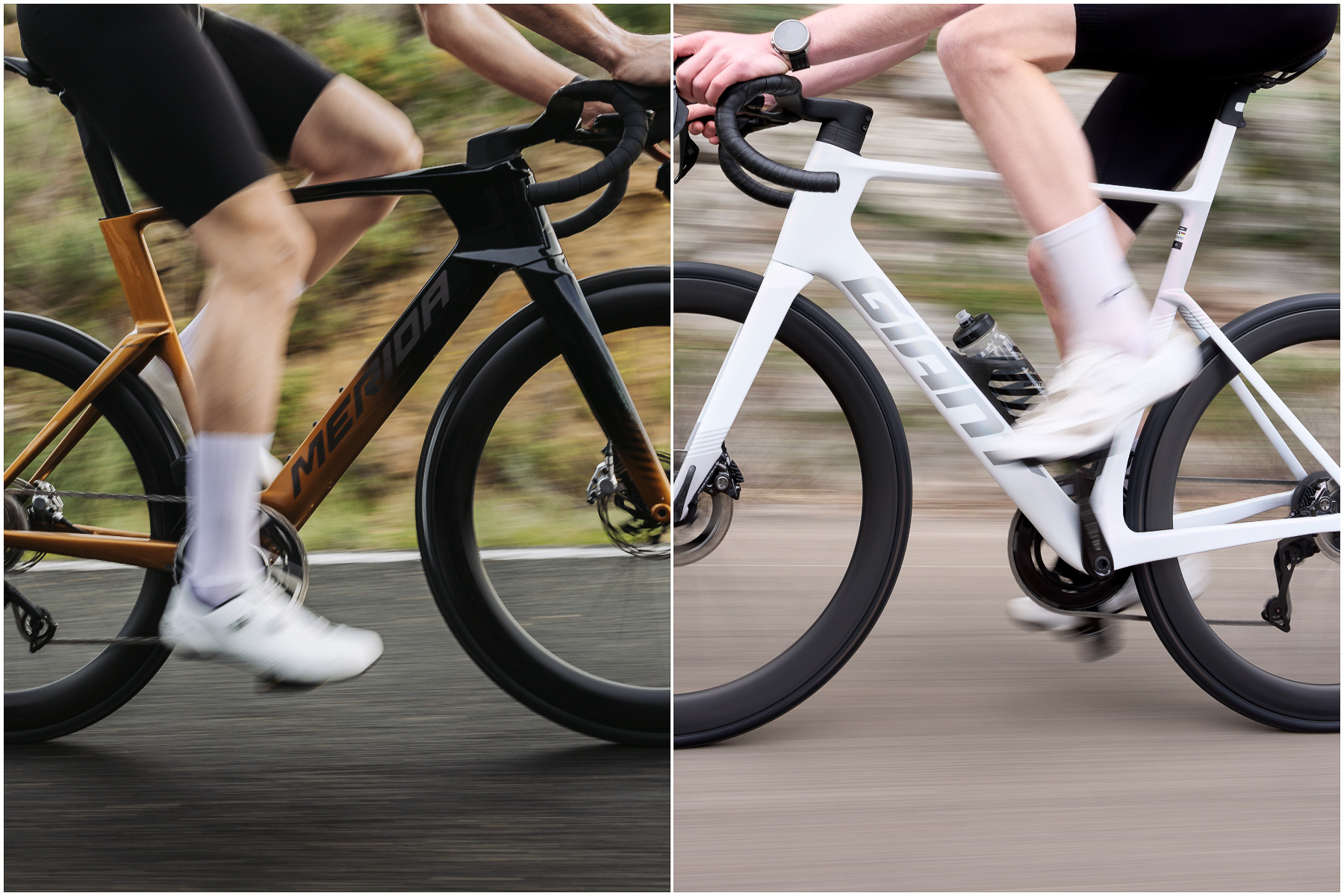
Aero bike releases had been neatly following this narrative until Friday 6th March, when Giant launched its new Propel and Merida launched its new Reacto within hours of each other. The timing coincidence was an interesting twist, but considering the wider context – the premise of the bikes and the market position of the companies that have released them – it becomes more intriguing.
First, the bikes themselves. Contrary to other recent aero bike releases, both adopt the more traditional approach of refining existing platforms rather than radically overhauling them. Also, the updates (which boil down to a bit lighter, a bit comfier) also move both bikes more squarely into competition with the brands’ own lightweight racers – the TCR and Scultura for Giant and Merida respectively.
Giant and Merida are the maker’s makers, in that they are responsible for the production of most high-performance bikes on the market because most bike brands subcontract one or the other to build their frames for them (for example, Merida builds Specialized’s bikes). Add this all-but-peerless level of oversight to the proposition of their latest releases, which are similar to each other but different to the rest of the market, and it raises the question of whether they know something the other brands don’t.
In an attempt to add some genuine insight to my rambling speculation, I spoke with both brands on the subject.
‘It's genuinely pure coincidence that Merida launched their new aero bike on the same day and we are based in the same city in Taiwan. They follow their own plan and there’s no collusion,’ says Giant product manager David Ward.
Merida’s Michael Wilkens concurs with Ward, so despite the coincidence firing up the imagination of this excitable journalist, as expected there’s no Velominati-esque agenda. But why the iterative updates this time around, rather than fully exploiting the UCI changes as others have?
‘The Reacto has always been, and continues to be, a highly versatile bike rather than a one-trick pony,’ says Wilkens. ‘While it clearly has an aerodynamic focus, comfort and handling were equally important in the development process so we could make it a bike that appeals not only to WorldTour racers, but also to performance interested amateurs.’
Ward echoes Wilkens’ sentiments in the Propel.
‘We wanted to improve on what we already had. Not everyone wants an extreme aero bike especially as in some cases those bikes can be heavier, less torsionally stiff and less comfortable to ride.’
These seem like fair justifications, but the other side of the coin to not leaning more heavily into aero is the risk of usurping preexisting lightweight race bikes. How will Giant and Merida deal with that conundrum? Both brands cite similar reasons for continuing with both platforms.
‘The weight is clearly getting closer to what was historically only possible on “classic/climbing” bikes, but we know that not everybody wants the aesthetics and style of an aero bike,’ says Wilkens. ‘Based purely on sales numbers worldwide, the Scultura continues to play a vital role, so we are keen to keep it in the range and will continue to develop the concept.’
‘Not everyone wants full on aero – the TCR is not going anywhere,’ says Ward. ‘Apart from anything else a TCR, with its sloping top tube design giving more exposed seat post and a fork with a less aero profile, will always give a more compliant ride than on a Propel.’
There we have it, folks. While I couldn’t get the juicy scoop the circumstances may have hinted were there, ultimately two great bikes appear to have been made even better, and by treading their own path – albeit together – Giant and Merida continue to offer more variety to those looking to ride fast, which is a situation I’m definitely here for.
Tech tidbits
A couple of Sam's small product launch highlights from the last week or two
Wider GP5000 S TR tyres
For my money the best all-round premium tyre on the market, Continental’s GP5000 S TR, is now available in a 35mm width. It rounds out a five-strong range that now caters for all road (which is importantly distinct from all-road) tastes. Crucially, the new size shares the same construction as the skinnier options, so users can expect the same suppleness and durability as they’d expect from the tyres, just with the extra grip and comfort that comes with more volume. Out and out speed-merchants will still want to hit that 30-32mm sweet spot, but for those who prioritise a nice riding experience – which really should be most of us – the 35mm width ticks a lot of boxes. Just make sure your bike has the clearance to fit them…
Genius pedal converters
Redshift has released the nattiest gadget I can remember coming across for some time. Its new Mousetrap pedal adaptor uses a cam mechanism that snaps down like a mousetrap into the pedal binding, converting clipless pedals into flats in seconds. Pedal converters aren’t exactly new, but these look among the best thought-out – they're even magnetised, so clip together neatly when not in use. Only Shimano SPD pedals are supported at the moment, but there are versions for SPD-SL, Look Keo and Crankbrothers pedal systems on the way. Priced at £90 a pair.