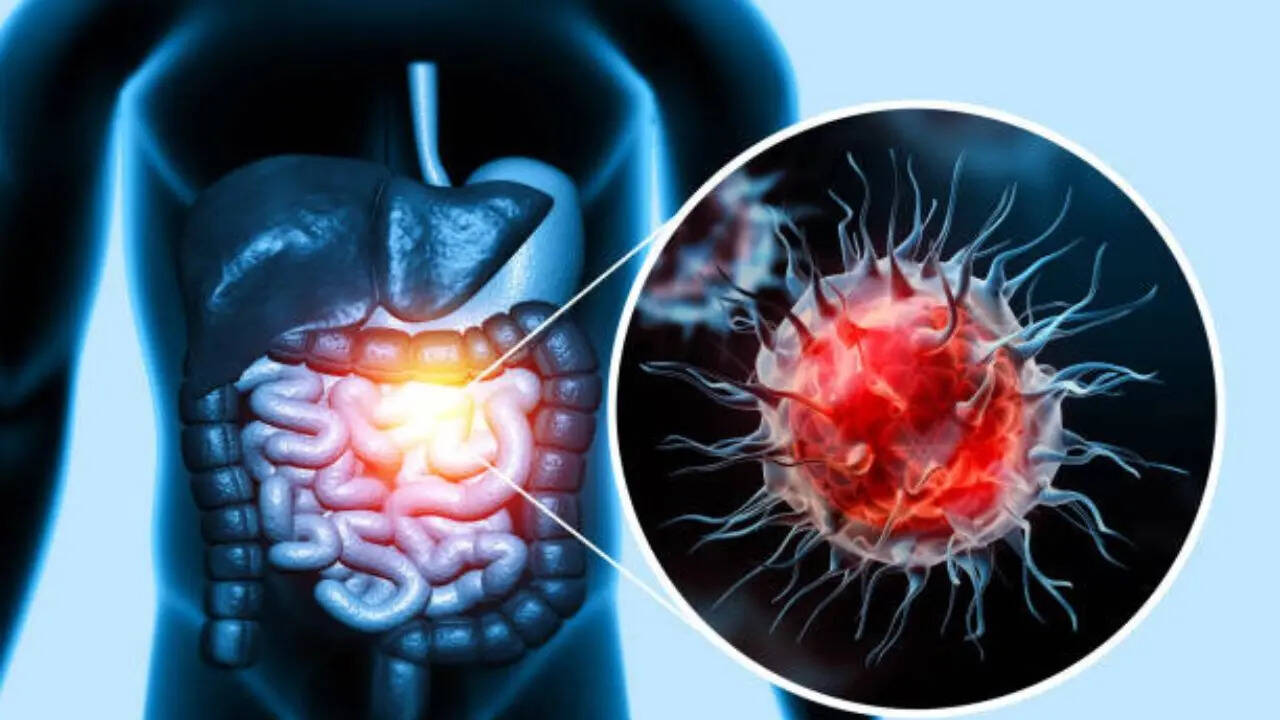
Colorectal Cancer Isn’t Always Lifestyle: How Family History and Genes Raise Risk
Meanwhile, familial adenomatous polyposis (FAP) is caused by mutations in the APC Gene. People with FAP develop hundreds to thousands of colon polyps, often beginning in adolescence. According to Dr. Rajkumar, without treatment, the lifetime risk of colorectal cancer can approach 100 per cent by mid-adulthood. “The mutation carriers can have an almost 100 per cent risk of colorectal cancer by around mid-adulthood if not managed. FAP can also be associated with certain other tumours (some with malignant potential), which is why families need structured follow-up rather than one-off tests,” he said.