CPH:DOX Director Wants the Copenhagen Doc Fest to Create “Big Chambers” of Dialogue, Not Echo Chambers, and Spread the Doc “Gospel”
The 23rd edition of CPH:DOX, the Copenhagen International Documentary Film Festival, is chock-full of new docs to discover. Its six juried competition sections alone feature 74 films, including 53 world premieres and 17 premieres. Meanwhile, the Right Here, Right now program puts a spotlight on human, civil and international rights, while the new Brainwaves lineup goes inside the mysteries of the human mind.
Plus, there are such sections as Science, Artists & Authors, Sound & Vision, and Urgent Matters. And Copenhagen’s Highlights program promises to screen “festival hits and front page stories,” including the likes of Miro Remo’s Karlovy Vary winner Better Go Mad in the Wild, Sinéad O’Shea’s capitalism and morality doc All About the Money, and Werner Herzog’s nature film Ghost Elephants.
Related Stories
So, local audiences and industry visitors alike have much to choose from during CPH:DOX, which kicks off Wednesday, March 11 and runs through Sunday, March 22.
“From the Arctic to the Amazon, Gaza to Greenland and Kyiv to the Kremlin, CPH:DOX 2026 spans the full alphabet of a world in flux,” Niklas Engstrøm, the artistic director of the festival, said in unveiling the program for this year’s edition. “The festival converges urgent reports from the world’s geopolitical boiling points with critical inquiries into AI disruption, Big Tech, oligarchs, and the battle for freedom of expression, while also tackling the accelerating climate crisis, neurotechnology’s ethical frontiers, and the fragile state of democracy itself.”
Ahead of the start of what looks like a feast for doc lovers in Copenhagen, Engstrøm talked to THR about his focus on expanding the notion of what docs can be, “tearing down” the walls between the screening room and the real world, how his team manages the huge amount of submissions, why CPH:DOX sees itself as a bridge between the U.S. and Europe in a time of tensions, and why Copenhagen wants to encourage curiosity, nuance, conversation and critical debates to create “big chambers” in the age of social media echo chambers.
I have noticed how different the topics of this year’s films are, but also how different the forms of documentary are that CPH:DOX 2026 is serving up, including hybrid forms. Can you talk a little bit about the importance of showcasing such innovation in the doc field?
From the very beginning of the festival in 2003, we have always believed in the mission of CPH:DOX to be a festival that should explore and expand the very notion of documentary cinema. That’s a main principle guiding us through everything we curate. Our goal is to present the most diverse program possible, spanning cultures and countries, storytelling forms and also social perspectives. I feel this year’s lineup reflects that commitment, maybe even more than ever. Our goal is also always to bring together established and emerging voices, challenging the conventional formats.
I noticed that you used the word “diverse” as a point of pride at a time when some parts of the world appear to see less value in diversity.
Yes, diversity has become a rather contentious phrase, not least in the U.S. But for me, it really is a value, and it’s much more than inclusion and equity. It’s much more than representation or geography. It is basically about creating a dialogue across cinematic practices and lived experiences.
CPH:DOX has been programming more immersive experiences and events in addition to traditional films. How important is it for you to look beyond the screen we all know and love?
It’s hugely important that the film screenings and everything we do is in close contact with the real world. We actually try to, as much as we can, tear down the walls between the screening room and reality outside. For example, with music films, if we can have the musicians at the festival, we try to bring them.
Sinéad O’Shea’s ‘All About the Money’ is part of Copenhagen’s Highlights lineup
Courtesy of Enda O’Dowd
I have heard that there are a lot of people coming to Copenhagen for the doc festival from outside of Europe. Can you talk a little bit about the role that you see for CPH:DOX on the global map?
I think that today it’s even more important than ever, with the growing tensions between the U.S. and Europe, to have a festival that bridges the gap. And I think this will become more and more important in this world we live in today. We have an ethos that this festival should be a shared space for grappling with all the complexities of today’s crazy world through documentary art.We have political frameworks shifting. We have conflicts intensifying. We have technology blurring perception. And therefore, this role feels more urgent than ever. We’re driven by curiosity. We want to explore the frontiers of documentary cinema. We want to open conversations on human rights, geopolitical ambiguities, and we want to do so without simplification, insisting on nuance and resisting easy answers. I think that this is more important than ever for festivals like ours at the moment.
The Berlinale’s most recent edition was full of conflict and controversy. What’s your take on that and what it means for film festivals, including CPH:DOX?
Every festival has had to think about questions being pushed over the last few years, with horrible wars going on in in Ukraine and in Gaza and elsewhere, and a lot of political movements building up around them, and with a lot of political pressure on cultural events, including film festivals. So I think that we have all been thinking hard, including in Berlin. I would just say that what happened in Berlin this year was, in a way, a continuation of conversations that had happened in Berlin and elsewhere over the past few years. And I think the important thing is that we continue those conversations even when it’s difficult, and not try to close them down – whether that be by boycotting or by politicians going way beyond how they should behave and pulling the rug from underneath the feet of festival directors.
At CPH:DOX, we strongly believe that our understanding of documentary can add to the understanding of the complexities of today’s world. To me, it’s Interesting if we can find a balance between different perspectives in our program and also start up conversations around those films, also with people who might have a totally different perspective. We are a documentary festival and that means that we are heavily invested in the real world, and we are heavily invested in art, but not art for art’s sake. We know that every filmmaker in our festival is interested and deeply engaged in the real world, and we want to engage people in the real world. So, we support every filmmaker in the program, but we also heartily support critical conversations about those films that they make.
We not only curate a film program, but also a program of panels and debates around those films, where we can take up those conversations and have hard discussions. I believe that a festival like ours should be safe, but it shouldn’t be a safe space in the sense that your viewpoints can’t be challenged. It should be an open space where we can discuss even the hardest questions.
I heard your conference lineup includes a conversation that basically asks if we even talk about Gaza…
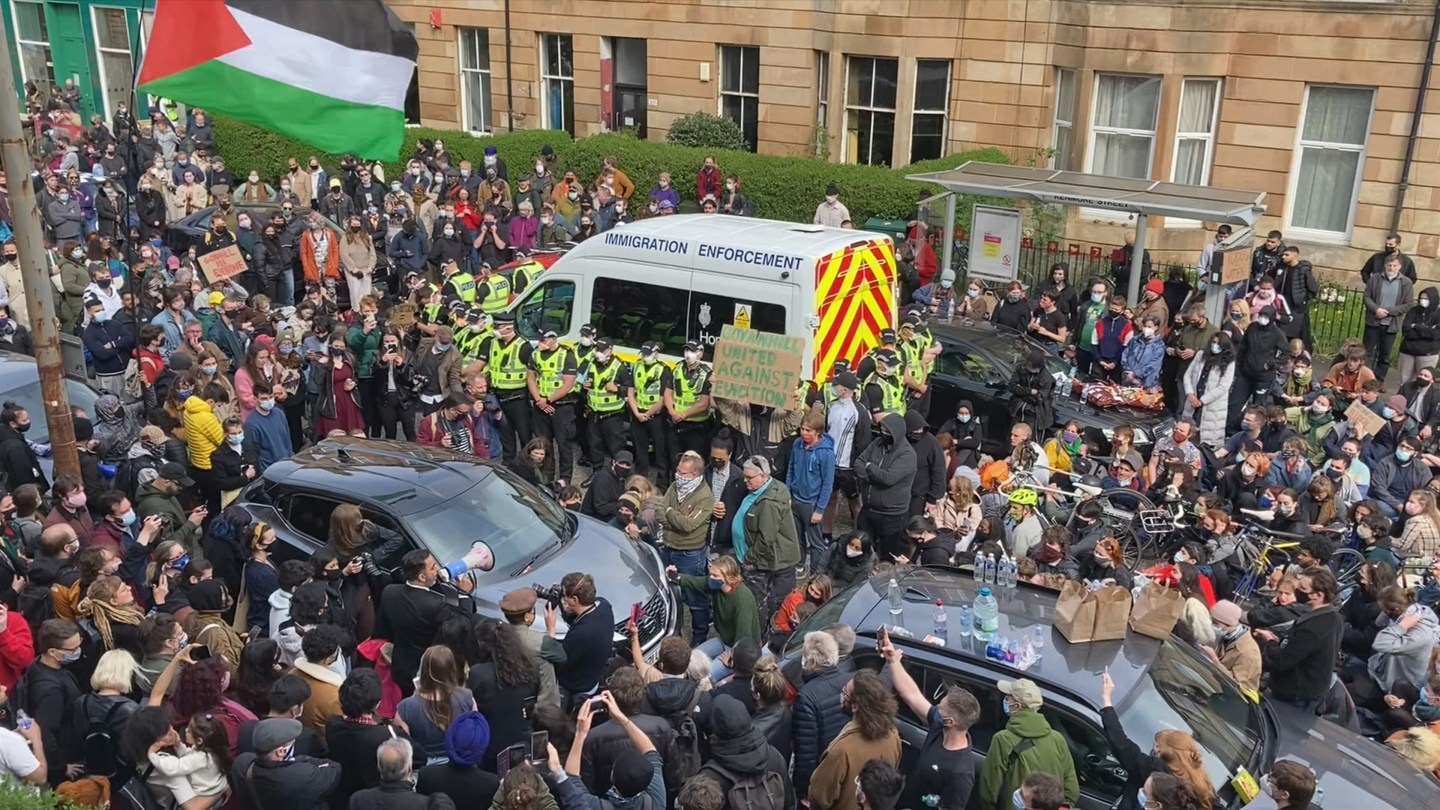
To me, it’s so important for us to facilitate conversations. And I know that right now, of course, with some conflicts, it’s almost impossible. But we’re still trying. We have a very, very critical film by a Danish Palestinian filmmaker, Omar Shargawi, who is criticizing Danish media coverage of the Gaza war and also harshly criticized the festival last year, and we listened. We listen to what our critics say. We have invited him inwith his new film, Palestinian Unwanted, and we also invited people he criticizes. So there will be a media representative [in Martin Krasnik, the editor-in-chief of Weekendavisen] in a discussion with him. They have had a really big fight about this, and we will invite them on stage to have a conversation.
To me, that’s the most important thing that a festival like ours can do: not creating an echo chamber, but building big chambers where you can listen to other people and other voices than your own.
Werner Herzog’s ‘Ghost Elephants’ is part of CPH:DOX’s Highlights program
Courtesy of The Wilderness Project Archive
Let me ask you more about programming Copenhagen. How have submissions to CPH:DOX been trending in recent years?
This year, we had around 3,000 submissions. That’s up from around 2,000 just three years ago. Our programming team actually counted the total running time of everything submitted, and it adds up to 112 full days of film. So that’s about four months of watching films 24 hours a day. This work is done by human beings, and every film is watched seriously, and we argue over them, so it is a huge amount of work. So, we simply had to find a way to hire more programmers over the last couple of years, and luckily, we managed to find the budget for it. I think this trend really speaks to the expanding global reach of documentary, but also the expanding reach of CPH:DOX.
Is there any new section or programming offering at the festival this year?
Yes, this year, we have curated a program called Brainwaves, which is a new major thematic trend that we will continue over the next few years, exploring the brain, consciousness and how our inner selves and our inner world order is changing rapidly, including with the rise of AI and new neural technologies.
Is there anything else you would like to share?
I see the festival as a space for thinking together, and that need feels more urgent than ever right now. That’s also why we are not only screening films in Copenhagen anymore. That is one of the big divisions in today’s societies, the divide between urban elites and people elsewhere and in the countryside. So, for me, the most important evolution of the festival in the last five years has actually been our nationwide program, DOX:Danmark, which is now in around 60 municipalities all over Denmark, out of 98. We started it five years ago with nine municipalities, so it has really grown a lot.
The first 20 years of CPH:DOX, we spent trying to bring the gospel of documentary to people in Copenhagen, and now we are trying to bring the gospel to everyone in Denmark. And it’s really encouraging to see audiences. They are actually coming in huge numbers for screenings in small towns all over Denmark.