Elon Musk Defends Himself in Court Over Posts Before Twitter Takeover
He told the jury that he was “flabbergasted” when CEO Parag Agrawal and CFO Ned Segal said they did not know how the company determined the 5% figure.
Days later, Musk posted on Twitter that the deal was “temporarily on hold” pending evidence supporting how Twitter calculated that percentage. Hours later, he posted that he was “still committed to acquisition.”
After the initial post, Twitter stock took “the elevator to the basement,” dropping 18% over the following 48 hours, Arnzen told the jury.
Arnzen also asked Musk if, after the early May meeting, he “thought [he] could pay way less for Twitter — half the price?” He also asked the X-owner whether he was “looking at an opportunity to revisit price.”
Musk said he believed there should have been an opportunity to renegotiate if there had been “material fraud” in calculating the numbers in Twitter’s SEC filings. Musk maintained, though, that he did not make any comments to intentionally depress stock prices or get a better deal on the purchase.
The tweets were intended to inform the public, he said, not sway stock prices.
“I’ve seen much bigger changes with no news,” Musk said on the stand. He did acknowledge that he knew the general public was closely attuned to his comments on social media.
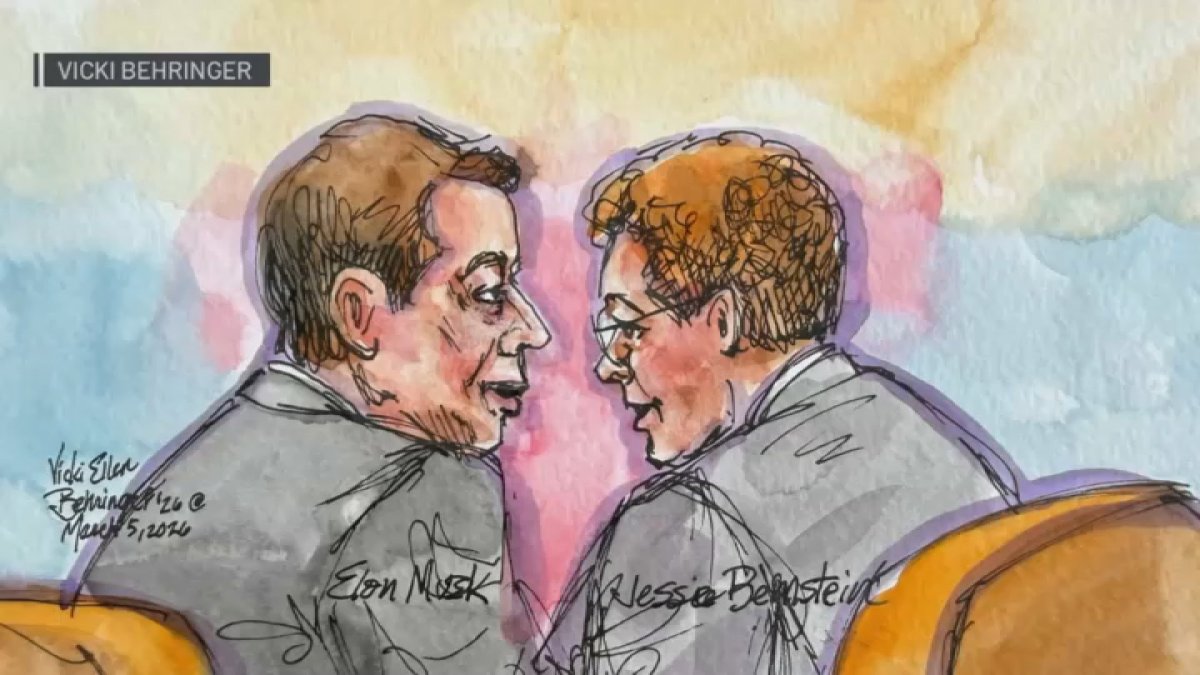
A courtroom sketch depicts the defense questioning Elon Musk on Mar. 4, 2026. The tech billionaire testified Wednesday, accused of defrauding former shareholders in a lawsuit. (Vicki Behringer for KQED)
This was in contrast with testimony from former stakeholders, who told the court they sold shares at deflated prices amid Musk’s public waffling. If he’s found guilty, he could be forced to repay them for the money they lost.
Separately, Musk also faces charges related to the Twitter acquisition brought by the SEC, which alleged he violated the law by not disclosing his stake in Twitter while the deal was being worked out.
When asked directly whether he thought of shareholders who might have sold their stock based on his comments at a deflated price, he said he didn’t have control over whether people chose to sell, adding that in the end, he bought Twitter at his originally proposed price, which was a “premium.”
“Share prices go up and down, but if somebody had simply held on to their position … the vast number of people benefited greatly from the acquisition,” he told the courtroom.