Berlinale crisis: Festival bosses rally to defend Berlinale director
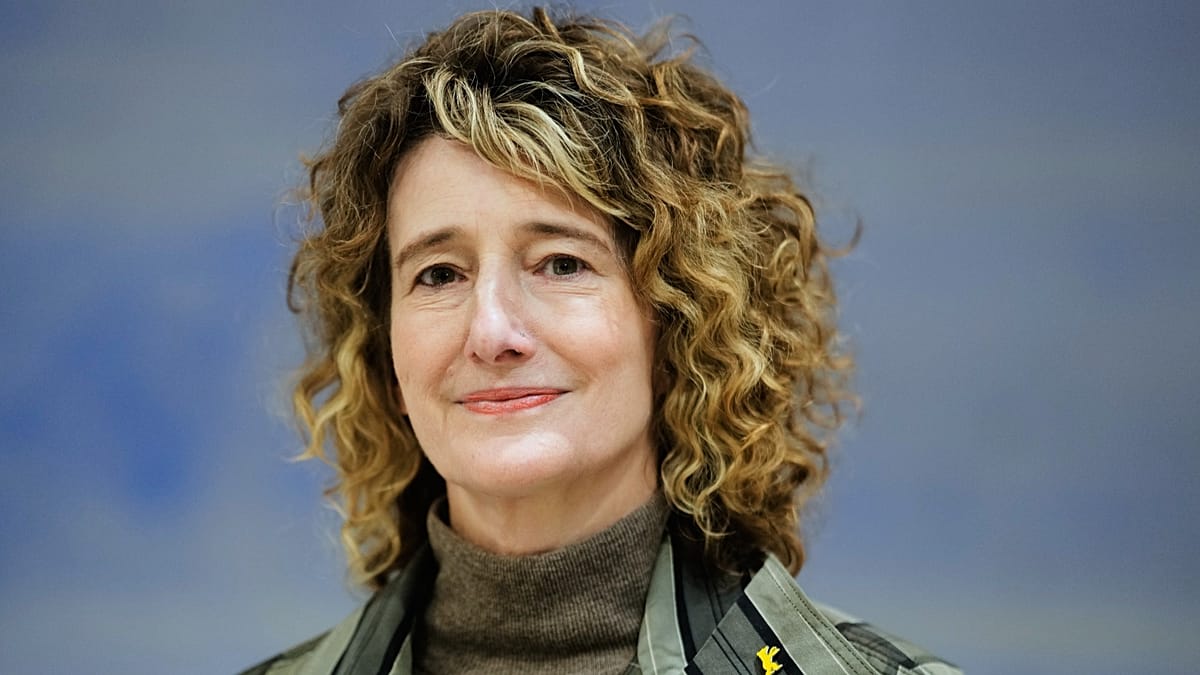
Global film festival directors, including Cannes’ Thierry Frémaux, Sundance’s Eugene Hernandez, London’s Kristy Matheson and Toronto’s Cameron Bailey, have published a statement throwing their support behind Berlinale boss Tricia Tuttle, amid reports that she may be getting fired.
ADVERTISEMENT
ADVERTISEMENT
Tuttle, who is currently two years into a five-year mandate, faces political backlash following pro-Palestinian speeches at this year’s Berlinale awards ceremony.
“We stand in support of Tricia Tuttle’s wish to continue as Berlinale Festival Director, in full trust and with institutional independence,” began the letter signed by 32 execs at the helm of the world’s most prestigious film festivals.
“A core aspect of our role as cultural custodians is to create and protect the space for filmmakers, artists, professionals and audiences to come together,” the letter continues. “This includes people who bring with them not only a shared love of cinema, but also a huge variety of lived experiences and viewpoints.”
“We must also navigate – with care – the fact that ‘everyone’ can include people with political and personal views that don’t always align, with each other, or with socially accepted or politically mandated positions.”
Scroll down to read the letter in full.
The signatories also include Jung Hanseok (Busan International Film Festival), Ilda Santiago (Festival do Rio), Vanja Kaludjercic (International Film Festival Rotterdam), Karel Och (Karlovy Vary International Film Festival), Giona A. Nazzaro (Locarno Film Festival), Lucía Olaciregui (San Sebastian International Film Festival), Frances Wallace (Sydney Film Festival) and Julie Huntsinger (Telluride Film Festival).
At first, the Berlin Film Festival was accused of censoring political talk when prominent attendees, including jury president Wim Wenders, declined to discuss politics.
The controversy blew up on closing night, when some prize-winners used their acceptance speeches to voice support for Palestine and Gaza.
German Federal Environment Minister Carsten Schneider walked out of the ceremony after Palestinian director Abdallah Al-Khatib, whose film Chronicles From The Siege won the top prize in the Perspectives section, accused the German government of “being partners in the genocide in Gaza by Israel” - referring in part to Germany maintaining a staunchly pro-Israel stance, rooted in the weight of historical guilt.
German conservative tabloid Bild, which is openly pro-Israel, suggested that Tuttle was about to be sacked. A column by right-wing journalist Gunnar Schupelius accused Tuttle of having “posed for Gaza propaganda,” citing a photo of Tuttle with Al-Khatib and the Chronicles From The Siege crew at the film’s Berlinale world premiere. He accused Tuttle of allowing the Berlinale to be used as a tool by “antisemitic” activists.
These accusations were countered by support for Tuttle – not only from the Berlinale but also from more than 3,000 film professionals, who signed an open letter stating that the Berlinale’s strength “lies in its ability to hold divergent perspectives and to give visibility to a plurality of voices.”
Speaking to the German press, Tuttle admitted she and German culture minister Wolfram Weimer “discussed the possibility of my mutual resignation” at a meeting of the festival’s supervisory board last week but that she is determined to stay on the job.
“I am very proud of my team and the festival and want to continue the work we have started together with full confidence and institutional independence,” Tuttle told German press agency dpa.
Here is the full letter of support from the festival heads:
As film festival directors and leaders, we stand in support of Tricia Tuttle’s wish to continue as Berlinale Festival Director, in full trust and with institutional independence.
In the debates that have surrounded the 2026 Berlinale and other cultural and artistic events in preceding months, we recognise the mounting pressures on film festivals everywhere to navigate volatile times while maintaining a safe space for the exchange of cinema, and of ideas.
A core aspect of our role as cultural custodians is to create and protect the space for filmmakers, artists, professionals and audiences to come together. This includes people who bring with them not only a shared love of cinema, but also a huge variety of lived experiences and viewpoints. This is what gives our film festivals their vitality, relevance and value, and it is what festival ‘spirit’ is made from.
We must also navigate – with care – the fact that ‘everyone’ can include people with political and personal views that don’t always align, with each other, or with socially accepted or politically mandated positions. And while film festivals that are long-lived, and well-attended, may appear to be indestructible meeting places, these spaces are often fragile, hard-won and complex to preserve.
Film festivals as we know, and need them, are becoming increasingly challenging to sustain in a climate where the appreciation of nuance is collapsing. Supporting genuine freedom of expression, including the freedom to articulate imperfect or unpopular opinions, has never been more important. We need to maintain spaces where discomfort is embraced, where debates can be expansive, where new ideas can propagate and where unexpected – and sometimes conflicting – perspectives are made visible.
We need all our stakeholders – audiences, creators, festival teams, public and private partners, industry, media, fellow institutions – to show each other grace, respect and solidarity as communities and networks connected through the love of film, or we risk losing these spaces completely. It is so much easier to destroy than it is to build.