From South Africa to trains, how boycotts have shaped Irish sport
Analysis: The public profile of sports events makes them a valuable forum for pursuing and drawing attention to social justice issues and other matters
Generations of Irish people have used sport as a platform for bringing people together to discuss contentious topics, to press for civil rights and to draw attention to other critical issues. Boycotts in sport have not always been successful in realising change and sport has also been used to provoke intolerance. Many instances of boycotts have been a valuable forum for pursuing social justice, a historical gauge for public morale and have shaped the story of Irish sport.
The very term boycott has Irish origins. It was coined after an English land agent Charles Cunningham Boycott was ostracised by his local community in Co. Mayo in 1880. When Boycott set about evicting 11 tenants in Ballinrobe, his employees withdrew their labour and began a campaign of isolation against Boycott in the local community. He left Ireland for London in disgrace, making the very first boycott non-violent and successful.
From US Holocaust Memorial Museum, report on the Nazi Olympics of 1936 in Berlin
The 1936 Olympics Games were a significant moment in world sport. Berlin was decided as the host city two years before Adolf Hitler came to power. The German Nazi regime saw the Games as an opportunity to present Germany as a sophisticated country and to simultaneously promote ideals of racial supremacy and anti-Semitism. Ireland boycotted the 1936 Olympics Games not because of opposition to the extreme racial ideologies of the Nazis, but because Ireland's National Athletic and Cycling Association (NACA) refused to accept a decision of the world governing body for track and field athletes.
It was deemed that Team Ireland's jurisdiction was only to be the 26 counties of the Irish Free State and therefore excluding athletes from Antrim, Armagh, Derry, Down, Fermanagh and Tyrone. The NACA did not accept the ruling that athletes were 'political entities' and Team Ireland boycotted the 1936 Olympic Games. With Bob Tisdall and Pat O'Callaghan being gold medallists at the previous Games in 1932, this was a formidable, unified stance for the pair of them and all the Irish athletes to take.
We need your consent to load this rte-player contentWe use rte-player to manage extra content that can set cookies on your device and collect data about your activity. Please review their details and accept them to load the content.
From RTÉ Radio One's Documentary On One, Crossing The Line looks at the Irish rugby team's decision to tour South Africa in 1981 at the height of apartheid
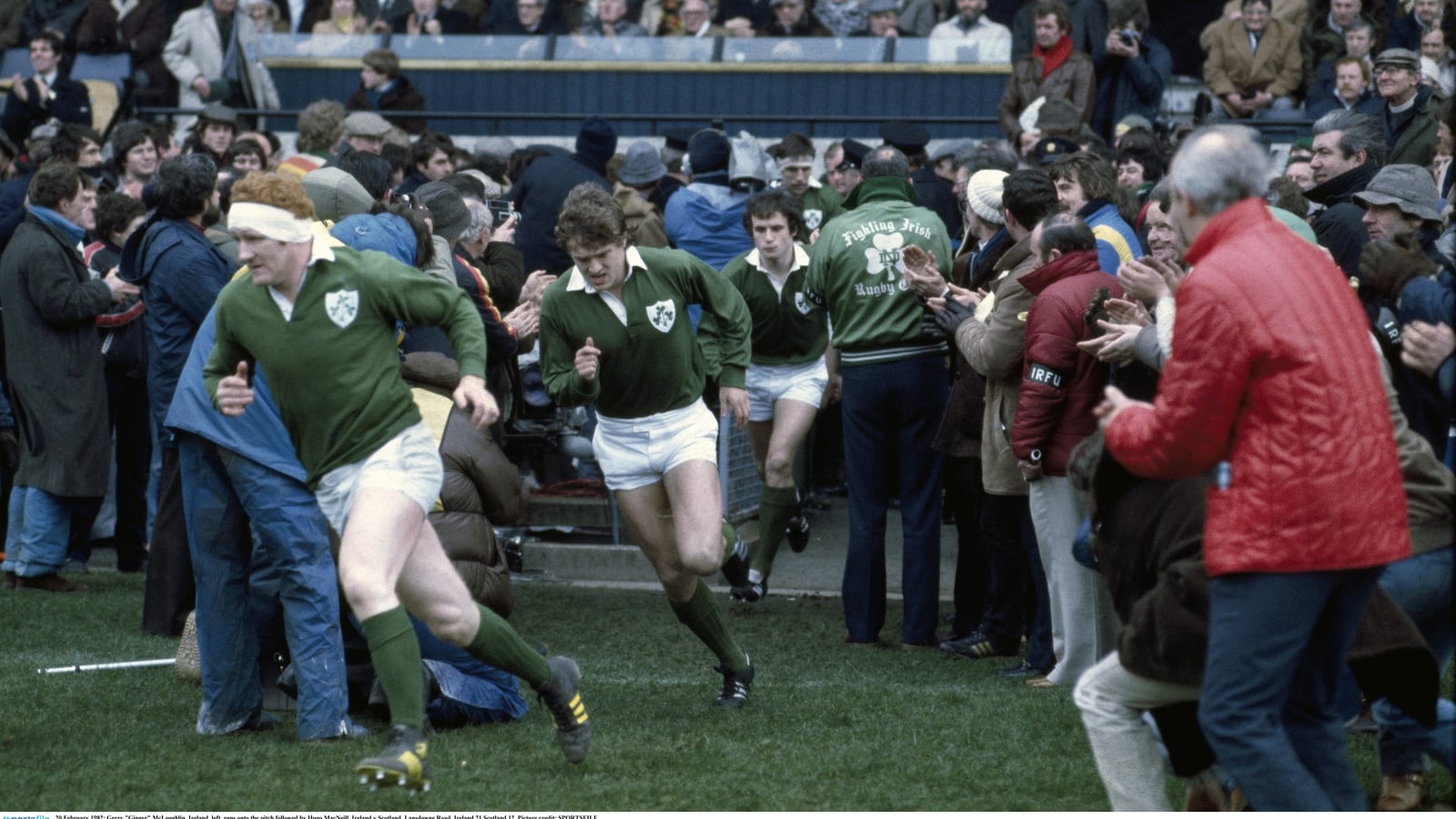
In May 1981, the IRFU defied international sporting boycotts by touring apartheid South Africa, starting one of the biggest sagas in Irish sport. Under apartheid the majority black population in South Africa were deprived of voting rights, access to education, housing, jobs and freedom of movement.
Sport was used as a mechanism to maintain racial segregation and promote white supremacy of the apartheid government. Only white people could represent South Africa at international sporting tournaments, sports arenas had separate entrances, seating and toilets for non-whites and other stadiums banned all non-whites from entering the premises altogether.
The Irish Government were urged to take all appropriate action to prevent the Irish rugby team from going to South Africa. Despite formal efforts to call off the tour, RTÉ refusing to cover the matches and Aer Lingus staff refusing to carry the team on their airline, the tour went ahead.
From RTÉ Archives, Prionsias Mac Aonghusa reports for Féach in 1978 on the Irish Anti-Apartheid Movement's march to the Department of Foreign Affairs to deliver a protest letter to minister Michael O'Kennedy
The Irish rugby team's participation in the tour of South Africa had an enormous impact on Ireland's reputation abroad. Players on the tour lost their jobs, the Irish government pulled funding for the IRFU and Irish athletes were boycotted in other events. In ignoring the international sporting boycott, the IRFU showed how arcane rules and closed door decision-making was wrongly prioritised over solidarity with marginalised athletes and people in South Africa.
Gaelic Games has always been rife with boycotts. The Kerry team boycotting the 1910 All-Ireland final against Louth due to a dispute over rail services, Dublin and Clare camogie teams boycotting a coin toss for a place in the All-Ireland quarter-finals in 2015 and Tyrone footballers boycotting RTÉ over a sketch on the John Murray Show on RTÉ Radio in 2011. Although each of these boycotts occured for different reasons, they represented a solidarity tactic
We need your consent to load this rte-player contentWe use rte-player to manage extra content that can set cookies on your device and collect data about your activity. Please review their details and accept them to load the content.
From RTÉ Radio One's News At One in 2015, Dublin and Clare camogie teams boycotting a coin toss for a place in the All-Ireland quarter-finals
In February, the Irish soccer team was paired with Israel in the 2026-27 Nations League draw. This understandably drew immediate outrage and calls for the fixture to be boycotted due to Israel's genocidal war in Palestine. This call for a boycott is alongside global lobbying for FIFA to ban Israel from participating in official FIFA tournaments.
The FAI has since said that it has "no choice" but to fulfil the fixture at the Aviva Stadium. This is a complete contradiction of a vote in November 2025 when the FAI agreed to submit a motion to UEFA to ban Israel from its European club and international competitions. If the FAI insists that the fixture must proceed, the breaches of international law by Israel will overshadow every moment of the game, from preparation to final whistle.
We need your consent to load this rte-player contentWe use rte-player to manage extra content that can set cookies on your device and collect data about your activity. Please review their details and accept them to load the content.
From RTÉ Radio 1's Late Debate, reaction and discussion on the forthcoming Ireland v Israel game in the Nations League
The public profile of sports events makes them a valuable forum for pursuing social justice and other struggles that affect individuals and communities in Ireland, as well as entire populations elsewhere. While many argue that sport is not political and works as distraction from social and civic issues, they are ignoring those who do not have access to sport due to existing inequalities. Boycotts have long shaped Irish sport. Now it’s time for Irish sport to shape the boycotts by being the place where injustice and inequalities are called out.
Follow RTÉ Brainstorm on WhatsApp and Instagram for more stories and updates
The views expressed here are those of the author and do not represent or reflect the views of RTÉ