NASA revamps its Artemis program, with new mission added before lunar landing
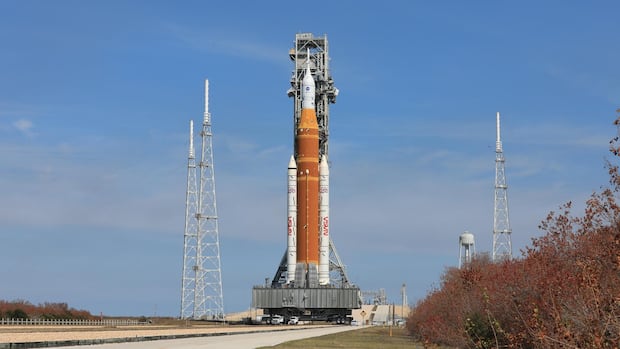
Listen to this articleEstimated 3 minutesThe audio version of this article is generated by AI-based technology. Mispronunciations can occur. We are working with our partners to continually review and improve the results.NASA has revamped the plans for its Artemis program, meaning the mission that was intended to put astronauts back on the moon in 2028 will instead conduct test flights next year in low-Earth orbit. The shakeup comes just days after the U.S. space agency scrubbed the launch of the Artemis II rocket over some critical technical issues — delaying its four-person flyby of the moon until early April. After that, NASA Administrator Jared Isaacman said Friday, Artemis III will conduct a docking test in low-Earth orbit between its Orion astronaut capsule and one or both of the new lunar landers — one from Elon Musk's SpaceX and the other from Jeff Bezos's Blue Origin."So instead of going directly to a lunar landing, we will endeavour to rendezvous in low-Earth orbit with one or both of our lunar landers," he said. NASA is still aiming for a lunar landing in 2028 with Artemis IV. Isaacman said NASA is hoping to launch missions more frequently, potentially every year or even every 10 months.WATCH | New plans for Artemis III:NASA announced Friday it is overhauling its Artemis lunar program, adding a spacecraft docking test. NASA's Jared Isaacman and Amit Kshatriya explain the changes to the upcoming Artemis III and subsequent missions."Every three years is not a path to success," he said. "Your skills atrophy, you lose muscle memory." "We've got a lot of really talented folks that have been working hard on the Artemis II campaign, and, you know, whether they're going to want to stick around for three more years after this mission is complete is a question mark. This is just not the right pathway forward."Isaacman stressed it was important for NASA to rebuild its civil servant workforce, as that will help turn around launches quickly. He also said it’s important to test other components, such as the astronauts' lunar landing suits and perhaps conduct extravehicular activity, when astronauts go out of the spacecraft into space.These changes and tests of various mission components are more in line with NASA’s earliest space programs, such as the Apollo missions of the 1960s and 1970s. "We did not just jump right to Apollo 11," he said, referring to the mission when astronauts first walked on the moon. "We did it through Mercury, Gemini and lots of Apollo missions, with a launch cadence every three months," he said. "I would certainly much rather have the astronauts testing out the systems, the integrated systems of the lander and Orion, in low-Earth orbit than on the moon."There are no other changes planned for Artemis II, which could launch in early April with Canadian Space Agency astronaut Jeremy Hansen and NASA astronauts Reid Wiseman, Christina Koch and Victor Glover.