Spring Statement is next week: What should we expect and what does it mean for your finances?
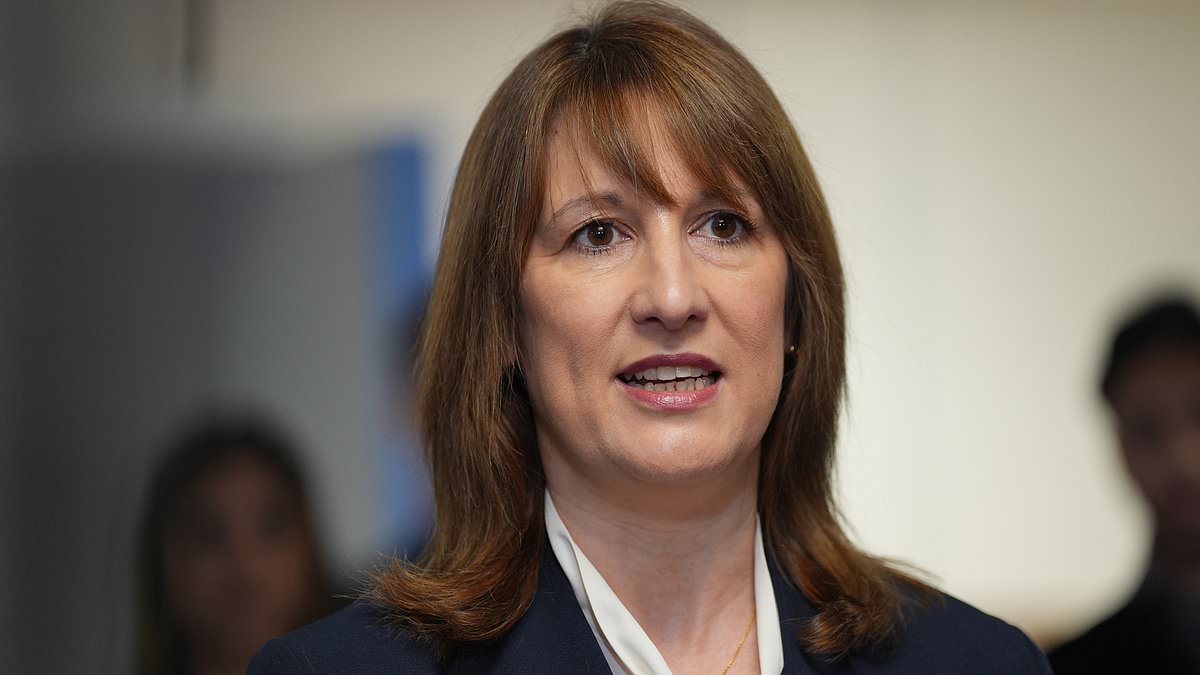
Chancellor Rachel Reeves will deliver her Spring Statement on Tuesday 3 March and provide an update on the country's finances.The Office for Budget Responsibility (OBR) will also publish its latest estimates on growth, inflation and other economic indicators.It is likely to be a quieter affair than the Budget and it will still set the scene for the Government's tax and spending plans. So what should we expect and how will it affect your finances?What is the Spring Statement?The Spring Statement is effectively an economic update.Unlike the Budget, where big tax and spending decisions are made, the Spring Statement gives the country a report on the economy and updated forecasts from the OBR. Quieter affair: The Chancellor is not expected to make major announcements like she did in the BudgetIt will be the first time it will not publish a formal assessment of the Government's progress towards meeting its fiscal rules, but it will still offer a good glimpse into how much headroom the Chancellor has and how the economy is expected to perform.It will take place on Tuesday, but we don't know what time the Chancellor is speaking in the Commons - it's like to be after midday.When she finishes, the Treasury will publish the OBR forecast. What should we expect in the Spring Statement?Unlike the Budget, where there were months of speculation, the build-up to the Spring Statement has been muted.After months of instability ahead of November's Budget, the Treasury has briefed that it will be a 'very, very boring' statement as it seeks to reassure businesses.Since the Autumn Budget, businesses of all shapes and sizes have criticised the government for raising taxes. But even after plenty of u-turns there has been no indication that Reeves will announce any major changes.However, last year's Spring Statement opened the door to Isa reforms, indicated higher defence spending, and announced changes to the Making Tax Digital scheme. 'There could be tweaks to spending plans, particularly if borrowing projections shift,' says Rebecca Williams, financial planning divisional lead at Rathbones. 'We may also see signals on welfare uprating, public sector pay, or business tax incentives aimed at supporting growth.'All eyes will be on the OBR's forecasts, particularly on whether it shows debt continuing to fall as a share of GDP over the medium term. While recent borrowing figures were better-than-expected, public sector net debt remains elevated at close to 90-95 per cent of GDP.Economists will be watching for any signs of pressure on public finances and, while the OBR won't publish a fiscal rules update, working out how much headroom the Chancellor has. 'A weaker than expected forecast could trigger fresh speculation about future tax raids, although government will be very keen to avoid a repeat of last year's Budget fiasco, when the chancellor briefed what appeared to be a dire economic warning to the media in order to lay the ground for a manifesto-breaking income tax hike,' says AJ Bell's director of public policy, Tom Selby. 'In the end it turned out to be a red herring, with the OBR document in the Autumn proving much less gloomy than many anticipated following Reeves' remarks.AJ Bell director of public policy.' What will it mean for your finances?The Spring Statement does not pack the same punch as the Budget, but it can still have an impact on personal finances.The OBR's forecasts on growth, inflation and borrowing will shape interest rate expectations, which feed into mortgage swap rates and saving rates.Economists think that a rate cut might come as soon as next month, as rising unemployment and sluggish growth have added pressure.'If the Statement reinforces expectations of falling inflation and interest rate cuts, mortgage holders could see relief ahead,' says Rebecca Williams, financial planning divisional lead at Rathbones. 'Savers, however, may need to brace for lower returns if rates begin to ease more decisively.'Reeves might also give an update on the Cash Isa reforms she announced in the Budget, in addition to plans to introduce a new first-time buyer Isa product. For pensioners, Reeves could use the Spring Statement to commit to pension tax certainty, says Selby, after rejecting calls to commit to a Pension Tax Lock last year. Finally, there has been a growing debate about changes made to freeze the threshold at which graduates on plan 2 pay back their loans. While the government is unlikely to fully u-turn on the decision, 'the levers they can pull would likely involve tweaking interest rates or repayment thresholds, or possibly a combination of the two,' says Selby.Certainty is a simulus, says PwC economist Barret Kupelian, PwC UK chief economist, said: 'In the build-up to the last Budget, we saw how uncertainty seeped through to the real economy, harming sentiment and business decision-making. 'A Spring Statement that is quiet by design - with no significant changes in the fiscal policy stance - would therefore be economically constructive and welcome. In markets and in boardrooms, certainty is a stimulus.'This is particularly important at this stage of the economic cycle, where we are seeing some green shoots appearing which rests on fragile roots. 'For example, some forward looking indicators on private-sector activity are the most positive since at least mid-2024. 'Retail sales, a decent bellwether for the household mood, have surprised on the upside. 'And with private-sector balance sheets still in reasonable shape and interest rates easing, there is scope for 'animal spirit' to be reignited.'Downside risks persist, most notably in the labour market, with unemployment rising and hiring cooling. 'Some sectors are still absorbing the effects of the Autumn Budget, and the global environment remains unpredictable. 'But the key issue is whether a steadier policy setting allows easing rates and improved confidence to feed through into investment and growth. 'A quieter Statement may prove the clearest vote of confidence.'DIY INVESTING PLATFORMSAJ BellAJ BellEasy investing and ready-made portfoliosHargreaves LansdownHargreaves LansdownFree fund dealing and investment ideasinteractive investorinteractive investorFlat-fee investing from £4.99 per monthFreetradeFreetradeInvesting Isa now free on basic planTrading 212Trading 212Free share dealing and no account feeAffiliate links: If you take out a product This is Money may earn a commission. These deals are chosen by our editorial team, as we think they are worth highlighting. This does not affect our editorial independence.Compare the best investing account for you