Microsoft HoloLens finds second home in the military after failing battlefield tests
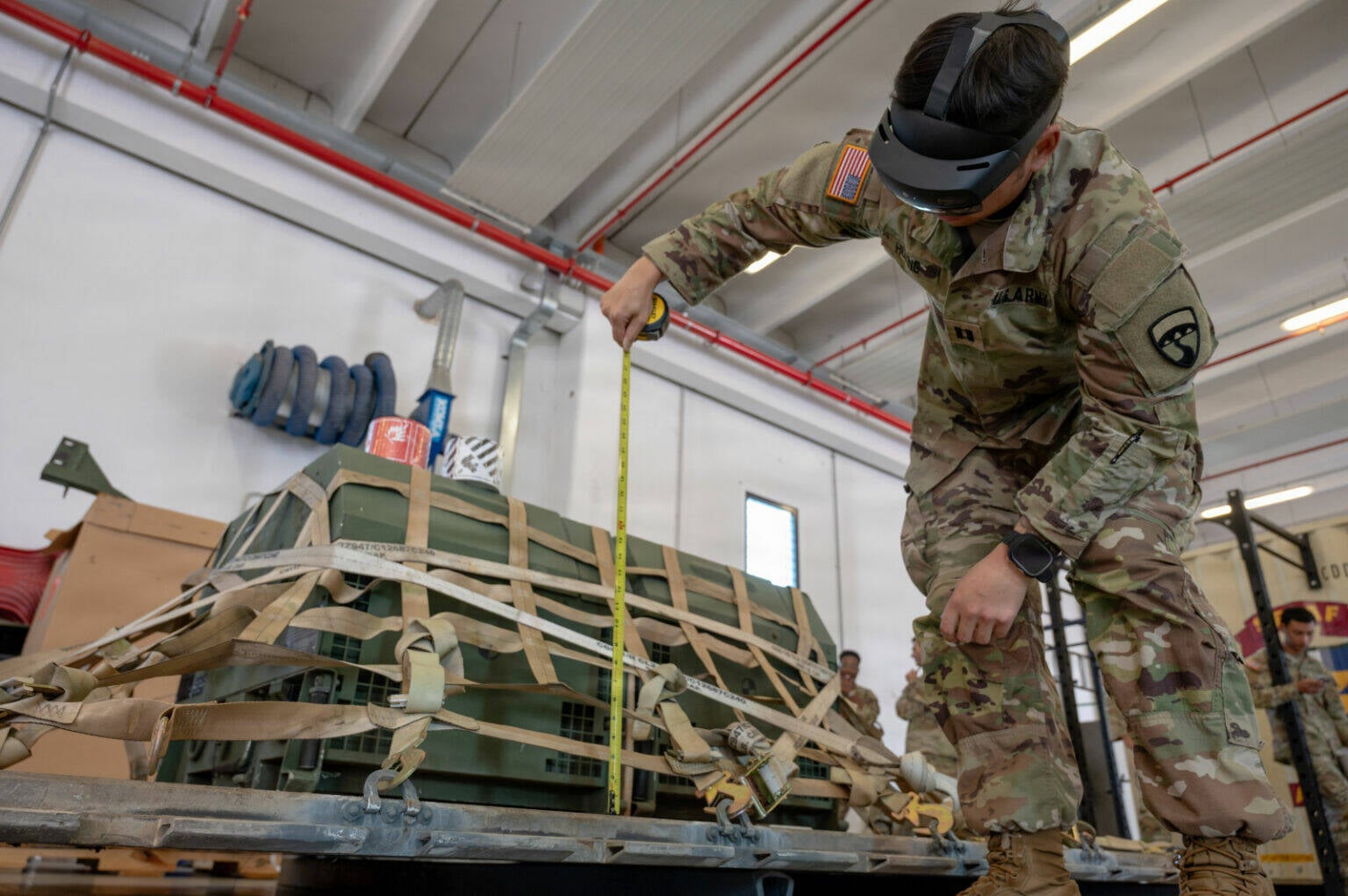
The US Army's attempt to turn Microsoft HoloLens headsets into battlefield kit may have failed, but the AR goggles aren't going into the garbage. Instead, they're being repurposed for remote cargo inspection support.
When it comes to ensuring that pallets of military equipment are properly load-balanced for air transport, there's no one better suited to confirm requirements have been met than the US Air Force. Unfortunately, there's no way for delicate airmen to be everywhere Army grunts are stuck (this vulture is an Army veteran), and even if they're allowed to jump out of airplanes you may not want the average ground-pounder securing cargo that's supposed to actually complete its flight.
Faced with that conundrum, the Air Force and Army teamed up to use HoloLens headsets in one of the ways Redmond actually intended, by letting someone qualified see through the eyes of a peon.
Members of the 724th Air Mobility Squadron, based in Aviano, Italy, have been working with soldiers from the Army's 173rd Airborne Brigade, based in Vicenza, Italy, to give airmen a chance to help soldiers inspect equipment pallets prior to loading onto aircraft.
"We spent a year working with the manufacturer [Microsoft] and experimenting with different add-ons to figure out the right software and process we needed to get to where we are today," said 725th Air Mobility Squadron superintendent, Chief Master Sgt. Anthony Sewejkis. "Now it's plug and play. We can connect [from] anywhere just using the HoloLens, a Wi-Fi hotspot and a laptop."
Airmen on laptops were able to see what soldiers were looking at, highlighting areas that needed attention using visual cues to direct soldiers to adjust rigging, reposition cargo, or whatever else needed doing. The augmented reality capabilities afforded to the troops by HoloLens headsets, 724's parent org the 521st Air Mobility Operations Wing noted, "increase the speed of maneuver to sustain joint force lethality across the competition continuum."
In other words, they think it's pretty cool.
Second time's a charm?
The inspection project, which was just a proof of concept but one the Squadron intends to keep refining, was a far greater success than the Army's first foray into making use of the HoloLens.
It all started back in 2018, when the Army awarded Microsoft a contract to build the Integrated Visual Augmentation System (IVAS) - custom HoloLens-derived headsets meant to give soldiers a battlefield heads-up display. Despite a deal described as worth up to nearly $22 billion over a decade, testing didn't go smoothly. A Pentagon watchdog report found the goggles caused “mission-affecting physical impairments,” including headaches, eyestrain, and nausea, among many of the soldiers who tested them.
Attempts to continue the program, by dumping millions more into it, were met with resistance from Congress, which slashed funding for the program. Microsoft ultimately gave up, passing control of the initiative to Oculus inventor Palmer Luckey's Anduril. Anduril in turn brought Meta into the mix before the Army ultimately relaunched the program under a new name as the Soldier Borne Mission Command (SBMC) program, with the intention of developing an entirely new headset that hopefully isn't such a headache for soldiers.
It doesn't help for Microsoft's prospects as a supplier of military mixed reality headsets that the company canned development of the HoloLens in late 2024, with support for existing models slated to run through the end of 2027.
It's not clear whether the headsets used in the cargo loading experiment were leftovers from IVAS, discounted leftovers acquired by the Air Force, or if they were purchased specifically for the project. We reached out to the Army and Air Force to learn more, but didn't hear back. ®