Trump floats 'friendly takeover' of Cuba. What's his endgame?
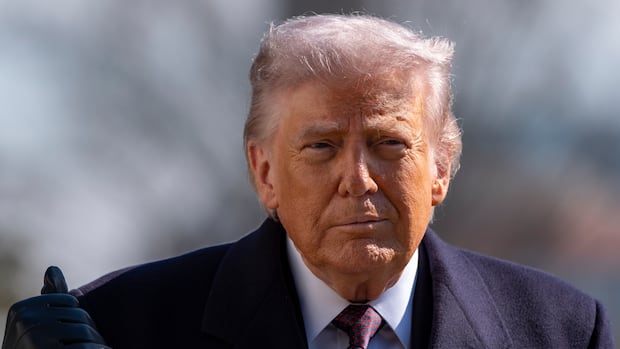
U.S. President Donald Trump is musing about a "friendly takeover of Cuba" as his administration tightens its economic squeeze on the island's communist government. Trump has moved to choke off much of Cuba's supply of crude oil, decimating the island's tourist industry and putting mounting pressure on the Cuban government to make some sort of deal with the White House. "They're in a big deal of trouble," Trump said Friday in Washington. "They have no money. They have no anything right now, but they're talking with us, and maybe we'll have a friendly takeover of Cuba." While Trump did not explain what he meant by a friendly takeover, experts on U.S. policy toward Cuba believe the president's tactics are likely more about creating business opportunities for American companies than about toppling the communist regime of President Miguel Díaz-Canel. Trump said last week he wants to "make a deal" with the Cuban authorities and said Secretary of State Marco Rubio — the son of Cuban immigrants — is leading the talks.William LeoGrande, a professor of government in the School of Public Affairs at American University in Washington, D.C., says Trump's objective in Cuba may be similar to what he's aiming to achieve in Venezuela: opening up the country to U.S. business interests. WATCH | What is Donald Trump's strategy with Cuba?:U.S. President Donald Trump is applying severe economic pressure to an already-strained Cuba mired in a food and power crisis. Andrew Chang explains why the U.S. is choosing now to cut off the country's oil supply, and why, for Trump and U.S. Secretary of State Marco Rubio, it's also personal."There certainly can be commercial opportunities for the United States in Cuba without a change in regime," LeoGrande said in an interview with CBC News. "If that's his intent in Cuba … rather than try to create a U.S.-style democracy on the island, then I think some kind of agreement between the two countries is a possibility," he said.Ramped-up embargo 'strangling' Cuban economy Though Trump referred to Cuba being in a "big deal of trouble," he neglected to mention his role in bringing the country's economy to its knees.By capturing Venezuelan leader Nicolás Maduro in early January and effectively taking control of the country's oil supply, the U.S. took away Cuba's staunchest ally in the Western Hemisphere and its top source of crude. Trump also signed an executive order threatening tariffs against any country that supplies oil to the Cuban government or its state-run enterprises. "It is really an extraordinary effort to strangle the economy of an entire country and it is already having a terrible impact on Cuba," said LeoGrande. The impact includes frequent power blackouts, shortages of food and medicines and a crippled tourism industry, after airlines stopped flying to Cuba over warnings that the country's airports may run out of jet fuel.A man walks past a Havana gas station that has run out of fuel in early February. The U.S. embassy is seen in the background. (Ramon Espinosa/The Associated Press)While the intensity of the embargo has some wondering whether Trump's endgame could actually be regime change — a more "unfriendly" takeover than he alluded to on Friday — it's not clear if that's the case.LeoGrande says the only ways the U.S. could oust the Cuban government would be to invade and occupy the island, or to squeeze the economy so badly that it collapses. He doubts the Trump administration has the appetite for either."Cuba is not Venezuela," he said. "There's not one person that you could abduct that would lead to the remnants of the regime suddenly caving in to U.S. demands."U.S. push for private sector expansionOther experts also believe Trump's real motivation is the prospect of profits for American business interests. Nicolas Forsans, co-director of the Centre for Latin American & Caribbean Studies at the University of Essex, expects U.S. negotiators will push the Cuban regime to allow a significant expansion of the country's private sector, including greater access for U.S. companies. "Crucially, Washington will want some guarantees that foreign investors can repatriate profits," Forsans wrote this month on The Conversation website. Cuban President Miguel Diaz-Canel, accompanied by his wife, first lady Lis Cuesta Peraza de Díaz-Canel, greets relatives of Cuban officers killed during a U.S. operation that captured Venezuela's President Nicolás Maduro, during the funeral for the soldiers in Havana on Jan. 16. (Adalberto Roque/The Associated Press)Forsans says the White House is likely seeking a deal giving U.S. businesses opportunities in such sectors as tourism, energy generation, ports and telecoms."Cuba’s political system will bend at the margins, yet it is unlikely that the U.S. administration will want to break the regime entirely," wrote Forans. Vicki Huddleston, a former U.S. diplomat who worked extensively on Cuba, says the Trump administration would risk provoking serious consequences from China by forcing out the communist government in Havana. "Taiwan is to China as Cuba is to the U.S.," Huddleston told a recent panel discussion held by the Quincey Institute for Responsible Statecraft, a foreign policy think-tank in Washington. "So if we do intervene in Cuba, I would imagine that China will intervene in Taiwan," Huddleston said. U.S. Secretary of State Marco Rubio, right, shakes hands with Guyana's President Mohamed Irfaan Ali on Wednesday during the Caribbean Community meeting in Basseterre, Saint Kitts and Nevis. (Jonathan Ernst/The Associated Press)Rubio has long opposed the communist government, but despite his hawkishness on Cuba, doesn't currently appear to be advocating for an overthrow."The only way Cuba is going to have a better future is if it has a different economic model," Rubio told reporters Wednesday at a Caribbean Community (Caricom) regional conference in St. Kitts and Nevis on Wednesday. "The problem is the Cuban private sector is very small," Rubio said, adding that if the Cuban government wants to "to open the gates and allow the Cuban private sector — independent of the military, independent of the government — to grow, that solution is there." Axios reported this month that Rubio was holding secret talks with Raul Guillermo Rodriguez Castro, the grandson of Cuba's former president Raul Castro. The pair met again this week on the sidelines of the Caricom event, the Miami Herald reported on Thursday.The latest meeting came shortly after the Cuban military killed four exiles and wounded six others who sailed into Cuban waters aboard a Florida-registered speedboat and opened fire on a Cuban patrol. Rubio denied it was a U.S. operation and said no U.S. government personnel were involved. WATCH | 'Maybe we'll have a friendly takeover of Cuba,' Trump says:U.S. President Donald Trump floated the idea of a 'friendly takeover' of Cuba as he departed the White House on Friday. While the U.S. has long had embargoes on Cuba, it tightened sanctions earlier this year, leading to major fuel shortages.