Ultra-sensitive CAR T cells eliminate hard-to-treat tumours in mice
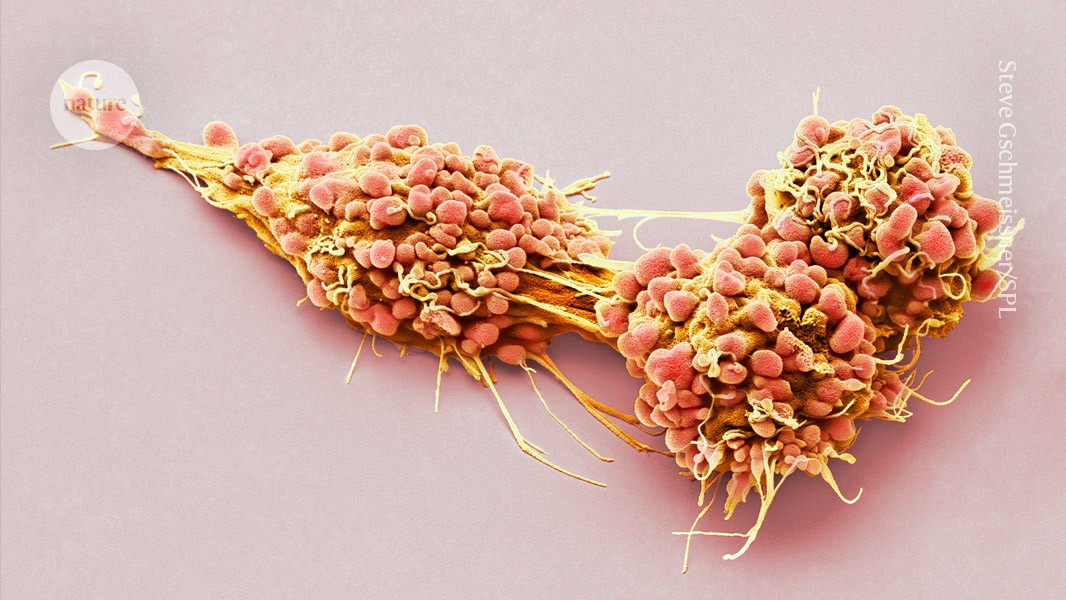
Engineered immune cells can identify ovarian cancer cells (pictured) that might otherwise escape detection.Credit: Steve Gschmeissner/Science Photo LibraryImmune cells engineered to detect extremely low levels of a target antigen have eliminated kidney, ovarian and pancreatic tumours in mice1 — a feat that has been near impossible using conventional CAR-T immunotherapies.Unlike blood cancers, solid tumours are hard to treat using CAR T cells because the tumours are dense, difficult to access and lack a common antigen target on every cell. At least, that’s been the story until now.A paradigm-shifting study published in Science today, overturns this theory by demonstrating that at least one antigen, CD70, is expressed on 100% of cancer cells in some solid tumours. However, it is often expressed at such low levels that the antigens cannot be detected through normal methods. The authors of the study are now planning to seek funding for a phase I safety trial in humans.“It’s a jump,” says Sophie Hanina, an immunologist at Columbia University Irving Medical Center in New York City who spearheaded the research. “It’s targeting the unseen.” Those kinds of jumps can only happen when they are guided by intuition, Hanina says.It was a hunch that led Hanina to double-check whether seemingly CD70-free cancer cells expressed residual amounts of the protein. She found that kidney tumours that were genetically engineered to lack CD70 seemed dark when using an optical imaging technique known as confocal microscopy. But tumours that were negative for CD70 on every other conventional test displayed a faint signal for the protein when using this imaging technique. This “hinted that there might be low-level expression retained”, she says.Hanina found that the levels of CD70 antigens were reduced – but not completely absent – in some cancer cells because they were being silenced.One of the many reasons that CAR-T-cell therapies fail in solid tumours is because of ‘antigen escape’ — in which the engineered immune cells attack all cancer cells that have high expression of a target antigen, but miss those with low or zero expression of that antigen, says Michel Sadelain, a co-author of the study and a cell engineer at Columbia University Irving Medical Center, who helped launch CAR-T-cell therapy in the 1990s.To tackle this problem, Sadelain’s laboratory invented an ultra-sensitive CAR T cell2 that can target cancer cells that have 10–50 times lower concentrations of antigens than those that can be treated with existing cellular therapies.Now the subject of a patent application, this innovative CAR T cell – called a CD70-targeted HLA-independent T cell (HIT) receptor – is a fusion between a synthetic CAR (or chimeric antigen receptor) and a natural T cell receptor. The CD70-targeted HIT receptor has the same receptiveness for CD70 but it also has enhanced internal signalling to make the T cell more responsive when it detects tiny amounts of this antigen.