Orban accuses Ukraine of disrupting its energy system
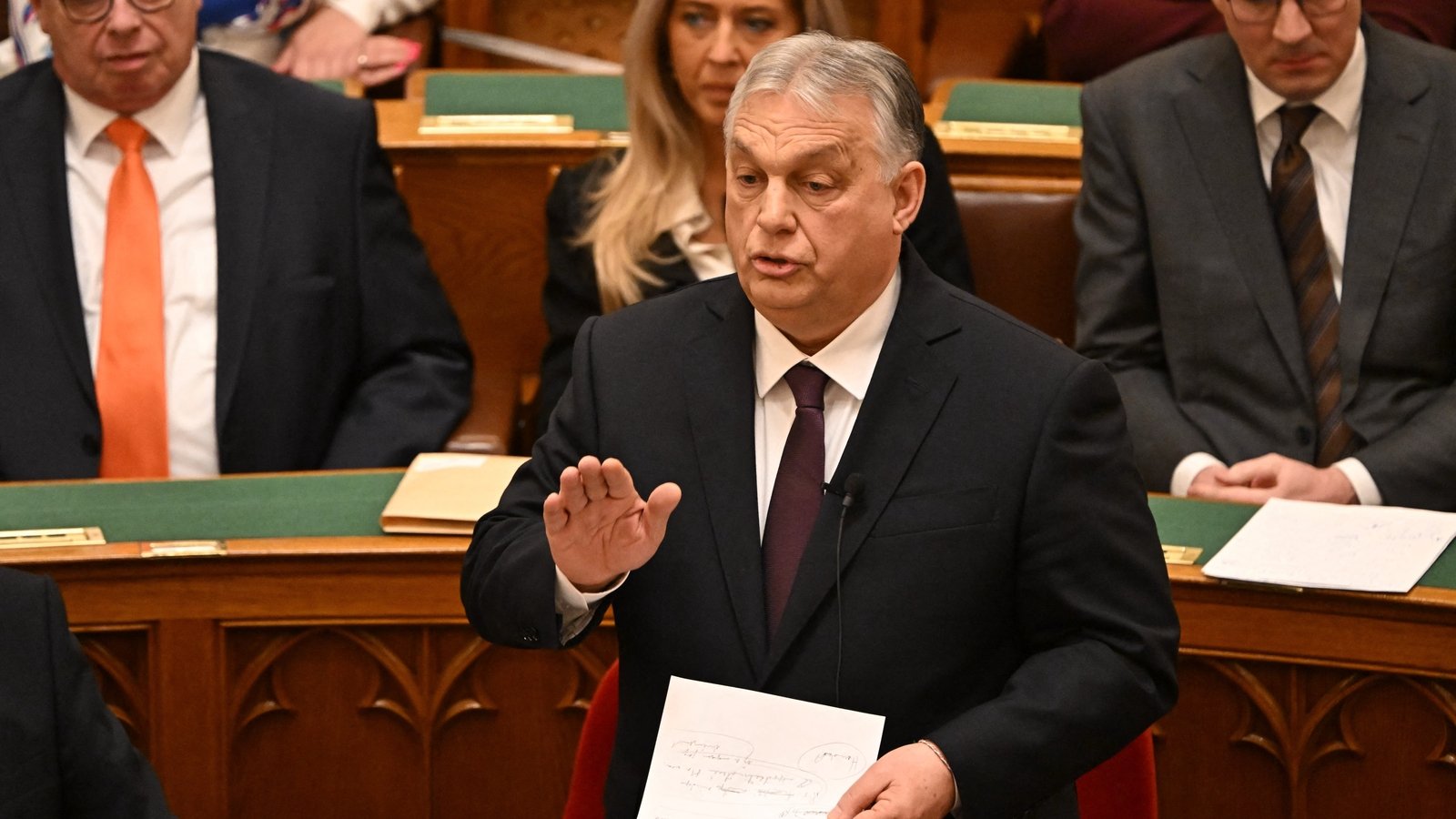
Hungary's Prime Minister Viktor Orban has accused Ukraine of planning to disrupt the Hungarian energy system and ordered the deployment of soldiers and equipment to safeguard critical infrastructure.
His action further escalates a dispute with Ukraine over an outage on the Druzhba oil pipeline carrying Russian crude deliveries to Hungary and Slovakia - both of whom blame Kyiv for the prolonged halt to supplies for its refineries.
Kyiv says the outage was caused by a Russian drone strike hitting pipeline equipment in Western Ukraine.
Meanwhile a Ukrainian strike on a Russian fertiliser plant in western Russia has killed seven people, according to local officials.
In Ireland a new survey of Ukrainians in Ireland showed that over half are in employment with many overqualified for the work that they are doing.
The Ukrainian Foreign Ministry did not immediately respond to a request for comment on Mr Orban's accusation.
Mr Orban, speaking in a video on his Facebook page, reiterated the Druzhba shutdown was for "political, not technical, reasons" and said intelligence reports show possible further disruption to Hungary's energy system.
"I see that Ukraine is preparing further actions to disrupt the operation of the Hungarian energy system," Mr Orban said.
"Therefore, I have ordered the reinforcement of protection for critical energy infrastructure. This means that we will deploy soldiers and equipment necessary to repel attacks near key energy facilities."
Hungary and Slovakia have maintained ties with Moscow and disagreed with European Union partners over their military support for Ukraine as its fights Russia's invasion.
On Monday, Hungary maintained its veto on new EU sanctions on Russia and a huge loan for Ukraine amid a dispute over oil supplies.
Mr Orban has cast Hungary's upcoming 12 April parliamentary election as a stark choice between "war or peace", saying his opponents would drag the country into the war raging next door in Ukraine.
Ukrainian attack on Russian fertiliser plant kills seven - officials
A Ukrainian drone attack on a fertiliser plant in Russia's western Smolensk region killed seven people and wounded 10 others, Russian officials have said.
The plant, just outside the Russian town of Dorogobuzh, lies around 290km from the Ukrainian border.
Unverified images published on social media purported to show the plant in flames with columns of smoke billowing into the night sky.
"The enemy struck PJSC Dorogobuzh, a civilian plant producing nitrogen fertiliser," Smolensk region governor Vasily Anokhin said in a post on Telegram.
Russia's Investigative Committee, which probes major crimes, said later seven people were killed, updating a previous toll, in what would be one of the deadliest attacks on a Russian industrial site of the four-year war.
Ukraine fired "at least 30 drones equipped with explosive devices," causing "significant damage" it said in a statement.
Rescuers had on Wednesday morning contained the fires, while authorities were considering evacuating residents from the neighbouring village for their safety, governor Anokhin added.
The plant was also attacked in December last year, according to Russian media reports.
Ukraine, which denies targeting civilians, did not immediately comment.
Ukraine has fired thousands of drones over the Russian border since Moscow launched its Ukraine offensive in 2022, some of which have landed hundreds of kilometres from the front line.
The strikes often target Russia's oil and gas industry and other industrial sites and have caused billions of dollars of damage.
Kyiv says the attacks are fair retaliation for Russian strikes on its own civilians that have killed hundreds and crippled Ukrainian energy infrastructure.
Survey shows 56% of Ukrainians in Ireland working but uncertain of their future
There are around 84,000 Ukrainians living in Ireland, with most here under the Temporary Protection Directive, which gives them rights to accommodation, social welfare, education and to work.
The directive will run out next year.
New research by the Irish Red Cross indicates that over half (56%) of adult Ukrainians here are working, but also that over half of those surveyed have had difficulty finding somewhere to live.
Head of International and Migration with the Irish Red Cross Niall O'Keeffe has said that the findings from the survey show that local people have benefitted from the host accommodation system, where a payment is paid to an Irish person to house Ukrainians in their home.
Mr O’Keefe said that this system of local accommodation allowing contact with local people has allowed Ukrainians to integrate well and that it was a "model pregramme".
Ukrainians in Galway marking four years since the Russian invasion
Speaking on RTÉ’s Morning Ireland, he said: "The findings from the survey indicate from people that they are really, really happy with this scheme. And in addition to the accommodation, I highlight the fact that their number one source of information locally for them is their host. It's not from organisational websites or government websites.
"It's from their host, which provides really valuable integration opportunities. And this evidence then points to this scheme being a model program.
Mr O’Keefe said that the current scheme was due to expire in March, and he hoped it would continue as it is.
In other findings from the survey 47% of Ukrainians indicated that language was a barrier for them to get a job and that 39% said that they are working in jobs for which they are overqualified.
He said that after the survey, recommendations would include further support in terms of language.
However, he said, even though many people are working, over 70% said they are just barely making ends meet.
"They can barely respond and cater for their own needs. So, there are struggles there. It's very positive progress that people are working, but it is fragile, it needs to be supported."
The survey suggests that the majority of Ukrainians (64%) are uncertain about what the future holds both in Ireland and in Ukraine.
"They're hugely positive about and appreciating the welcome and the status that they have been provided here in Ireland through the temporary protection directive, which a mechanism brought in a couple of years ago. And that's very, very positive.
"But this uncertainty is a huge concern for them. And it's also there are some signs that this is holding people back.
"For example, that people, if they're uncertain about their future, maybe they won't commit to do some retraining, for example.
"So that's a challenge. And I suppose that some of the evidence then would suggest in terms of a recommendation that there is a need to provide some longer-term legal status for people so that they can continue, if that's the desire.