Why removing Andrew from the line of succession is not as easy as it sounds
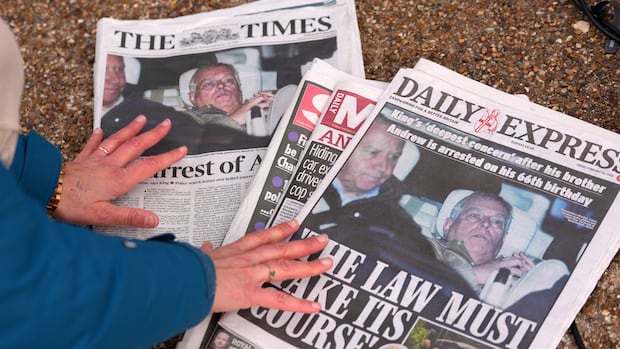
With the prime minister of Australia now offering his support to ensure the scandal-plagued Andrew Mountbatten-Windsor never becomes King, the prospect of an altered line of succession could be moving closer to reality.Andrew has already been tossed out of Royal Lodge and is no longer allowed to use his titles including: Prince, Duke of York, Earl of Inverness, Baron Killyleagh and His Royal Highness.Moving to strip Andrew of any possibility of ascending the throne by removing him from the line of succession would take the effort to sideline the former prince to the next level. Considering the former prince's legal troubles that come as a direct result of his relationship with the American sex offender Jeffrey Epstein, it may be a surprise to some that he still remains eighth in line to the throne. What many may not realize is that to change the royal line of succession is not something the current monarch can do unilaterally; it requires the British Parliament, and the governments of the remaining 15 Commonwealth realms to act in concert. When news emerged that the U.K. has been talking with Buckingham Palace about possibly preventing Andrew from becoming King, the first sign of support from a Commonwealth realm — a country whose official head of state is the sitting British monarch — came from down under. Andrew Mountbatten-Windsor, younger brother of Britain’s King Charles, leaves Aylsham police station on the day he was arrested on suspicion of misconduct in public office, on Friday. Andrew still remains eighth in line to the throne, though changing change the royal line of succession is not something the current monarch can do unilaterally. (Phil Noble/Reuters)"In light of recent events concerning Andrew Mountbatten-Windsor, I am writing to confirm that my government would agree to any proposal to remove him from the line of royal succession," Australian Prime Minister Anthony Albanese said in a letter sent to U.K. Prime Minister Keir Starmer on Monday."These are grave allegations and Australians take them seriously," he said. CBC News has asked the Prime Minister's Office for its position on Canada changing the line of succession but has yet to receive a response. Andrew's arrest last week was just the latest in a series of crises besetting the former prince, as revelations linked to his relationship with Epstein continue to emerge.Such allegations saw him in 2022 settle a civil suit with Virginia Giuffre, who alleged Epstein trafficked her for Andrew, who then allegedly sexually assaulted her on three occasions when she was 17.Andrew denies the charges, which have not been proven in court. Police said Andrew's arrest on suspicion of misconduct in public office last week was part of an investigation into allegations that he shared confidential trade materials with Epstein when the former prince was a U.K. trade envoy between 2001 and 2011.King Charles threw his support behind the investigation, saying "the law must take its course," but news the palace and the U.K. government are talking about removing Andrew from the line of succession suggests the Crown wants to sever all connections to the former duke. A Commonwealth-wide effortThe last time the line of succession was altered was in 2013 when the U.K.'s Succession to the Crown Act came into force, making significant changes to how monarchs ascend the throne. While that legislation ended the long-standing practice of barring anyone who marries a Roman Catholic from becoming monarch, it retained the ban on anyone who is a Roman Catholic from becoming King or Queen. But the law is best known for removing the male bias from the line of succession, putting male and female heirs on the same footing when the throne is handed down from one generation to the next. In order for those updated changes to take effect, each of the Commonwealth realms had to agree to them because they all share the same head of state and are legally equal with one another. At the time of those changes, there were 16 realms, including the U.K. Six realms passed accompanying legislation to harmonize their laws on succession with the U.K.: Australia, Barbados, Canada, New Zealand, St. Kitts and Nevis and St. Vincent and the Grenadines.Nine additional realms decided they did not need legislation because their domestic laws already recognized the incoming U.K. monarch as their next head of state. Those nine realms include: Antigua and Barbuda, Bahamas, Belize, Grenada, Jamaica, Papua New Guinea, St. Lucia, Solomon Islands and Tuvalu.Since that time, Barbados has become a republic, leaving 15 realms, including the U.K., left in the Commonwealth. In all there are 56 countries in the Commonwealth, including Barbados, but they do not hold that status of realm because the British monarch is not their head of state. A largely symbolic effortRobert Finch, the dominion chairman of the the Monarchist League of Canada, questions whether undertaking the change is worth the hassle. "Andrew is well down in the line of succession. Others before him are younger and healthy. So let's be realistic: there is virtually zero chance he would ever be monarch," he said. "That makes me think the change — which symbolically would likely have support — just wouldn't be worth the effort."Carolyn Harris, an expert in the history of the monarchy and royal protocol, said if Andrew was next in line to the throne there would be a constitutional crisis gripping the Commonwealth, but that isn't the case. If the effort to remove Andrew from the line of succession moves forward, Harris says "an argument may be made that it's taking up parliamentary time in numerous Commonwealth realms when there is very little chance of Andrew ever being in that role."