Trump Menaces Iran With Massive Armada Capable of Prolonged War
Fresh from the conflict with Venezuela last month, the USS Gerald R. Ford — America’s newest and largest aircraft carrier — is speeding through the Mediterranean and toward a potential war with Iran. Another aircraft carrier, the USS Abraham Lincoln is already deployed to the Middle East. The military pressure campaign, which could allow the U.S. to begin sustained attacks in a matter of days, is part of the Trump administration’s multipronged effort to pressure Iran to cease a nuclear program whose key sites, according to President Donald Trump, were “completely and fully obliterated” in U.S. attacks last year.
America’s latest gunboat diplomacy gambit comes as Trump’s two main envoys, his friend Steve Witkoff and son-in-law Jared Kushner, have engaged in indirect talks with Iranian diplomats in Geneva. The talks are taking place even though Trump previously said no agreement with Iran was necessary. “I don’t care if I have an agreement or not,” he announced last June. “I could get a statement that they’re not going to go nuclear.” Trump added: “They’re not going to be doing it anyway.”
Trump reversed himself late last month imploring Iran to “quickly ‘Come to the Table’” or face more strikes. On Thursday, at a gathering of his self-styled Board of Peace in Washington, Trump reiterated his call for a deal. “Now is the time for Iran to join us on a path that will complete what we’re doing,” he said. “If it doesn’t happen, it doesn’t happen. But bad things will happen if it doesn’t.”
“A massive Armada is heading to Iran,” Trump announced on Truth Social.
The United States has, in fact, spent weeks moving military assets into place for a potential resumption of the war on Iran. The Ford alone can carry more than 75 aircraft, including F-35 Lightning II stealth fighters and F/A-18 Super Hornets, as well as EA-18 Growler radar-jamming jets. The Lincoln is accompanied by three warships that are equipped with Tomahawk missiles, which were used to strike two of Iran’s nuclear facilities last June. In addition to destroyers, cruisers, and submarines at sea, the U.S. has moved additional air assets needed for sustained conflict across the Atlantic including a U-2 Dragon Lady spy plane, dozens of refueling tankers, scores of additional fighter jets, and critical E-3 Sentry Airborne Warning and Control System jets, which can provide advanced radar, communications, and sensors to track and thwart planes, drones, and cruise missiles.
The massive accumulation of military forces in preparation for a potential war with Iran dwarfs even the monthslong build-up that proceeded the U.S. coup in Venezuela that saw its leader Nicolás Maduro deposed and power transferred to a U.S.-backed puppet regime.
Three U.S. officials with long experience in the Middle East told The Intercept that they do not believe Trump has made a final decision to launch a new attack on Iran but the chances of it are high. All said that the U.S. attacks could possibly destabilize the Iranian regime, spur a grave humanitarian crisis, and have major impacts across the region. None thought the Trump administration had anything but vague plans to deal with such blowback.
All three officials believed that sufficient U.S. military assets were in place for a sustained military campaign. One said that Tehran may see the second major U.S. attack in a year as an existential crisis and respond by launching a more formidable counterattack than its ineffectual strikes on America’s Al Udeid Air Base in Qatar in 2025.
Over the past month, the U.S. military has moved critical air defense equipment — including Patriot missile batteries and Terminal High Altitude Area Defense systems, also known as THAAD — to the region to protect U.S. troops and allies from Iranian ballistic missiles.
Rep. Ro Khanna, D-Calif., said he believes reports that Trump administration officials think there’s a 90 percent chance the president will order strikes on Iran. He said that such a war would be “catastrophic” and lead to counterattacks that put U.S. troops in the region at risk.
Iran has repeatedly warned of retaliatory strikes on U.S. troops and allies in response to any American attack. Iran shut down the Strait of Hormuz earlier this week to conduct military exercises.
Khanna announced on Thursday that he and Rep. Thomas Massie, R-Ky., would attempt to force a vote on a war powers resolution regarding Iran next week. “I am confident we can win this vote and assemble a bipartisan coalition,” Khanna told The Intercept. Khanna believes they can force the vote before Trump attacks Iran, but one of the government officials expressed concern that strikes could come as early as Sunday or Monday. Another speculated that Trump might be convinced not to conduct an attack during Ramadan — the Muslim holy month that began Wednesday — or at least wait for a “decent interval” in deference to other U.S. allies in the Middle East.
Trump is also delivering his annual State of the Union address on Tuesday with a reported focus on messaging around domestic issues ahead of fall midterm elections, which may impact his decision. The conclusion of the Winter Olympics on Sunday might also play a role in the timing of the attacks as the notion of an Olympic truce, or “Ekecheiria,” dates back millennia.
The White House did not reply to a request for comment.
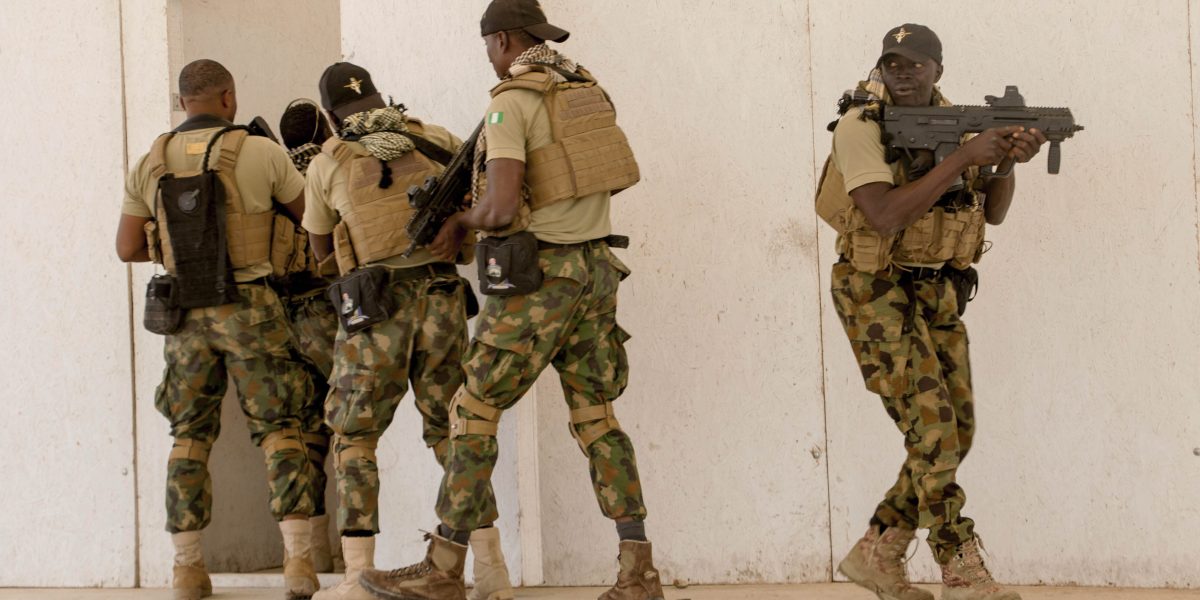
For a president who ran for office promising to keep the United States out of wars, came into office claiming to be a “peacemaker, and has consistently campaigned for a Nobel Peace Prize, Trump has proven to be a warmonger. During his second term Trump has already launched attacks on Iran, Iraq, Nigeria, Somalia, Syria, Venezuela, Yemen, and on civilians in boats in the Caribbean Sea and Pacific Ocean. The Trump administration also claims to be at war with at least 24 cartels and criminal gangs it will not name and has also threatened Colombia, Cuba, Greenland, Iceland, and Mexico.







Comments (0)