Irish architects leaving a firm footprint on American streetscapes
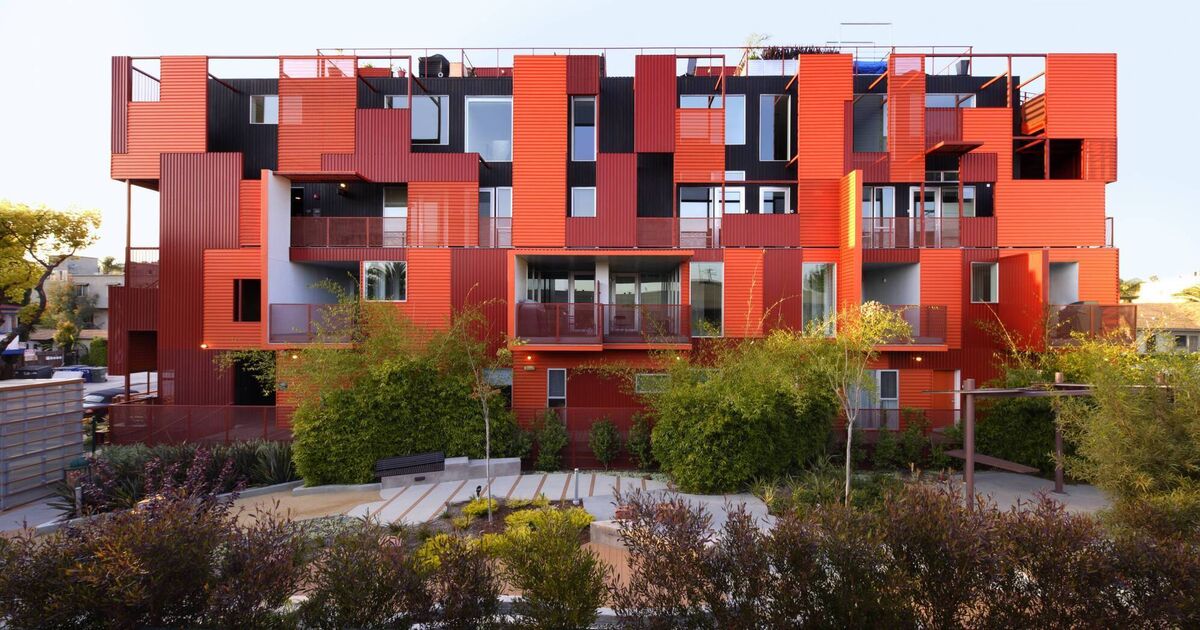
The Irish influence on the American building landscape is deep-rooted and proud. Many iconic skyscrapers were built by Irish immigrants. Kilkenny-born architect James Hoban designed the White House in Washington. William Mulholland was the self-trained civil engineer who built the Los Angeles Aqueduct. Iconic New York City skyscrapers – too many to mention – were built, brick by brick, by labourers that included Irish immigrants in their multitudes.On Hoban’s contribution, RIAI director of architecture and communications, Dr Sandra Andrea O’Connell, says: “He emigrated to the US in 1785 and seven years later won the competition to design the most well-known residence in the US, the White House. Describing the ‘historically close relationship’ between Ireland and the US, she says that bond is mirrored in the equally close and collaborative relations their architects enjoy.“Andy Devane (RKD Architects) worked with Frank Lloyd Wright. Shane de Blacam (De Blacam and Meagher) joined Louis I. Kahn. Robin Walker (Scott Tallon Walker) was an architectural graduate in Mies van der Rohe’s Chicago office. All three brought their US experience back to Dublin and set up successful practices.” Referencing the career of Mitchelstown-born architect Kevin Roche, Dr O’Connell says he had a particularly long and distinguished career in the US. “Having joined the offices of Finnish-American architect Eero Saarinen, Roche and his colleague, Kevin Dinkeloo, took over the practice in 1961 – following Saarinen's death – and completed major projects including Dulles International Airport, the St. Louis Gateway Arch, the TWA Flight Center at New York's JFK Airport and the CBS Headquarters in New York.” Five years later, the practice became Kevin Roche John Dinkeloo and Associates (KRJDA) with landmark projects including the Ford Foundation and the new master plan for the Metropolitan Museum of Art, both in New York City. In 2010, KRJDA completed their iconic Dublin project: The Convention Centre Dublin. “For his achievements,” says Dr O’Connell, “Roche received one of architecture’s greatest honours - the Pritzker Prize - in 1982. He also received the RIAI lifetime achievement award, the RIAI Gandon Medal, in 2013.” UAATC in Fayetteville, Arkansas, designed by Grafton Architects. Photo: Tim HursleyToday, the Irish influence endures, continuing to shape the US in positive ways. Dr O’Connell says: “Currently, Irish-based practices – such as Grafton Architects and heneghan peng – are once more delivering significant educational and cultural buildings in the US, while US-based Irish and Irish-American architects like Lorcan O’Herlihy (LOHA Architects) and James Mary O’Connor (Moore Ruble Yudell Architects) are also shaping Ireland’s built environment.“UAATC in Fayetteville, Arkansas, designed by Grafton Architects. Photo: Tim HursleyO’Connor’s masterplan for Dublin’s acclaimed educational campus – Grangegorman Urban Quarter for Technological University Dublin – continues to deliver quality educational infrastructure,” she says. “Raymund Ryan, HonFRIAI, who studied architecture at UCD, is a significant contributor to the wider architecture culture and the discourse around Irish and American architecture as curator of The Heinz Architectural Center, at the Carnegie Museum of Art, Pittsburgh. The RIAI believes that the continued flow of architectural contributions both ways across the Atlantic is an important contribution to US and Irish relations.” UAATC in Arkansas, designed by Grafton Architects. Photo: Tim HursleyYvonne Farrell and Shelley McNamara are Pritzker Prize laureates and co-founders of Dublin-based Grafton Architects. They received the honour for “having consistently and unhesitatingly pursued the highest quality of architecture for the specific location in which it was to be built, the functions it would house and especially for the people who would inhabit and use their buildings and spaces” (Jury Citation, see pritzkerprize.com).What sets Irish architectural design and practice apart in the US?Recognised globally for their contextual and human-centred buildings, Grafton Architects have become increasingly concerned with climate change. In recent projects, such as the ESB headquarters, they have successfully demonstrated how – as city temperatures rise – buildings can be naturally ventilated and cooled through clever design solutions.Grafton’s first US project – the Anthony Timberlands Center for Design and Materials Innovation, at the University of Arkansas – was recently described by the Guardian as one of the most significant buildings for the future of architecture in North America.“Our design envisions the new building as a ‘Story Book of Timber’, where timber would be both the structural bones and the enclosing skin,” says Grafton co-founder Yvonne Farrell.“Responding to the local climate, we proposed a canopy of light and air, a cascading roof with glulam rainwater gutters, covering the open-air yard, the fabrication shop, and connecting all the teaching spaces, where upper galleries form educational and social vantage points.” Storm King Art Center, New York, designed by heneghan peng architects and WXY. Photo: Richard BarnesFounded by Shih-Fu Peng and Róisín Heneghan in New York in 1999, heneghan peng architects (hparc) is a design partnership practising architecture, landscape and urban design. Co-led by heneghan peng and WXY, Storm King Art Center is hparc’s first completed project in the US.Describing the project, Roisin Heneghan and Shih-Fu Peng say: “Centred on the ethos of building only what’s necessary, the radically reduced built footprint uses fewer materials and less energy, ensuring that the built environment remains secondary to the experience of art in nature.” Storm King Art Centred is LEED gold certified and has been awarded an AIANY Design Awards 2026 with a special citation for the sensitivity to landscape and art. The project’s outdoor sinks were named by New York Times architectural critic Christopher Hawthorne as ‘One of the Best Rooms of 2025’.Storm King Art Center, New York, designed by heneghan peng architects and WXY. Photo: Richard BarnesWith offices in Los Angeles and Detroit, Lorcan O’Herlihy Architects has built over 100 projects across three continents, since its foundation in 1994. The diverse work ranges from art galleries, bus shelters, and large-scale neighborhood studies, to large mixed-use developments, affordable housing projects, and university residential complexes.The SiriusXM Offices in Los Angeles, designed by Lorcan O' Herlihy Architects. Describing his influences, O’Herlihy says: “I was born in Dublin, but we travelled extensively throughout my childhood. My father was an actor, and we spent months at a time on film locations in places like Rome, Florence, Madrid, Barcelona, and Ukraine. These were formative experiences; the exposure to different cultures, seeing how people lived and engaged with their cities.“Living in Ireland, I was deeply influenced by the strength of public spaces and the culture of communication and openness. That idea of architecture as a framework for social connection has stayed with me throughout my work in the USA.” Sandi Simon Center for Dance at Chapman University in Orange, California, USA; designed by Lorcan O' Herlihy Architects. Asked of the projects about which he is especially proud, he replies: “One recent such project is Isla Intersections in South Los Angeles, where we transformed a forgotten sliver of infrastructure into 54 homes for formerly unhoused residents. It’s about finding opportunity in the margins of the city and using design to restore dignity, health, and a sense of belonging. Isla Intersections was designed very deliberately. The goal was a robust project that could act as a catalyst for real change in the community. I’m most proud of projects that don’t just provide shelter, but create spaces for gathering.” Acknowledging that Irish engineers are playing an increasingly important role in the US economy, Damien Owens, director general at Engineers Ireland says: “Ireland is the ninth‑largest source of foreign direct investment in the US, and Irish engineering firms are playing a significant part in this investment, with companies such as PM Group, H&MV Engineering, and many others seeing notable expansions into that market.” Noting that the growth of Irish engineering in the US can return significant benefits to this country, he adds: “Exposure to large‑scale infrastructure programmes across the Atlantic can only enhance the technical capabilities and expertise of Irish engineering. This is likely to be particularly vital as we seek to rapidly develop considerable infrastructure across Ireland, through the National Development Plan and other projects. “Moreover, Ireland has developed into a hub of engineering innovation in many sectors and greater ties to other markets, such as the US, help to support and spur the continued growth of that innovation.” Engineering has long been a cornerstone of the strong and mutually beneficial ties between Ireland and the US. Owens says: “For well over a century Irish engineers - like Michael O'Shaughnessy, who revolutionised San Francisco’s rail and water systems – have played an enormous role in developing key infrastructure in the US. At the same time, US investment here has delivered much-needed jobs and economic growth in many disciplines of engineering. It is a transatlantic relationship likely to persist and benefit both countries, for many decades to come.”