3 Winnebago Revel Alternatives For Your Off-Road Vanlife
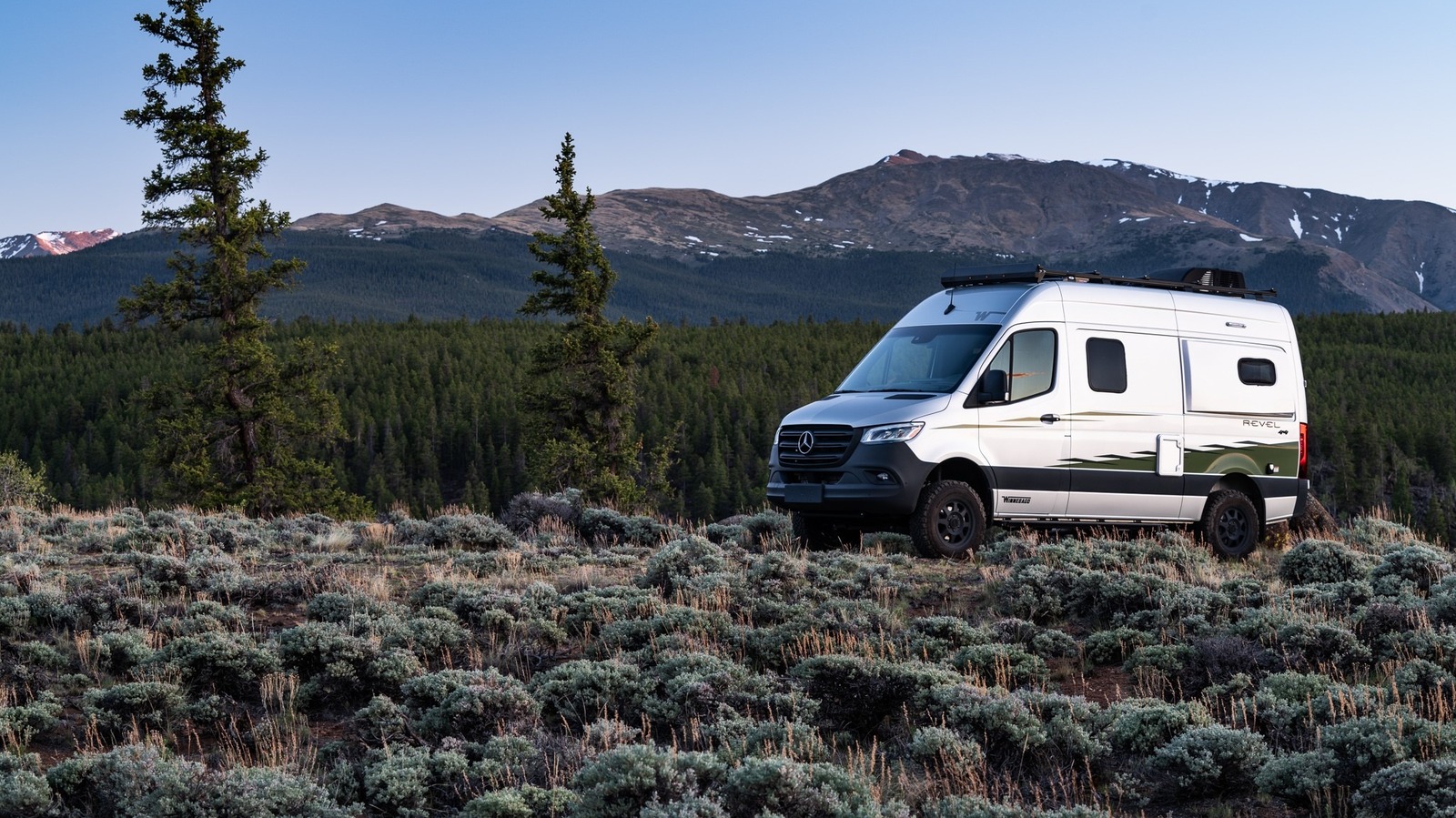
Most people may think of a recreational vehicle as this giant, lumbering, bus-like home on wheels. While there are certainly models that fit that description, there are also many smaller, van-sized Class-B options. These streamlined RVs not only offer many of the comforts of home, but can also go off-road, taking your adventure places larger Class-A RVs couldn't dream of. Take, for example, the popular Winnebago Revel, which has captured the attention of both overland and van life enthusiasts.
The Winnebago Revel, in particular, provides travelers with a number of conveniences, including its size. Utilizing Mercedes Sprinter bones, this all-wheel drive van comes in under 20-feet in length, and less than 8-feet in width, allowing it to fit in most parking spaces. In addition, the Revel comes equipped with a robust 16.8 kWh battery that can keep the energy flowing for up to a week, according to the manufacturer. There's also the 2.0-liter turbodiesel engine and a water tank that holds 35 gallons. Because of its unique design with expanded rear panels, the Revel also allows the bed to be laid out side-to-side, instead of lengthwise, providing precious extra space.
Unfortunately, the Revel isn't for everybody, and the first barrier to entry is the price — it starts at an eye-watering $261,808 – pretty much the polar opposite of budget compact-van builds. Some rivals have criticized the Revel, claiming that not everything inside the van is made from top-tier materials. The Revel Sport is considerably less at $208,804, albeit with fewer bells and whistles. The good news is that there are plenty of alternatives that offer advantages over the Revel.
The Thor Motor Coach Sanctuary
Thor Motor Coach offers an attractive option for those looking at Class B vans in the vein of the Revel, with the Sanctuary. With a starting price of $218,260, the Sanctuary is over $43,000 cheaper than the Revel, and the Thor comes with features not present on the Winnebago.
For example, the Thor Sanctuary comes equipped with a built-in microwave, which is strangely absent on the Revel. The Sanctuary also includes a 24-inch smart TV in the living/sleeping area. If you want a TV in the Revel, you must get it installed after-the-fact, as the factory model doesn't include the option for one. While overlanding with a 4x4 vehicle may not involve a significant amount of television watching, it's still a nice feature to have.
The Sanctuary also provides a unique flip-down vanity sink in the shower, along with mirrored upper cabinets. With the Revel, there are no mirrors in the shower area — they're technically on the bathroom door — and if you want to use the sink, you'll have to use the one in the kitchen. Finally, the Sanctuary may be the easier option in terms of remote working travelers, as it includes a factory-prepped pass-through and setup for those utilizing Starlink to connect online. This removes the need for owners to find an existing unused port, or drill through the body, weatherize and insulate around the opening, and run the appropriate equipment through.
Jayco Terrain
Those looking to overland or venture deep into the backcountry should also have a look at the Jayco Terrain. At just a bit more than the Sanctuary, starting at $221,993, the Terrain is still significantly less expensive than the lofty-priced Winnebago Revel. The Jayco also features some helpful design elements, upgraded suspension, and water-saving technology.
One of the issues with limited fresh water is that once it's gone, you'll need to head back into civilization, potentially cutting the trip short. Smartly conserving water, Jayco's Aqua View SHOWERMI$ER water management system recirculates water through the system until it heats up and you're ready to take your shower, reducing water loss as the system flows. One of the other features the Jayco brand is known for is its robust 750-pound drop-down bunk capacity. In the Terrain, you get a powered bed that lowers in the rear of the unit and can safely accommodate two adults. The bunk stays out of the way when not in use and makes lots of room for storing things like mountain bikes or climbing gear.
The Revel comes equipped with a stock Mercedes Sprinter suspension system, with several owners choosing to install aftermarket upgrades, replacing the OEM setup. Alternatively, the Terrain offers a few suspension upgrades that can help both on and off-road stability. For example, Jayco comes fitted with a beefier rear stabilizer bar and Koni shocks, both of which reportedly improve handling.
Airstream Rangeline
While the brand Airstream is mostly known for its aluminum travel trailers, they have expanded into other areas, such as Class B RVs. The Airstream Rangeline offers a dramatically lower price than the Revel, with starting prices as low as $160,400. The Rangeline uses Ram ProMaster 3500 underpinnings, instead of a Mercedes Sprinter, which is a big part of the price difference, and the Ram uses a V6 gasoline engine as opposed to diesel — so it's not for everybody. While diesel engines are more expensive to purchase, they often offer more torque. For instance, the diesel Sanctuary pushes out 332-lb-ft of torque, while the Rangeline only manages 250 lb-ft.
In the kitchen, the Rangeline mostly matches of exceeds the Revel's capabilities — a strong selling point when you consider the reduced price. The Rangeline has a slightly-larger refrigerator at 3.2 cubic feet, versus 3 cubic feet for the Revel, and the Rangeline includes an equally powerful induction cooktop. If you look up inside the Airstream, you'll also notice something familiar from the brand: An aluminum ceiling. It's a nice touch, considering little else in the Rangeline connects it visually with the iconic trailers.
While not standard, for around $11,900 extra, you can add a Pop-Top to the Rangeline, which enhances functionality. The roof extends upward, opening up space for another bunk. It increases the sleeping arrangements from 2 to 4 people and frees up interior space as the standard bunk below can remain folded up. If you're trying to register an RV as a primary residence, this might be the sort of extra space you need to make the leap.