CNY: Why younger Malaysians are swapping house visits for holidays
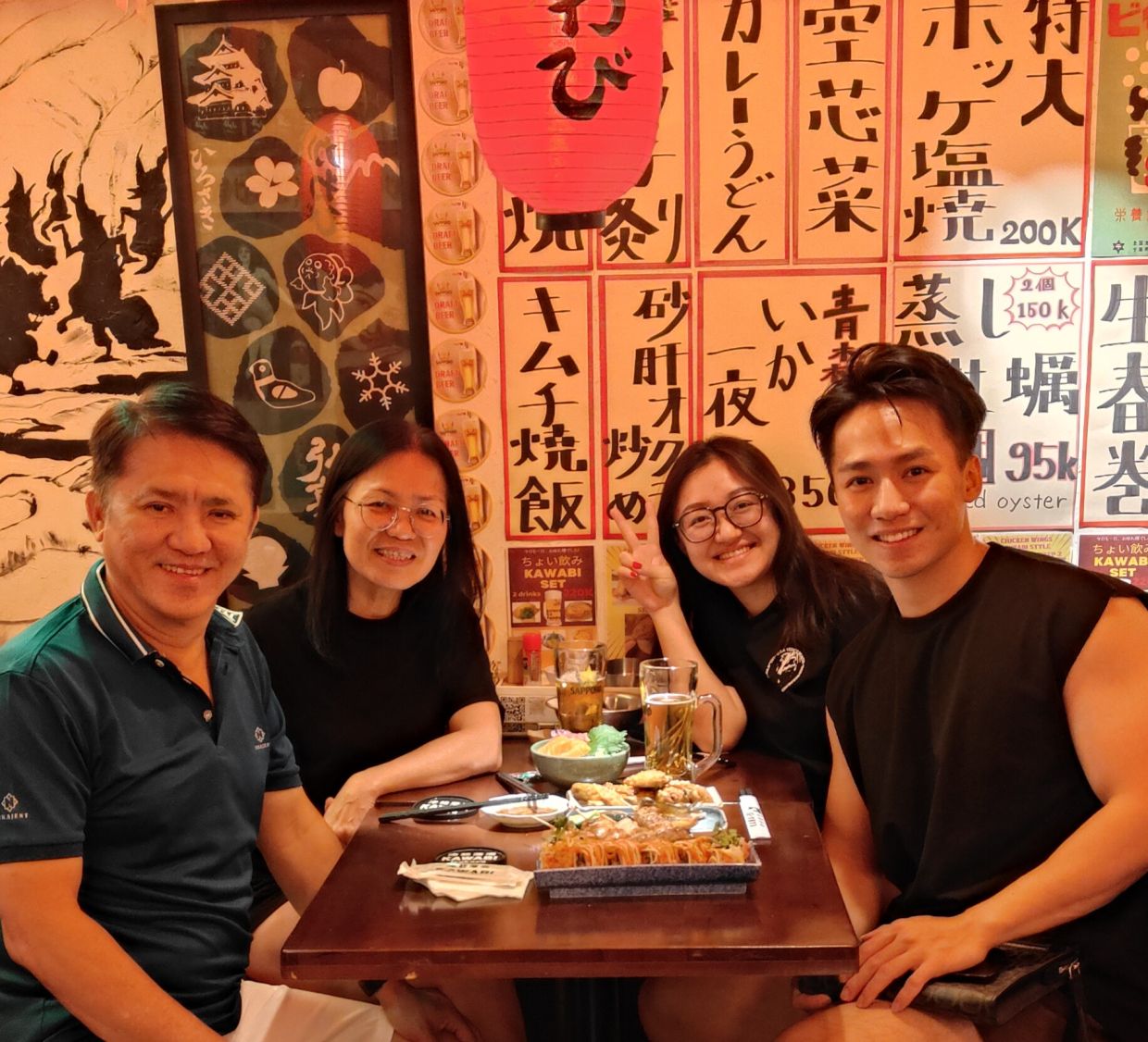
Chinese New Year is traditionally marked by reunion dinners and a flurry of visits to relatives’ homes.But for a growing number of families, the festive season is taking on a different shape – one that involves passports, boarding passes and shared experiences overseas.For businesswoman Peggee Gan, 30, travel has become her family’s way of marking the festivities.“Chinese New Year is one of the rare times when all of us can be together,” she says. “That’s why I’d rather focus on bonding with my parents and my brother by travelling together. For me, that’s what matters most,” says Gan during an interview from Kota Damansara, Selangor.Gan (second from left), her parents and her brother are opting to make overseas trips as a more relaxed way to mark the Chinese New Year holidays.On Feb 17, the first day of Chinese New Year, Gan, her father, retiree Gan Boon Hong, 62; her mother, retiree Tiew Sook Ting, 59; and younger brother, operations manager Gan Hao Ren, 27; will board a flight to Jakarta for a short holiday.In recent years, they have celebrated Chinese New Year in Bali, Indonesia; Bangkok, Thailand and Ho Chi Minh City in Vietnam.Gan’s approach reflects a broader shift among younger Malaysian families, many of whom are rethinking how tradition fits into modern life.With smaller family units, hectic work schedules and relatives spread across cities – and even countries – the idea of Chinese New Year as a marathon of house-to-house visits is gradually changing.Originally from Melaka, Gan is now based in Kota Damansara, Selangor, while Hao Ren works in Singapore. With family members living and working in different places, Chinese New Year – when leave is easier to coordinate – has become one of the few opportunities for them to spend uninterrupted time together.“My brother has been based in Singapore since graduating from university, so I rarely see him unless we make it a point to meet at our parents’ home during long holiday breaks,” Gan says.“Celebrating it overseas came from wanting more quality time together as a family.”Gan has a playful moment with her father, Gan Boon Hong.Instead of spending hours helping her mother cook and host guests during the festivities, Gan prefers a quieter celebration overseas with just her immediate family.“This way, my parents can relax and spend more time with us,” she says. “Otherwise, it’s non-stop hosting, visiting relatives and cooking. We’re usually exhausted by the end of the celebrations.”For those who are single, like Gan, travelling also offers a welcome escape from the usual prying questions – from how much they earn to when they plan to settle down. At times, the festive gatherings can feel less like a celebration and more like an interrogation.Gan admits she has never been drawn to large group celebrations during Chinese New Year, finding the social demands mentally draining.“There’s a lot of small talk, and honestly, it can be exhausting,” she says. “I don’t really enjoy going around in big groups.”The trend is also noted internationally. A 2024 BBC article titled “The Chinese millennials shunning Lunar New Year travel”, highlighted that younger generations in Asia are increasingly spending Chinese New Year travelling instead of following traditional rituals, driven by changing family dynamics, evolving lifestyles and economic pressures.For some, the festive break has come to resemble an extended vacation rather than a period centred on large family gatherings.“Time passes very fast,” Gan says. “My parents are getting older, my brother is busy with work and everyone has their own life. These trips give us uninterrupted time together.”Family unityGan’s family still observes key traditions during Chinese New Year.For the Chinese, the reunion dinner is the most important part and the family makes it a point to gather for the occasion.For the past four years, they have gathered at Gan’s home in Kota Damansara for their reunion dinner before travelling.“Sometimes my mother cooks her signature dishes like lor bak, steamed fish and prawns, and we order food. Sometimes we eat out.”Tiew (left) and Gan Boon Hong see Chinese New Year as a rare opportunity to travel with their children and spend quality time together as a family.Tiew says the decision to travel during Chinese New Year was made easier as the family does not observe ancestral prayers during the festive period.“If we did, it would be difficult to go away,” she says. “My daughter is in Petaling Jaya and my son is in Singapore, so we hardly have much time together. Since Chinese New Year is when everyone gets a few days off, we felt it was a good opportunity to travel.”When her children were younger, Tiew says family holidays were usually limited to school breaks. Today, she is happy to let them take charge of planning their trips.“They are young and very good at planning and organising things using apps,” she says. “When my husband and I travel, we usually just follow tour packages.”With fewer visitors expected, she also keeps festive preparations simple.“I still buy some cookies, but not many because no one is around anyway,” she says.As for whether older relatives mind their absence, Tiew says understanding goes both ways. Her mother lives in Tangkak, Johor, with her older son.“I visit her every weekend,” she says. “She is very understanding about us travelling. After we return, we will visit her and she is totally fine with that.”For these families, travelling together offers a chance to slow down, spend quality and uninterrupted time with one another and create new memories – even if they are celebrating Chinese New Year away from home.