The letter so moving it briefly lifted Fiona Phillips' Alzheimer's fog, emotionally revealed by her husband Martin Frizell
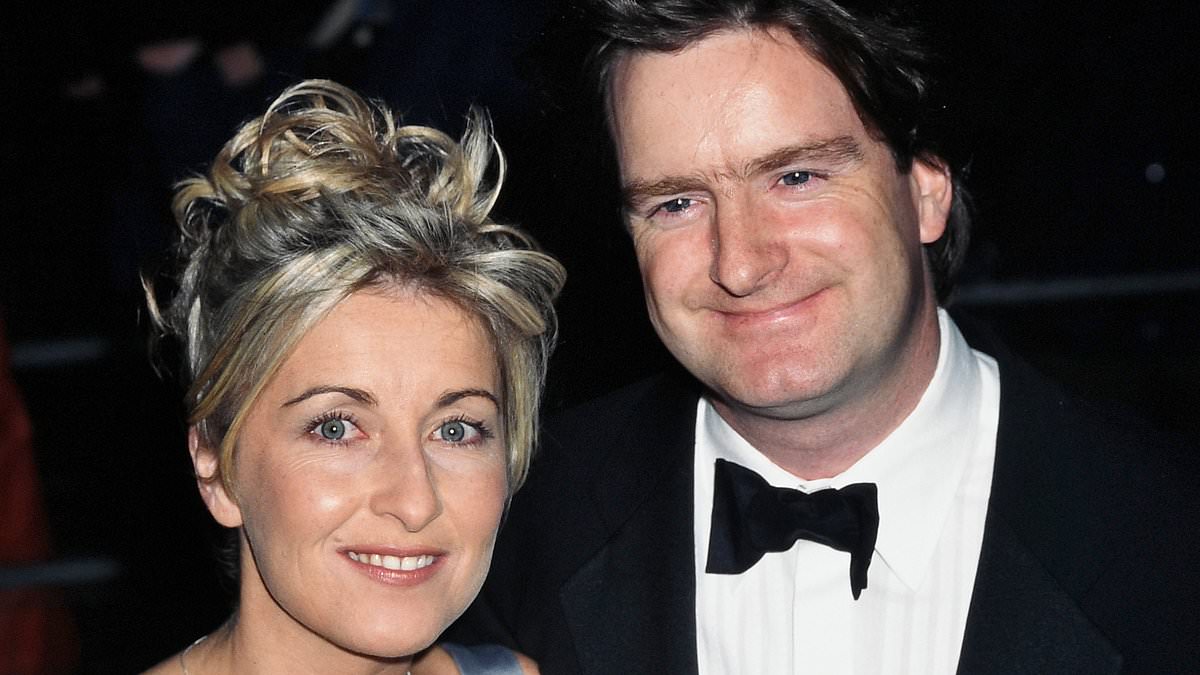
A cold, rainy winter's day in London. Fiona Phillips, the 65-year-old former GMTV host who is now in the advanced stages of early-onset Alzheimer's disease is huddled in a cab with her husband of 28 years, Martin Frizell. They are on their way to see a specialist they hope will help with the terrible pain she has been suffering.It is agonising and has remained undiagnosed for months, despite numerous trips to specialists – a secondary medical complication that has proved desperately stressful for both of them.'There's no way I could drive or we could take public transport,' Martin recalls, 'as Fiona now rarely understands where she is going or why, constantly asking what is happening, probably four or five times a minute on loop for the entire journey.'Honestly, I got close to telling the taxi driver to turn around and take us home – Fiona's only safe place – as the stress was unbearable.'But of course that self-pity pales into insignificance compared to what Fiona was going through.'Her pain had been constant. There had been any number of fraught taxi journeys for scans and procedures, but consultants had failed to diagnose what was wrong.Then someone suggested visiting a neuropsychiatrist. 'Who had even heard of a such a thing?' Martin says now. Fiona Phillips, the former GMTV host who is now in the advanced stages of early-onset Alzheimer's disease, pictured with her husband Martin Frizell at the National TV Awards in 1997 'At times I have to stop myself from thinking, "Is this attention-seeking?",' Martin says. 'A terrible, selfish thought, but I'm told it's an understandable reaction in someone caring for an Alzheimer's victim.' Pictured: The couple by The Needles rock formation on the Isle of Wight Martin spoke to the Mail's Amanda Platell in an interview to coincide with his update of Fiona's unflinching and heartbreaking book, Remember When, which was serialised in the Daily Mail last July. Pictured: The couple together on GMTVSo they were making their way to him – and he was not in the slightest bit surprised by the combination of brain disease and pain Fiona was suffering.He explained that the anxiety caused by Alzheimer's could trigger a major memory episode as her stressed-out brain tried to find comfort in past events.It just so happened that her most recent big memory was not a good one. It was of pain, excruciating pain, from before an operation she'd had months earlier.At least they had an idea of the cause, says Martin. He was told that relaxation was key, which meant rest and sleep – Fiona spends a lot of time doing that these days.But there was also an unsettling question he could not shake off. Was the pain real or imagined?'I heard what the expert said,' he reflects, 'but I honestly don't know.'At times I have to stop myself from thinking, "Is this attention-seeking?" A terrible, selfish thought, but I'm told it's an understandable reaction in someone caring for an Alzheimer's victim.'Martin, a long-standing friend of mine, is talking to me with his usual candour in an interview to coincide with his update of Fiona's unflinching and heartbreaking book, Remember When, which was serialised in the Daily Mail last July.He says her condition has deteriorated somewhat since then and reached a sort of plateau, and he has added a deeply moving new chapter.In the original, with Martin's help, Fiona herself wrote in haunting detail of how her mind was slipping away. 'Everywhere I look there are memories,' she said of the huge pile of newspaper and magazine cuttings they had gathered as research for the book. 'I know they are there. Yet so many of them feel out of reach now.'It's like I reach out to touch them but then just as I am about to grasp it, the memory skips away from me. And I can't catch up with it. Like trying to chase a £5 note on a gusty day.'Martin's contributions to the book were equally devastating. He talked of the daily routine in the summer of 2024, after Fiona had been diagnosed with early-onset Alzheimer's in 2022.'I would wake at seven and go downstairs to make a coffee. If Fiona heard me, she might come down too...'I would give her an antidepressant tablet and make her a cup of tea, then get myself ready for work [at ITV where he ran shows from GMTV to This Morning and Loose Women]. Martin says her condition has deteriorated somewhat since the release of the book and reached a sort of plateau, and he has added a deeply moving new chapter. Pictured: A more recent photo of the couple, in Santorini, Greece In the original edition, written with Martin's help, Fiona (pictured, aged 22) wrote in haunting detail of how her mind was slipping away'Fiona would often say to me, "What shall we do now?" "Why don't you go to bed for a couple of hours?" I'd say, "It's still early."'"Where do I go to bed," she would ask. "In the bedroom," I'd reply and point her back to the staircase of her own home.' Martin talked of his exasperation, and his guilt about feeling angry: 'Anyone who thinks they could endlessly explain the same thing over and over again just needs to try it. Not once, not now and again, but every single day.'And the book, so humbling, such a story of love and commitment as she drifted away, struck an extraordinary chord, soliciting countless messages of support from readers.In his updated chapter, Martin writes of the 'blisteringly hot' week the book was published and the day he gauged that Fiona felt well enough to go for a walk.'I usually made the destination our local Londis,' he says. 'There and back was about as far as we could manage.'He bought a Magnum ice cream, but Fiona started to panic. 'While she looked around, agitated, and whispered anxiously about getting home, I paid, unwrapped the chocolate ice cream as fast as I could and put it in her hand.'It was a failsafe distraction, taking her troubled mind away from its dark spaces. And, for a few minutes, her mood lifted to the extent we had a fairly lucid conversation about her book, its launch and its great reception.'One of the most frustrating elements of her condition is that Fiona, the people-pleaser, the humble girl from Canterbury via Southampton, is now outwardly lost but is still very much there; she just couldn't say thanks on her own.'She can't find her way around a mobile phone nor use social media or write a letter and certainly not address a crowd, so how could she indicate her appreciation for the love that was flowing in?'Around the corner from the shop I persuaded Fiona to record a piece to camera on my phone, Magnum in hand, smiling, wearing the new Prada sunglasses I'd bought her, which she now slept with, almost like a comfort blanket. It was a nine-second clip, thanking everyone who'd read her book, and it went viral.'She said simply, in one take, as that was all I was going to get: "Hello, thank you for reading my book, really good of you, hope you like it, okay, bye."'To date, that recording has been viewed 3.6million times on Instagram, with 80,000 likes and 2,500 comments – just those nine little seconds.'Almost everyone who commented claimed they had experience of caring for a dementia sufferer or knew someone who had been affected by it. 'It suggests a silent epidemic of an untreatable disease that feels like it has touched almost every family in the UK.'Fiona was a carer to both her parents when they got Alzheimer's, which led to her becoming a long-term campaigner and ambassador for the Alzheimer's Society before her own cruel diagnosis. Martin's contributions to the book were equally devastating, as he talked of his exasperation, and his guilt about feeling angry: 'Anyone who thinks they could endlessly explain the same thing over and over again just needs to try it. Not once, not now and again, but every single day'. Pictured: The couple at the BAFTAs in 1998 Fiona was a carer to both her parents (pictured together, in 1994, in Los Angeles) when they got Alzheimer's, which led to her becoming a long-term campaigner and ambassador for the Alzheimer's Society before her own cruel diagnosisMartin believes there are millions of people in Britain who face a 'wretched life' daily because of Alzheimer's, many of them at their wits' end as they struggle to cope.The messages came in in their thousands after the book was published.One person wrote: 'I've got two parents with dementia so could relate to everything you said about being a carer and the lack of support. 'You and your boys [Fiona and Martin's grown-up sons, Mackenzie and Nathaniel] are amazing to care for Fiona at home. It was nice not to feel alone for a change.'Martin understands the sentiment only too well after leaving his job at ITV to look after his wife. 'It's the isolation that gets you, because it's a lonely life, this Alzheimer's game,' he writes at the beginning of his new chapter. 'When your world has been full of whip-smart young producers, hourly decisions and meetings, images and stories that make national news and, most importantly, work that can make a difference to people's lives, the... brick wall of losing a career you loved to care for a family member with dementia is tough to swallow.'There have been some 'lovely' messages from celebrities that Fiona and Martin knew through work. 'Out of the blue I received a message for Fiona... from Kate McCann [the mother of Madeleine McCann, who was abducted in Portugal in 2007]. 'She remembered that she was a warm, bubbly and capable lady. Kate was sure those attributes must have stood Fiona in good stead.'I didn't realise until I read the letter that Kate McCann, herself a doctor, had spent almost ten years in [NHS] Memory Services, largely drawn to it because of her dad, who also had dementia.'When Martin read Fiona the 'very long letter' Kate had written, she remembered Madeleine and her eyes welled up.For a moment, the Alzheimer's fog lifted and she was back as the GMTV presenter and sympathetic mum. She'd met the McCanns several times and was the first to announce Madeleine's disappearance on GMTV.Then the clouds came back and the memory went away as quickly as it had surfaced. The old Fiona who'd appeared for a moment was gone.How does Martin, 67, cope with these ups and downs? How can he bear the occasional glimpse of her lovely personality only to see it shrouded again in clouds of anxiety and despair?One specialist suggested he should go to Alzheimer's discos – but Fiona is often too frightened to leave the house.'She is very dependent on me,' he says, 'perhaps too much, but for my own sanity I try to get out for a coffee for an hour each day and sometimes I manage a day out on a boat. Martin believes there are millions of people in Britain who face a 'wretched life' because of Alzheimer's, many of them at their wits' end as they struggle to cope. Pictured: A family photo of Fiona's parents, walking their dogs near their home in Wales There have been some 'lovely' messages from celebrities that Fiona and Martin knew through work, including a letter from Kate McCann (left, with her husband Gerry McCann, in 2017)Read More FIONA PHILLIPS: I know my memories are there but they skip away from me like £5 notes on a gusty day 'Try as I might, though, I still worry about whether she's all right back home.'Martin also gets some respite from a new line of work. He's running a broadcasting outfit, with a true-crime podcast which he is soon taking on tour as well as a political one, which he likes because it keeps him plugged into the news.'Fiona hasn't heard a second of either – she's just not interested and still thinks I run Britain's biggest morning show,' he says wistfully.Martin is still her primary carer. He tried a professional carer and called her a housekeeper to overcome Fiona's suspicions, but she saw though that. So it is just him and, of course, the couple's two sons.He is desolate over the fate of his once glamorous wife, who was a regular on the red carpet, loved make-up and gossip and never left home without looking utterly fabulous.Today, he washes her hair as she can't remember how and she needs help brushing her teeth before she retires to her comfort zone, her bed, where she sleeps most of the day. Like so many people in his situation, Martin's abiding thought is: 'How long can we keep and care for my beautiful wife at home.' What happens next?He has recently returned from a brief trip to Tuscany where he and Fiona have a small villa. He now rents it out as he knows there will be no more family holidays there and it will help pay the bills.When he sat at the local restaurant to a dinner for one, the locals who adored Fiona asked repeatedly: 'When will she be back?'He replied, 'Hopefully in a month' – knowing the real answer is 'never'.A previously unseen picture in the new paperback version of Remember When shows her on a fashion shoot at the villa ten years ago, looking ravishing in red, taken by the celebrity photographer Nicky Johnston.It was taken before her diagnosis and at her happiest in a place she loved. When Martin showed Fiona the picture recently, she sprang into her old TV presenter persona, grabbed the dress which still hangs in her wardrobe and put it on, loose now that she has lost so much weight.For a moment she was the gorgeous, bubbly, Fiona of old.At the villa there is an archway where she had planted jasmine vines a decade ago. Her dream was always to stand under the jasmine as they entwined their arms over the arch, which they now do, but which she will never see.Today, the powerful scent of the jasmine is bittersweet, reminding Martin of the joyful summer days they spent there when life was carefree. Martin is desperate to highlight the fact that so many people are in Fiona's and his own position. Suffering desperately in silence. Pictured: The couple at the funeral of former political adviser and ITV presenter Kate Garraway's husband, Derek Draper, in 2024 As Martin wrote, in his contribution to his wife's book: 'It breaks my heart that my strong independent wife has become so vulnerable'. Pictured: Fiona at home in 2015 One of the reasons he has written the new chapter is he wants us to remember his wonderful wife as she was, not as she is now.Despite my requests, he would not provide any current pictures of Fiona.Today, she is happiest going to bed and listening to Rod Stewart – she interviewed him many times and he always affectionately called her 'Doris'.But such is her anxiety Martin has to explain to her where the music is coming from. She no longer understands concepts such as speakers and iPhones.Martin is desperate to highlight the fact that so many people are in Fiona's and his own position. Suffering desperately in silence.He's not on a crusade. He does not want to be the poster boy for Alzheimer's, but he is furious that it inflicts so much pain on families and loved ones, and yet, despite the fact that it cannot be cured and kills more people annually than heart disease and strokes, gets a fraction of the research. Cancer receives 13 times as much, for example.In Fiona's book, Martin makes an astonishing but understandable claim: 'Being brutally honest, I wish she had got cancer. Then at least there might be a cure.'The lack of funding is one reason why the Daily Mail and Alzheimer's Society recently launched the Defeating Dementia campaign to boost research, spread awareness of the disease, increase early diagnosis and improve care.Meanwhile, the pain for Fiona – and for Martin – goes on. Pain that started in her fifties as the symptoms of the disease first appeared.As she wrote when she was still able to: 'My marriage was coming under increasing strain. 'I'm sure the disease was at least partly responsible but at the time neither of us could see it.'I just became more and more disconnected from the boys. "You've totally zoned out of our family and our marriage," she would say to me.'"Don't be so bloody ridiculous!" I'd yell back.'They separated for a short while, but realised they could not do without each other, and Martin has been her staff and support ever since.It must be an overbearing strain. When he rages against the injustice of it all, he forces himself to recall the three words experts have told him to say to himself: 'Don't! Feel! Guilty!'And he shouldn't, for his love for Fiona has never dimmed. As he wrote in his contribution to her book: 'Sometimes when I'm going out, she will say, "Please don't leave me," because she wants me to be close by.'And it breaks my heart that my strong independent wife has become so vulnerable.'Dates and tickets for Martin Frizell's This Much is True Crime podcast can be found at www.tartannoir.co.uk