The world’s first sodium-ion battery EV is here and it could be a game changer
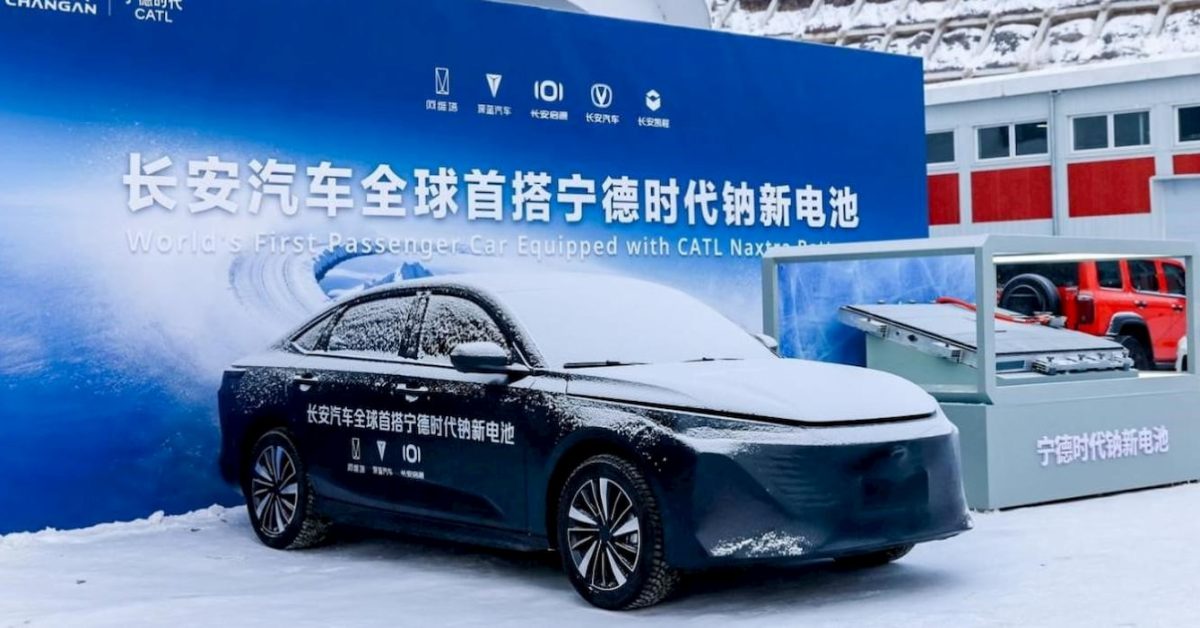
Leading global battery maker CATL and Changan Automobile unveiled the world’s first passenger EV powered by a sodium-ion battery on Thursday.
CATL and Changan unveiled the new vehicle on Thursday, deeming it the world’s first mass-produced EV with sodium-ion batteries.
The vehicle showcased was the Changan Nevo A06 (also known as the Qiyuan A06), but CATL will supply sodium-ion batteries for all Changan brands, including Qiyuan, Deepal, Avatr, and Uni.
“The breakthroughs in sodium-ion technology bring greater resilience, a wider operating temperature range, and more sustainable growth to electrification,” CATL’s chief tech officer, Gao Huan, said during a press conference on Thursday. Advertisement - scroll for more content
After unveiling its “Naxtra” sodium-ion batteries last April, CATL said it achieves an energy density of up to 175 Wh/kg, putting it on par with lithium iron phosphate (LFP) batteries.
Two weeks ago, CATL launched its Tianxing II sodium-ion Naxtra batteries for light commercial vehicles. Passenger EVs will use the same 45-kWh sodium-ion battery pack, which the company says delivers up to 400 km (248 mi) of range.
(Source: Changan Automotive)
As the new battery tech advances, the Chinese EV battery giant expects range to improve to around 500-600 km (310-372 mi).
While sodium-ion batteries, such as LFP, may offer lower costs, they also perform considerably better in extreme cold.
According to CATL, the sodium-ion batteries still charged at temperatures as low as -30°C (-20°F). At -40°C (-40°F), they still retained 90% of their usable capacity. To put that into perspective, lithium batteries retain about 80% of their capacity on average.
(Source: CATL)
While the Nevo A06, currently sold in China with a 63.18 kWh lithium-ion battery, offers a CLTC range of up to 630 km (397 miles), its performance drops significantly in extreme cold. The 45 kWh sodium-ion battery promises to retain most of its range and charging performance.
They are also safer and less flammable than traditional lithium-ion batteries, CATL said after the batteries went through a series of brutal tests.
With lithium prices rising, sodium offers a lower-cost, less price-sensitive alternative. CATL, BYD, and several other leading Chinese battery manufacturers are investing heavily in sodium-ion batteries to combat rising lithium prices.
Lithium carbonate prices reached 170,000 yuan ($24,500) per ton earlier this year, up significantly from around 50,000 yuan ($7,200) per ton in 2021.
While sodium-ion batteries currently offer lower energy densities than LFP, CATL aims to bring them on par within the next three years.
In 2025, sodium-ion battery shipments reached 9 GWh, up 150% from 2024. Over the next four years, that number is expected to reach over 1,000 GWh.
CATL expects 2026 to be a turning point for the new battery tech with plans to launch its first sodium-ion battery EV by mid-year. After that, it will continue rolling it out to new vehicles while deploying them in new markets.
FTC: We use income earning auto affiliate links. More.