Nintendo’s new Virtual Boy is more fun to look at than to play
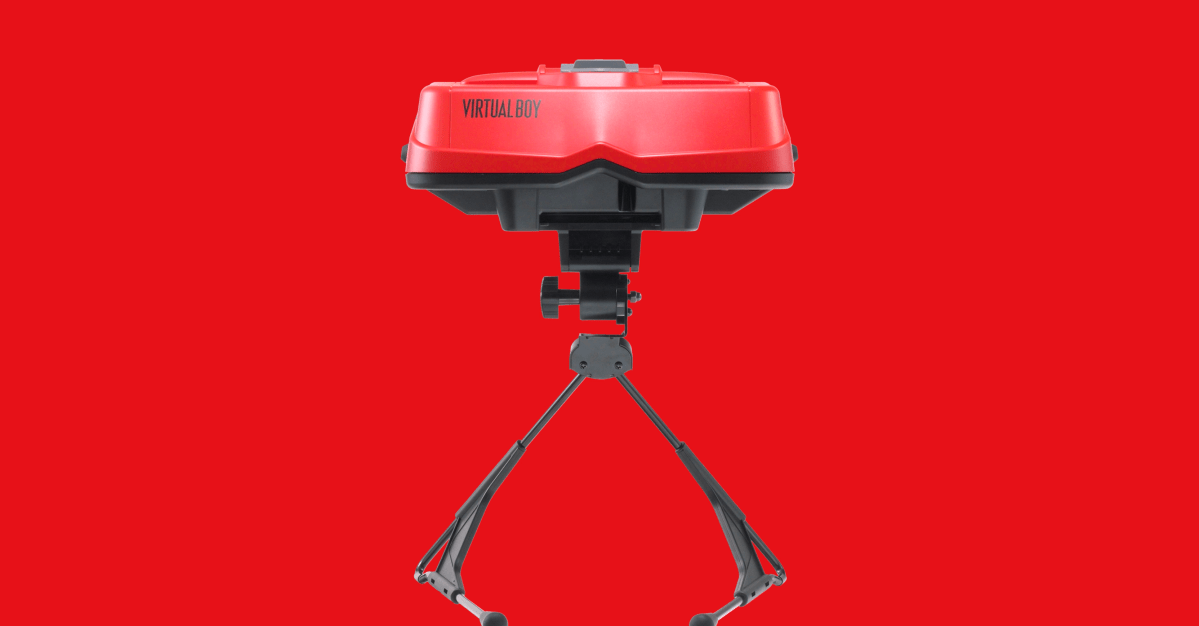
Though the Virtual Boy was both a commercial and critical failure, the console’s infamy is part of what has made it such a fascinating piece of Nintendo’s history. Original units are still going for hundreds of dollars on bidding sites, and hobbyists have spent years keeping the Virtual Boy alive through emulation and homebrew games. For a long while, it seemed like Nintendo wanted nothing more than for the public to forget that the Virtual Boy ever existed. But over time, the company has become more comfortable acknowledging and even joking about the system through references in games like Super Smash Bros. Melee, Tomodachi Life, and Luigi’s Mansion 3.Looking back on the Nintendo 3DS and more recent experiments like the Nintendo Switch and Labo, it wasn’t exactly surprising to learn that the Virtual Boy was being resurrected as a Switch peripheral designed to be used while playing classic Virtual Boy games on Nintendo Switch Online. There’s a nifty poetry to Nintendo’s worst-selling console being reimagined as a fancy peripheral for its most successful system of all time. Everything about the new Virtual Boy’s release speaks to Nintendo being confident enough to revisit one of its biggest failures and turn it into a flex that is quite literally designed to prop up the Switch family of consoles.When I recently spent some time playing with the new Virtual Boy, though, Nintendo’s confidence in this $100 side quest didn’t feel entirely justified. The headset / stand combo is a gorgeous piece of retro tech that’s comfortable enough to shove your face into. And even though I was kind of hoping to experience some disorienting visual weirdness, the console’s stereoscopic lenses didn’t leave me with a headache. But there’s a clunkiness to the way the Virtual Boy’s games played that made the device feel more like an aged novelty rather than a system I could see myself spending some serious time with.The major selling point to this thing is that it’s faithfully re-creating aspects of the original console that worked while smoothing over some of the roughness that led to it flopping in the ’90s. But if retro nostalgia isn’t really your jam, you might want to pass on the plastic model and consider dusting off your old Labo kit.As someone who never played the original Virtual Boy and tends to find VR headsets uncomfortable to wear, I was pleasantly surprised at how well my face fit into the new peripheral, which is meant to stand on a table and be used with a controller after you insert your Nintendo Switch or Switch 2 into it. Unlike my cardboard Labo headset — which was prone to letting external light leak in — the plastic Virtual Boy was able to plunge me into total darkness while I was sitting in a well-lit event space.That darkness made the redness — which can be customized to other colors — of the Virtual Boy’s monochromatic game selection screen pop as I browsed through the limited library of 3D titles. Nintendo says that by the end of this year, it plans to release 14 different Virtual Boy games through its Nintendo Switch Online + Expansion Pack subscription package, which costs $50 a year for individual accounts and $80 for family plans. The first batch of Virtual Boy games is due out on February 17th when the $100 peripheral and its cheaper $25 cardboard counterpart are being released.During my time with the Virtual Boy, I found myself charmed but a little underwhelmed while playing games like Galactic Pinball, Teleroboxer, and a new port of The Mansion of Innsmouth — a title that had previously only been released in Japan. The games ran perfectly fine and looked like what you would expect from a point in Nintendo’s history when it was experimenting with a new way to make its games feel immersive. As impressive as this lens technology might have been when the original Virtual Boy was released, it pales in comparison to what Nintendo managed to accomplish with the 3DS, and it never managed to fully trick my eyes into thinking that I was playing a game in 3D.Ironically, it was more aesthetically simplistic games with vector graphics like 3-D Tetris and Red Alarm that felt like they were really pulling me in with their novel approach to presenting three-dimensional space. There’s also something to be said for the fact that playing these games in any form has become much more difficult over the years. This new peripheral might not exactly set off a new wave of Virtual Boy game preservation, but it will make them infinitely more accessible — especially for folks who weren’t around during the original console’s brief lifespan.Though Nintendo didn’t give me hands-on time with the cardboard Virtual Boy, I came away much more interested in trying that out and seeing what these games might look like on a Labo. The plastic model definitely looks cool and will probably scratch a certain itch for those who wish they’d been able to own a Virtual Boy back in the ’90s. But in 2026, these kinds of 3D games just feel a bit too dated to warrant the price of admission if you aren’t already paying for an NSO subscription.