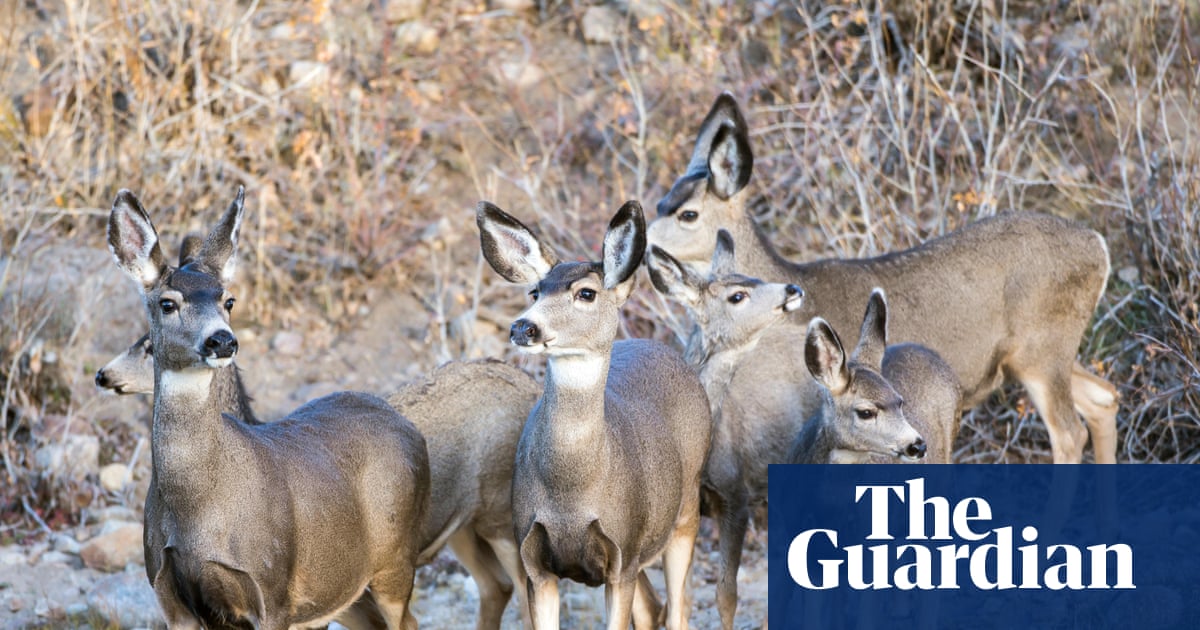
California officials move forward with plans to exterminate mule deer from island
California wildlife officials moved forward last week with a plan to eradicate a mule deer herd from Santa Catalina Island: extermination.The plan has long pitted locals from the island off the coast of Los Angeles against the Catalina Island Conservancy, an environmental non-profit that manages 88% of the island’s terrain. The conservancy sees mule deer, which are not native to the island, as a major threat to local biodiversity, water quality and fire resilience.The permit issued by the California department of fish and wildlife allows the conservancy to eliminate the island’s herd of roughly 1,800 deer over a period of five years, mostly using hired shooters who will kill the deer over bait. Outside the island’s only incorporated city of Avalon, shooters can fire at night and may use helicopters and drones to help locate deer. Helicopters may also be used to drop nets on deer for capture.As deer numbers dwindle, the permit envisions using dogs to help shooters find and kill the stragglers. The permit also allows the conservancy to capture deer, sterilize them, fit them with GPS collars and release them back into the wild.The meat from the animals will either go to feed captive birds at the California Condor Recovery Program or to tribal partners.Many locals, however, deride the extermination methods as cruel and see deer as an iconic local species, despite the fact that they were introduced to establish a huntable population in the 1920s. An online petition to “Stop the Slaughter of Mule Deer on Catalina Island” has garnered nearly 23,000 signatures.“Mule deer have been part of Catalina’s landscape for nearly a century, and their presence has become an important part of the island’s identity,” Los Angeles county supervisor Janice Hahn wrote in a recent letter to California’s wildlife officials. “This plan disregards the deeply held values of many Catalina residents and visitors. I continue to hear from my constituents who have lived on the island for decades and have come to cherish these deer.”Recreational hunting will continue on Catalina Island, though the conservancy says that it has failed to reduce numbers sufficiently.Santa Catalina’s native flora evolved without mule deer, leading plants to evolve few defenses to limit the animals from gorging on them, according to the conservancy. That heavy browsing pressure has allowed non-native grasses to colonize areas once populated with native plants, leading the island to lose shrubby chaparral to invasive grasslands.The conservancy plans to replant native flora and beat back invasives as it exterminates the deer. Recolonizing the island with native shrubs and other plans will help support efforts to recover endangered species including the Catalina Island fox and the Catalina Hutton’s vireo, a small songbird endemic to the island, the conservancy says.“The ecological challenges facing Catalina cannot be solved in a long-term, sustainable way as long as nonnative mule deer continue to prevent the recovery and restoration of the Island’s natural habitat,” reads a conservancy management plan.