The mental toll of chronic skin conditions
Journalist Caoimhe Mahon shares her experience of coping with the mental toll that can come with chronic skin conditions.
I was 27 when I was diagnosed with 'adult-onset acne', and as I sat there in the clinic, trying to process the results, I felt somewhat betrayed by my own body and skin.
How could a young woman, in her 20s, with a meticulous skincare routine, fall victim to a condition I had always thought only impacted teenagers?
Well, it turns out that I was wrong. In fact, according to research by the Irish Skin Foundation, whilst ‘‘the highest incidence of acne occurs during the teenage years, affecting up to 85% of teenagers and young adults, it can occasionally persist or appear for the first time in later life.
This is known as ‘adult onset acne’ or ‘late onset acne’ and usually begins after the age of 25.’
I was no stranger to chronic skin conditions, having battled eczema for as long as I could remember. So, it wasn’t the fear of the unknown that scared me when I received the diagnosis of adult-onset acne, but rather, I was fearful because I already knew too much about what to expect physically and emotionally with skin conditions.
For example, research suggests that ‘there is no cure for eczema, but there are many treatments available to help manage it.’ But in that moment when I was told it was likely ‘acne’ was another thing I was going to have to ‘learn to manage’, I felt deflated and rather helpless.
Managing my skin to date had already felt like a chore; it was unpredictable, exhausting and at times an emotional rollercoaster where the highs of a clear period were almost euphoric, and the lows of a relapse had you crashing back down to reality and the state of your fragile skin.
For anyone who has ever suffered from one or both of these conditions, you will know that it is much more than just a superficial condition or cosmetic concern. Instead, it is a lifestyle change and balancing act you have to learn to get to grips with.
How was I going to manage two skin conditions simultaneously, especially when they decided to predominantly take my face hostage?
Don’t get me wrong, I have had eczema invade my entire body, from head to toe. Not only can this be visually unpleasant, it can also be incredibly painful.
I could manage the flare-ups on my body, concealing the red, raw and flaky patches that took over my natural complexion, and whilst a jumper or long sleeve top didn’t take away the physical discomfort, it at least reduced the emotional blow by concealing the thing people tended to latch onto and stare at.
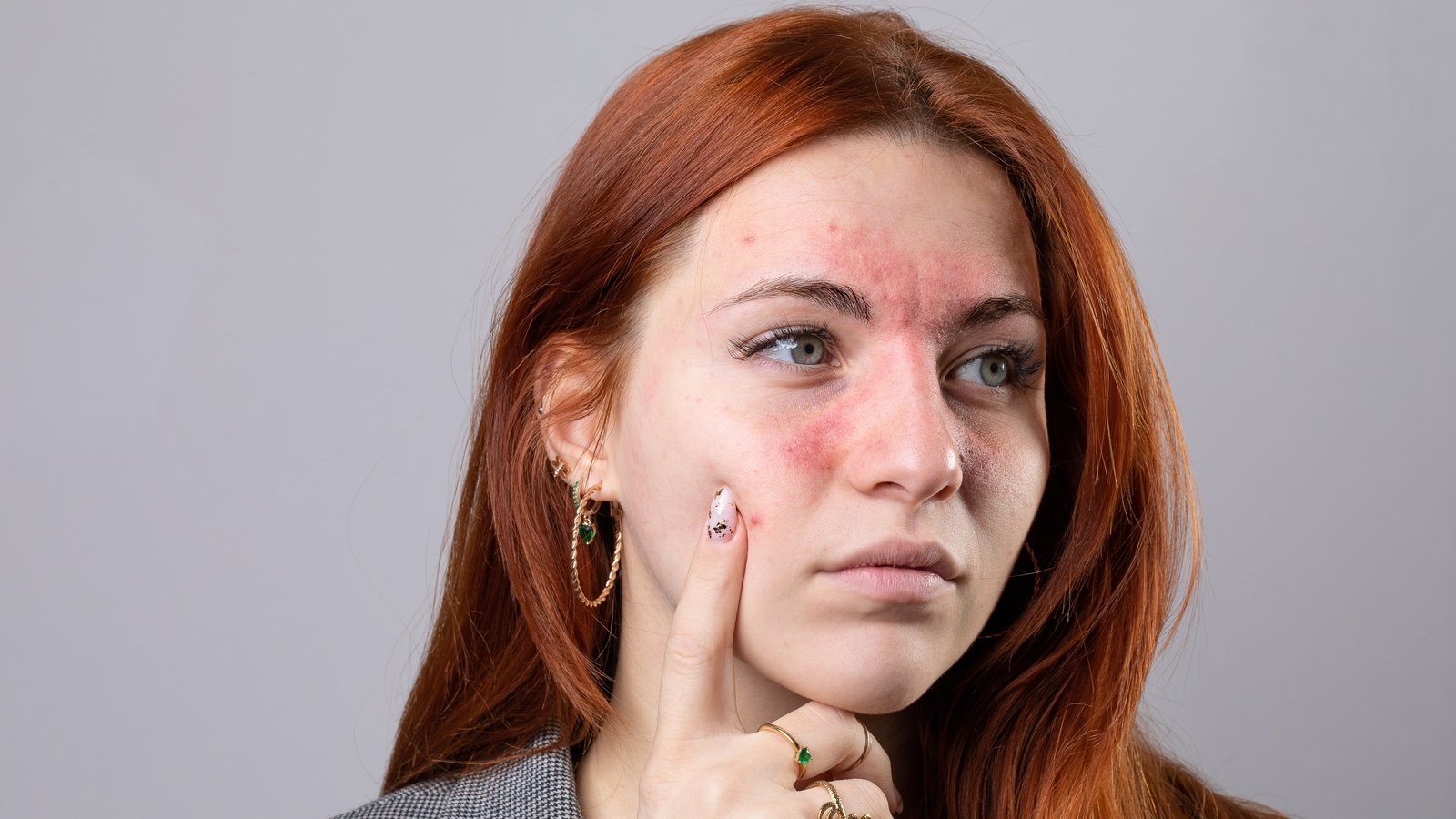
However, there is something all the more exposing about a condition on your face for all the world to see.
How would I conceal this and shelter myself from what is often the worst parts – the stares, the unsolicited advice or stereotypical assumptions?
If you have ever experienced this, you will understand how that judgement, shame and embarrassment can often become internalised, especially for a young woman today, when we exist in an aesthetically motivated and face-forward world.
In fact, studies show that ‘there is a growing recognition of the psychological impact of living with a skin condition and appearance-related anxiety in a culture that still endorses unblemished appearance as ‘beauty.’
Whilst this was something that I recognised throughout years of eczema, I felt it became heightened when I started to display ‘acne’ symptoms, which I felt not only blemished my 27-year-old skin, but infantilised it, too.
Just like the eczema started small and spread, so too did the acne. It started with a few darkened pimples around the temples of my forehead, then quickly spread from my head sporadically to my cheeks and eventually clustered to form inflamed boils under my chin.
Within a few weeks of getting my first few ‘persistent’ spots, I found my skin to be consumed by two conditions, both fighting one another for as much space as they could get on my face.
Whilst the physical appearance of both conditions appears changeable from person to person, so too are the methods of treating them. This can be quite frustrating, not to mention overwhelming – I would scroll TikTok and see so many people displaying their before and after images, and I would look in the mirror and wonder when something would finally work for me.
I suppose it all comes down to trial and error; at 27, I am still unpacking a plethora of contributing factors that trigger my eczema.
So, imagine how daunted I felt when I realised that I had to embark on this laborious journey for a second condition, preparing a regimented routine and incorporating new tools of treatment.
In fact, when I first thought about writing this piece, I considered the various ways in which I could construct it and what I wanted to say. Did I want to recommend these resources, present medical advice from industry experts or explain the science behind one or both of these conditions?
Then as I sat down to write it, currently experiencing a fairly nasty flare-up of both conditions, I was hit by the reality that often we read articles presenting data, defining the condition or providing examples of what to avoid and what to implement, and although beneficial, you finish reading still feeling rather alone in the experience of actually enduring the reality of these statistics presented on page in front of you.
At times, when writing, I found myself feeling a little guilty for being impacted by this, people would deem me ‘vain’ or ‘shallow’ for letting something as ‘small’ as my skin bother me.
Then it hit me: I am sharing my story, my experiences, vulnerabilities and insecurities around my skin – not to offer you a medical handbook or ‘how to guide’ to fix it but to tell whoever is reading this, who may be in the same boat, that you are not alone and the feelings you have around your skin are warranted.
I know, easier said than done.
In fact, preparing this article, I too felt a little silly, like my experiences of the conditions were invalid, as though I was being dramatic because many people experience both more severely than myself. Then I forced myself to re-frame – asking what I would tell a friend or family member if they felt bad for having an emotional response as a result of a physical experience.
It doesn’t matter how many people tell you that ‘it’s not that bad’ or ‘it’s just skin’, those words won’t encourage you to wear the top that doesn’t hide the flare-up, or go make-up free or post those holiday photos – because to you, it is never just skin.
Believe me, I get that. How confident or vulnerable I feel regarding my skin changes every day. Sometimes, I embrace it and view it as a superpower, a unique part of my identity, and other days it is simply a hindrance.
This is the reality: as your skin fluctuates, so too will your response to it, and that is okay. You are more than the current state of your skin, which tells a story of resilience, discipline and strength.
The views expressed here are those of the author and do not represent or reflect the views of RTÉ
If you have been affected by issues raised in this story, please visit: www.rte.ie/helplines.