SpaceX intervene amid reports Russia equip drones with Starlink
Ukraine’s Defence Minister praised SpaceX’s “swift response” amid reports that Russia leveraged Starlink satellite systems
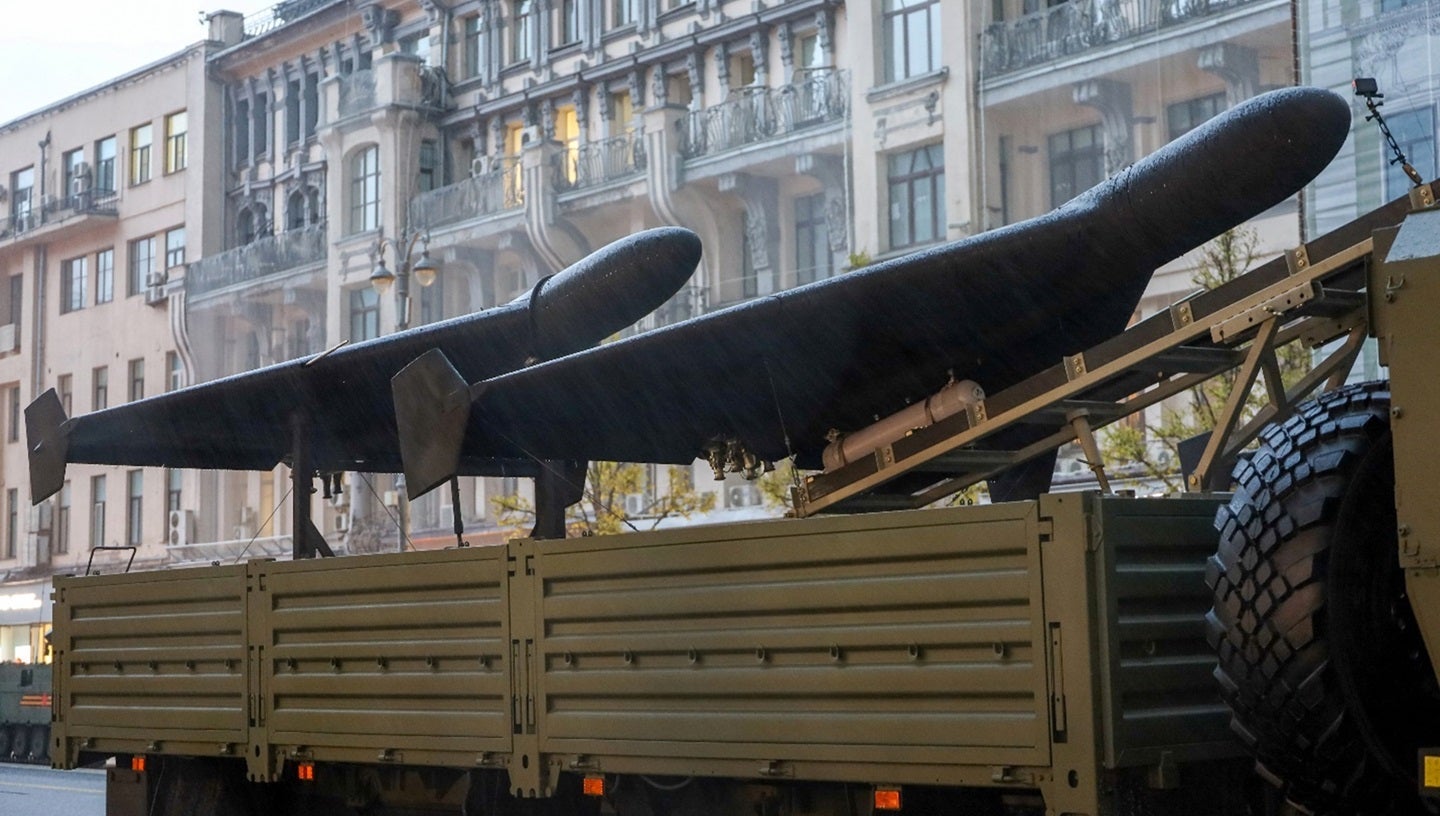
It has been suggested that Russian forces used the LEO constellation to extend the range of its BM-35 attack drones to 500 kilometres
It may not be the first time Russia equipped its drones with Starlink following Ukrainian intelligence reports that Starlink enabled Shaheds in 2024 and Molniya units last month
Ukraine’s new Defence Minister Mykhailo Federov praised US broadband provider SpaceX today (29 January) for “beginning work on a solution” to curtail Russia’s use of Starlink satellite systems to enable deeper drone strikes inside the war-torn country.
His thanks comes two days after reports, affirmed by the Washington based Institute for the Study of War (ISW), that Russian forces were increasingly leveraging the satellite based internet provider to extend the range of their BM-35 attack drones by up to 500km.
According to the think tank, this additional coverage provided Russia with the potential to strike into Central Europe. If launched from Belarus or Russia, ISW suggested, this distance would cover most of Ukraine, all of Moldova, and parts of Poland, Romania, and Lithuania.
Russia has done this before
The BM-35 is a loitering munition, or one-way effector, which reports claim was first deployed in September 2025. According to Ukraine’s Main Directorate of Intelligence (GUR), the uncrewed air system (UAS) comprises a number of foreign-made components, some of which are European and American.
This is not the first time Western components have been uncovered from within Russian weapon systems on the Ukrainian battlefields.
Graphic representation of BM-35 attack drone. Credit: War Sanctions / Ukraine’s Main Directorate of Intelligence.
But the GUR have previously accused Russia of equipping other UAS types with Starlink, too.
Just last month, the GUR found that the Molniya-2P first-person view (FPV) UAS levraged the low earth orbit (LEO) constellation to transmit video signals from both cameras, telemetry and control commands.
Other systems include the long range Shahed UAS in September 2024, the ISW have suggested. Likewise, Reuters reported that downed Shaheds were equipped with Starlink terminals just last week, citing online posts from Serhiy Beskrestnov (a newly appointed adviser to Fedorov).
Starlink policy
Starlink is a constellation of thousands of satellites in orbit much closer to Earth, at about 550km, and cover the entire globe. Since Starlink satellites are in a LEO, latency is significantly lower than other broadband providers, most of whom operate much further away in geostationary orbit.
In his update on social media, Federov urged that “Western technologies must continue to support the democratic world and protect civilians”.
Yet SpaceX’s policy is more complicated. Russian denial does mean the satellite connectivity supplier seeks to enable the Ukraine’s offensive operations either. In fact, this proved to be a sore spot throughout 2023 when SpaceX CEO Gwynne Shotwell refused to extend the capability beyond Ukrainian communications.
Sign up for our daily news round-up!
Give your business an edge with our leading industry insights.




Comments (0)